The Luxor issue
Above the Valley of the Kings: Luxor's Dawn Balloon Ascent
How to pick the right sunrise balloon flight over Luxor's West Bank — from heritage operators to private baskets and the honest budget tier.

By Hanne VermeerReading Luxor the way it was built
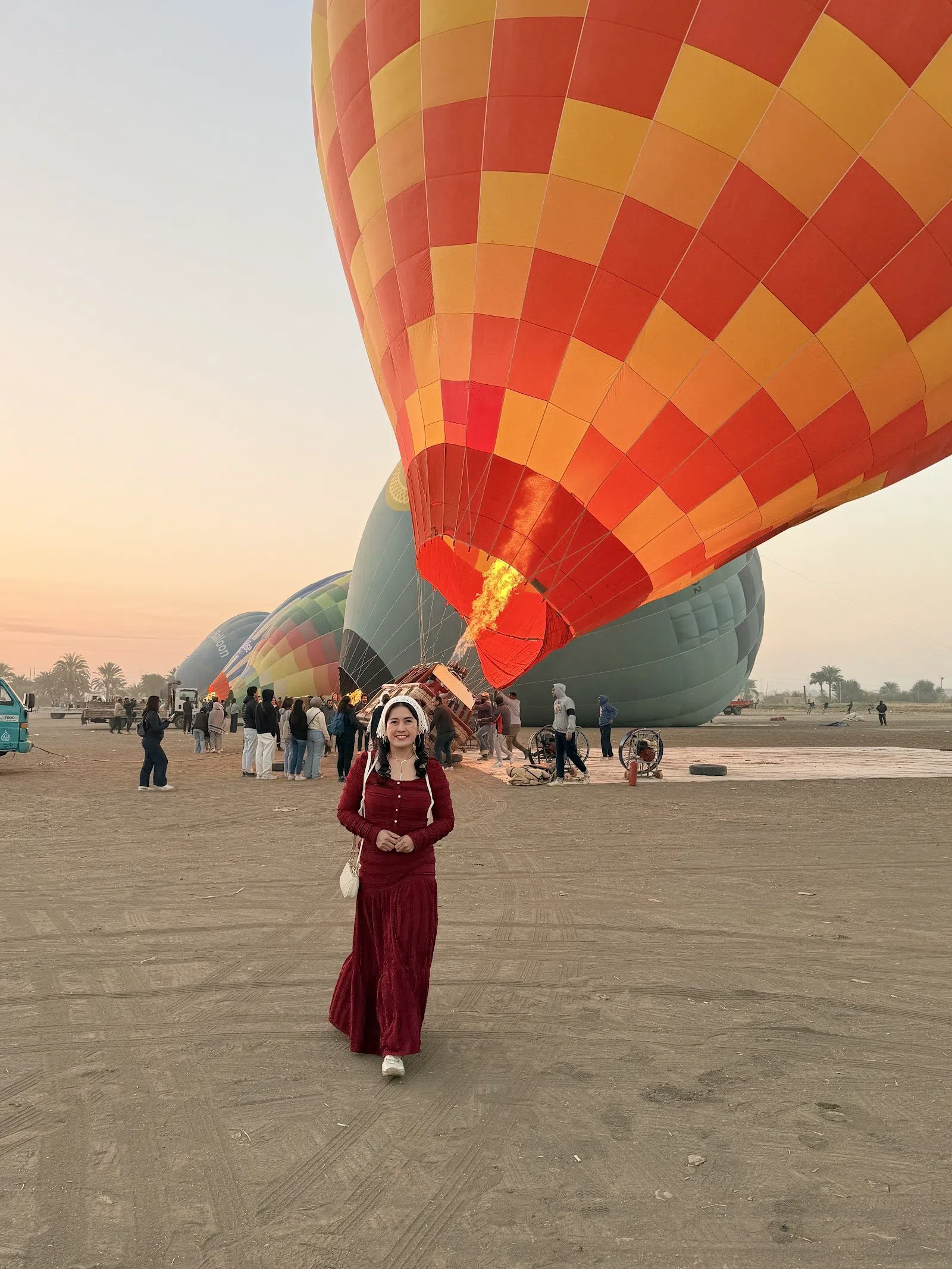
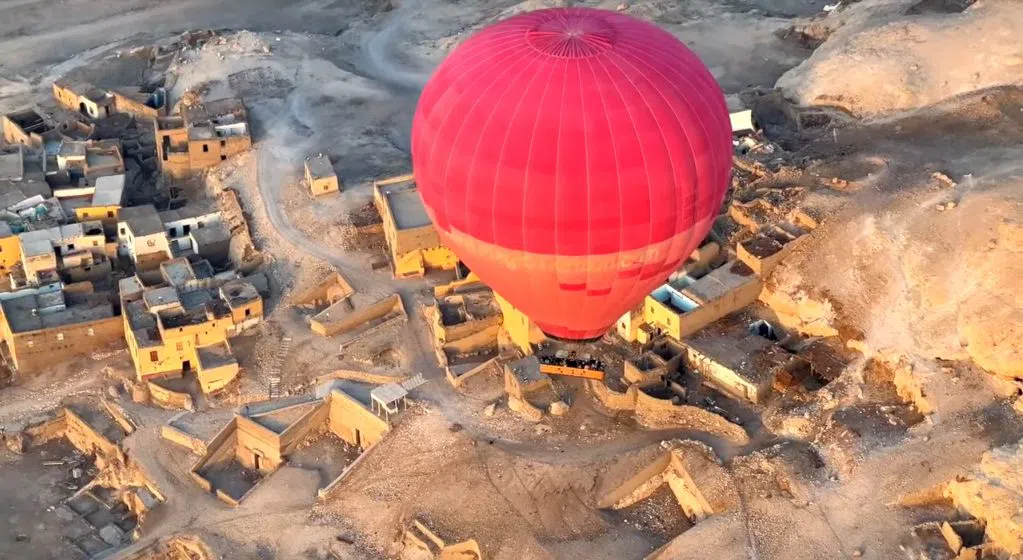
Before the sun clears the eastern hills, the burners fall silent and the balloon lifts off the West Bank floodplain with a stillness that feels almost unearned. Below you the alfalfa fields give way to bone-dry limestone, and the necropolis where New Kingdom pharaohs were buried for five centuries slides into view — the folded valleys of the royal tombs, the colonnaded terraces of Hatshepsut's temple, and, far off, two seated giants that have watched this plain crack and flood since the fourteenth century BCE. No temple tour reads the landscape the way twenty minutes of drifting air does.
What you are actually looking at
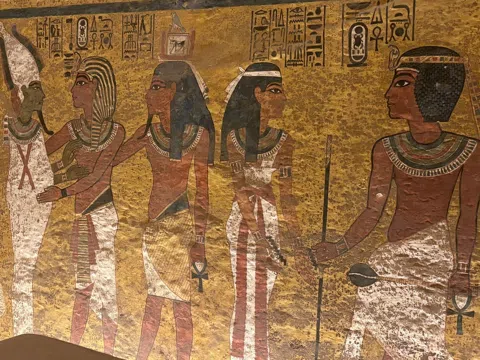
Luxor sits astride the Nile, and the river has always sorted the city into the living and the dead. The East Bank held the temples of the daily cult — the great pylons of Karnak, the avenue of sphinxes. The West Bank, where every balloon launches, was the land of the dead: the Valley of the Kings and its hidden rock-cut tombs, the mortuary temples strung along the desert edge, and the workers' village of Deir el-Medina tucked into a fold of the hills.
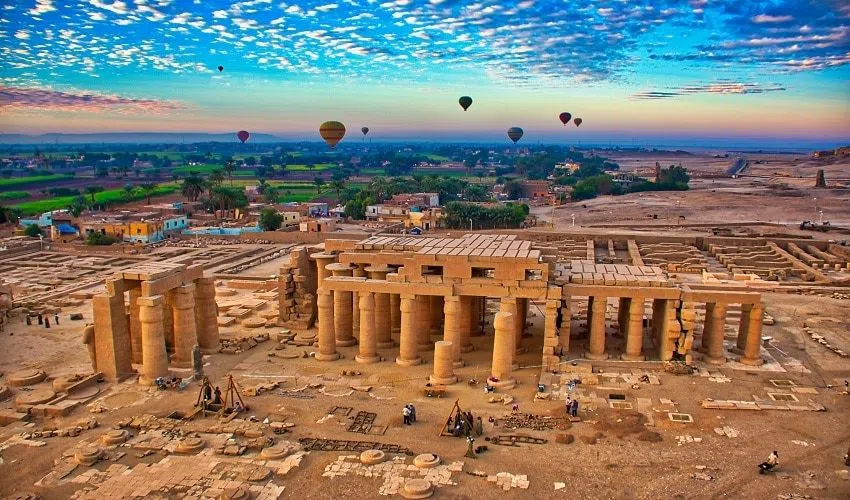
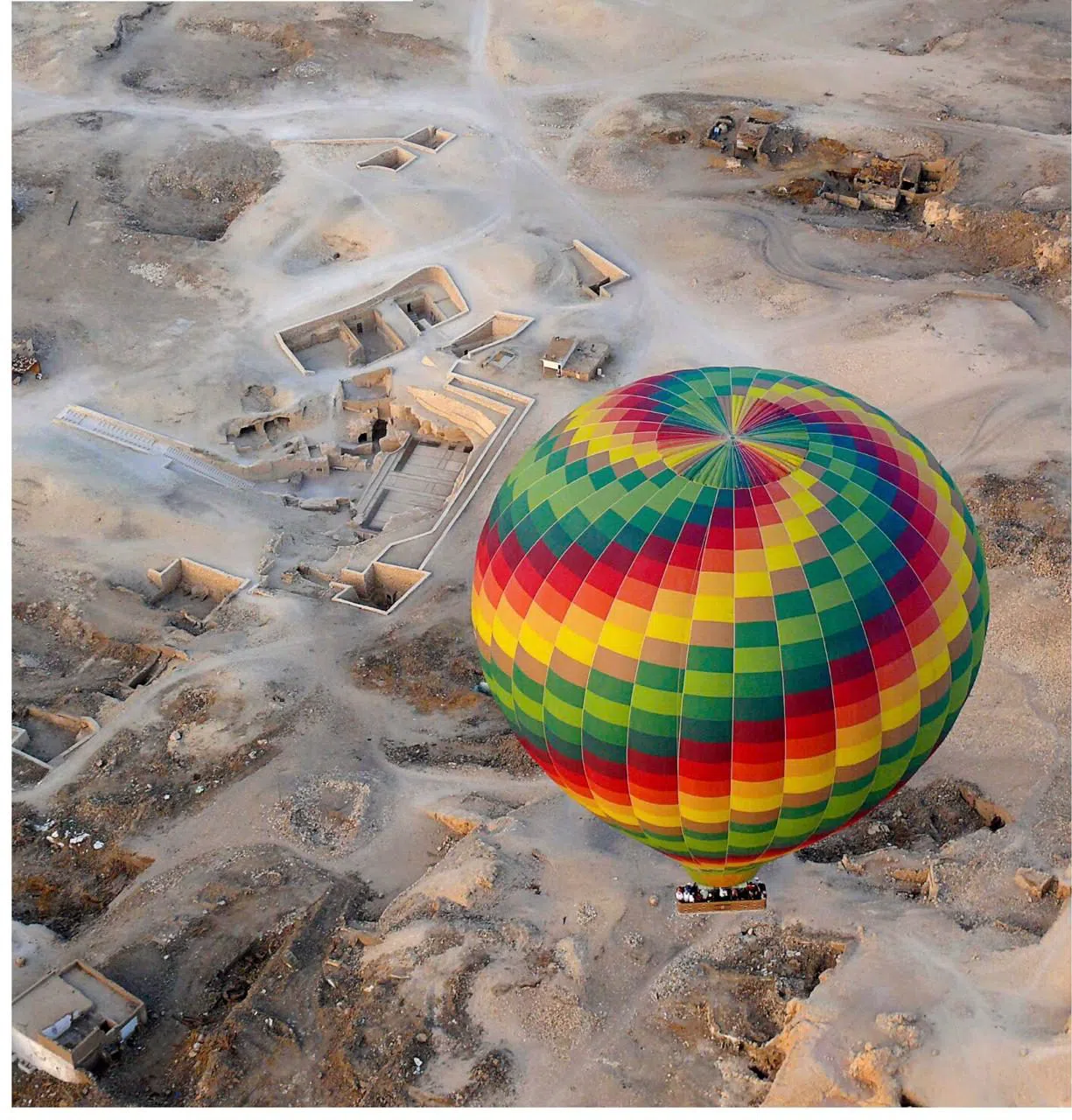
From the basket the geography finally makes sense. You can trace the causeway leading up to the mortuary temple of Hatshepsut at Deir el-Bahari, pick out the ruined bulk of the Ramesseum built for Ramesses II, and see the better-preserved walls of Medinet Habu to the south. The two weathered Colossi of Memnon — all that survives above ground of Amenhotep III's vast temple — sit like markers at the valley's mouth. What a ground tour shows you as separate stops, the dawn light stitches into one continuous funerary landscape. That single perspective, more than the novelty of flight, is the reason to go up.
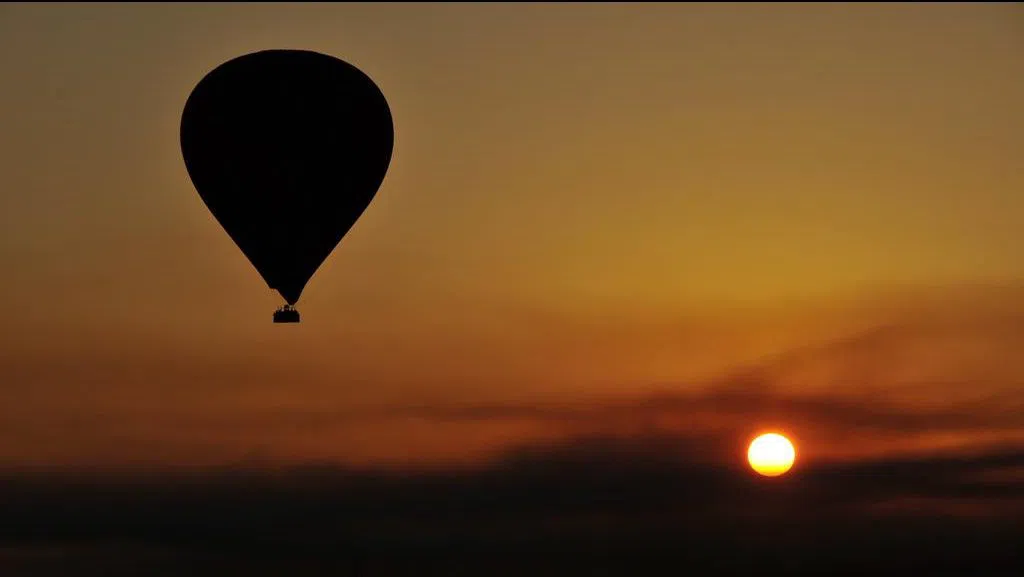
A word on timing and light: flights launch at first light, and the earliest baskets off the ground get the longest, softest low-angle sun across the tombs before the glare flattens everything by mid-morning. Every reputable operator runs by the wind, not the clock, so the exact launch site shifts day to day.
Plan your Luxor trip
Live prices from our booking partners.
Free cancellation on many rooms. We may earn a commission when you book.
The heritage operators
If you want the reassurance of a long track record, two names carry the most history.
Hod Hod Soliman Hot Air Balloons (West Bank launch) is Luxor's original — established in 1993, licensed by the Egyptian Civil Aviation Authority, annually inspected, and fond of pointing to a wall of international gold medals. It handles cruise-ship and coach groups at scale, running both shared and private baskets at roughly $100–130 per person. That volume is a double-edged thing: the operation is slick and dependable, but a shared Hod Hod basket on a busy morning is a full one, so this is a better fit for travellers who want a proven name than for couples chasing a quiet, private dawn.
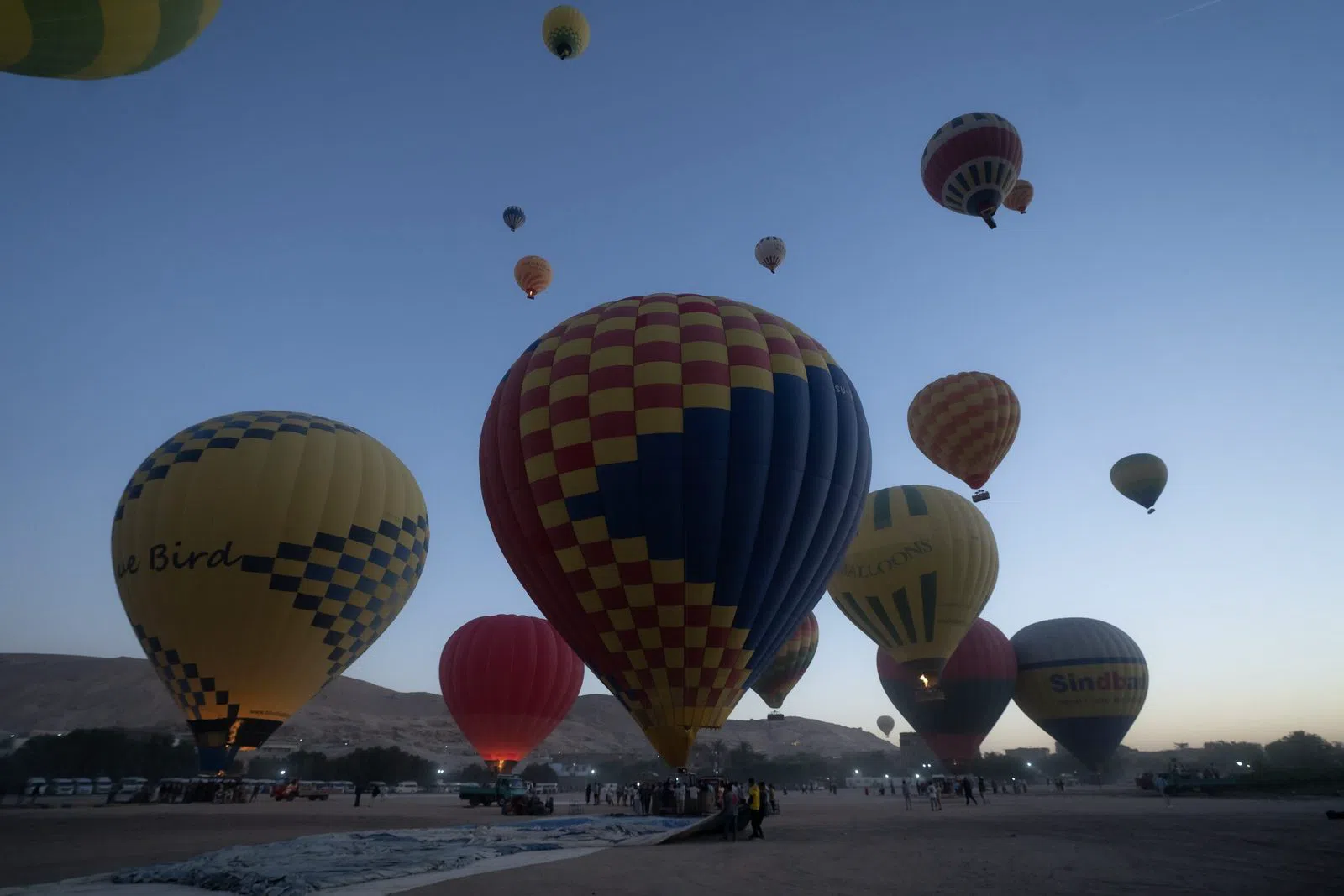
Sindbad Balloons (West Bank launch) is the other long-runner and probably the most-cited operator for Luxor sunrise flights, with a safety-first reputation to match. It is transparent about basket sizes, which matters more here than anywhere: the Standard basket holds up to 28 people, while the Comfort tier is deliberately capped at 20 for more elbow room and a clearer view over the rim. Pricing is tiered — €100 standard, €120 deluxe, €150 comfort — and private baskets are available on request. Sindbad is booking its 2026 season now. If you are weighing the standard against the comfort ticket, the €50 gap buys you eight fewer bodies and a materially better photographic vantage; for a once-in-a-trip flight, it is money well spent.
The big fleets and the most-booked flights
Several operators compete on scale and reliability — useful if you are booking late in a busy season, because a large fleet means a spare balloon when one is grounded for maintenance or wind.
Magic Horizon Hot Air Balloons (West Bank launch) runs the largest fleet in Egypt and holds a 4.5/5 rating across more than 361 TripAdvisor reviews, with a pilot known simply as 'Bob' turning up again and again in the glowing write-ups. Shared flights start from $135, and reviews mention baskets carrying as many as 32 — so temper expectations of intimacy on the group ticket. A private charter runs around $1,500 for your own basket. This is the operator to book when you want the best odds of actually flying on a fixed-date, tight-itinerary morning.
Sunrise Ballooning Luxor (West Bank launch) is another of the larger, reliably scheduled fleets, offering standard, deluxe and private tiers from roughly $80–120 per person on the shared flights, with a strong 2026 review presence. It is comfortable with groups without being the biggest name, which makes it a sensible middle path.
Luxor Hot Air Balloon (West Bank launch) has been flying since 1998 and markets its careful daily launch-site selection by wind — a genuine safety point rather than a slogan on this plain. Packages run from $129 per person across private, shared and larger-group options. Note that its published material was current through 2025 rather than freshly dated to 2026, so confirm the season's schedule when you book. It is a solid mid-market choice with a long operating history.
Going private: couples and small groups
Shared baskets are the norm and the value here, but a dawn over the necropolis is exactly the kind of occasion — a honeymoon, a milestone, a family that wants the rim to itself — where a private basket earns its premium.
King Tut Balloons (West Bank launch) is a good first stop for smaller parties. Alongside its shared flights it offers a dedicated private basket for your own group, issues a flight certificate on landing, and is gold-medal-rated with consistently high traveller scores, at roughly $80–130 per person. It runs twin slots — one before sunrise, one just after — which is worth understanding: the pre-sunrise launch gives you the drama of the sky changing colour beneath you, while the after-sunrise slot trades that for warmer, more even light on the ruins. Neither is wrong; it depends on whether you are shooting the sky or the stones.

Aero Hot Air Balloons (West Bank launch) is the straightforward pick for first-timers who want the logistics handled. It offers both shared and private/group packages with hotel transfers included, is ECAA-regulated, and publishes a current 2026 pricing page, at roughly $80–150 per person depending on package and season. The included transfer matters more than it sounds — you will be collected in the dark, and a bundled pickup removes the one piece of pre-dawn friction most likely to go wrong.
For larger private groups, remember that the heritage and big-fleet names above also charter whole baskets — Sindbad on request, Magic Horizon at around $1,500 — so it is worth pricing a private booking against them rather than assuming the smaller operators are always cheaper.
The value tier and the newer names
A cluster of operators competes on price. They can be excellent value, but this is the tier where you should verify licensing and basket size directly before you hand over a deposit.
SkyScape Balloon Luxor (West Bank launch) is the clear budget pick, with shared flights at roughly $50–100 per person — the spread reflects a deluxe sunrise slot versus a cheaper after-sunrise one — and 2026 TripAdvisor reviews on the board. It takes group bookings over WhatsApp. It is a newer operator, so treat it as keen-priced rather than premium, and confirm exactly which slot and basket you are buying.
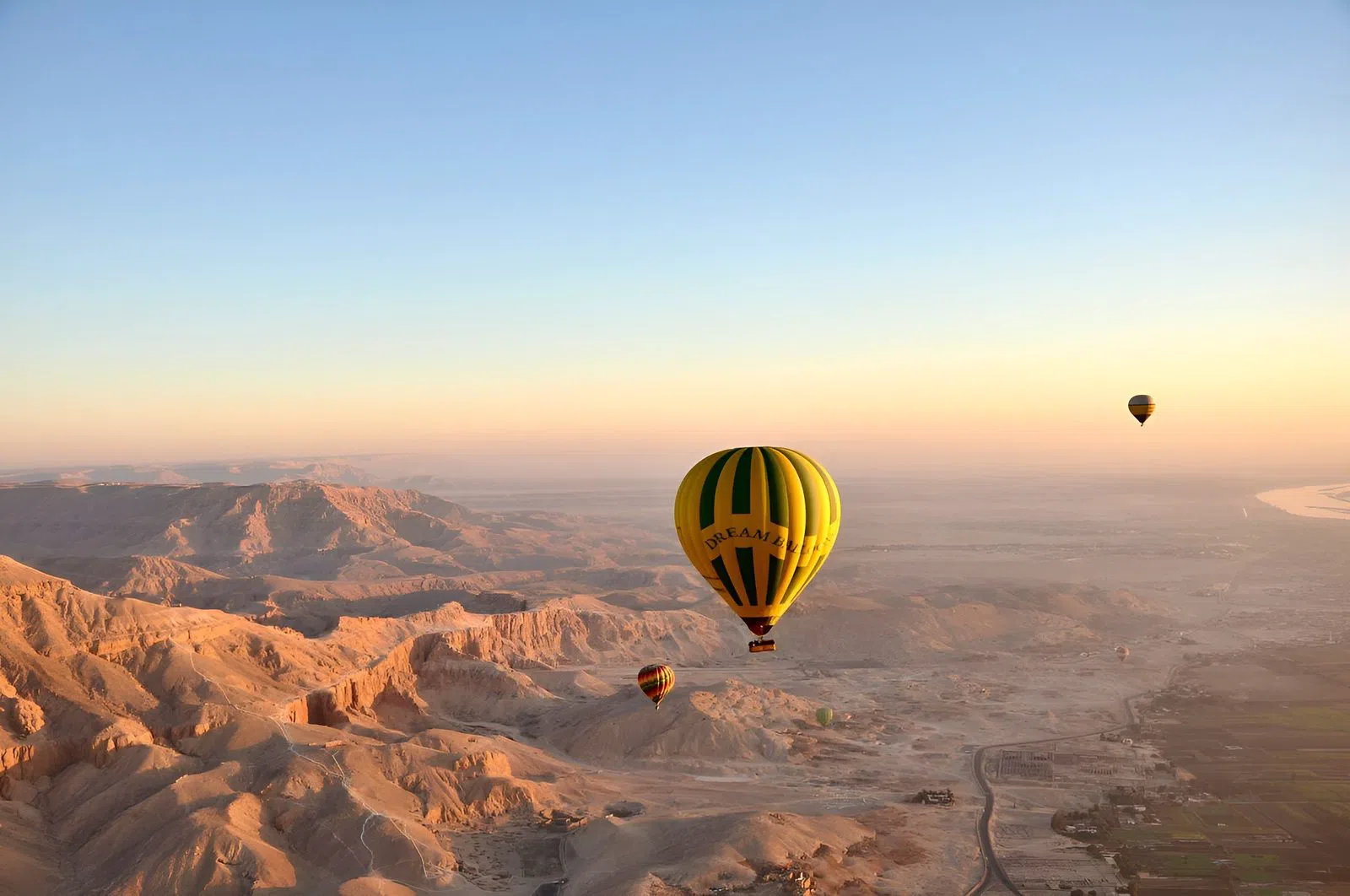
Dream Balloons (West Bank launch) is a long-runner by contrast, Civil-Aviation-licensed, with shared and private adventures at around $100 per person and a live 2026 TripAdvisor listing. The caveat is its own website looks dated, so confirm the current schedule directly before you build a morning around it.
Luxor Sky Balloon (West Bank launch) is a genuinely newer entrant surfacing in 2026 traveller reviews, running shared sunrise flights at roughly $80–120 per person with groups on request. Its footprint is smaller than the established fleets, so verify basket size and licensing with the operator before booking — not as a warning against it, but as the ordinary due diligence any new name deserves.
Safety, and how a dawn flight actually runs
Ballooning over Luxor is a licensed, regulated activity — the ECAA inspects operators annually, and reputable companies fly only when the wind allows, which is why launch sites move and flights are occasionally scrubbed at the last minute. A cancellation for weather is the system working, not failing; build a spare morning into your itinerary if the flight is a must-do.
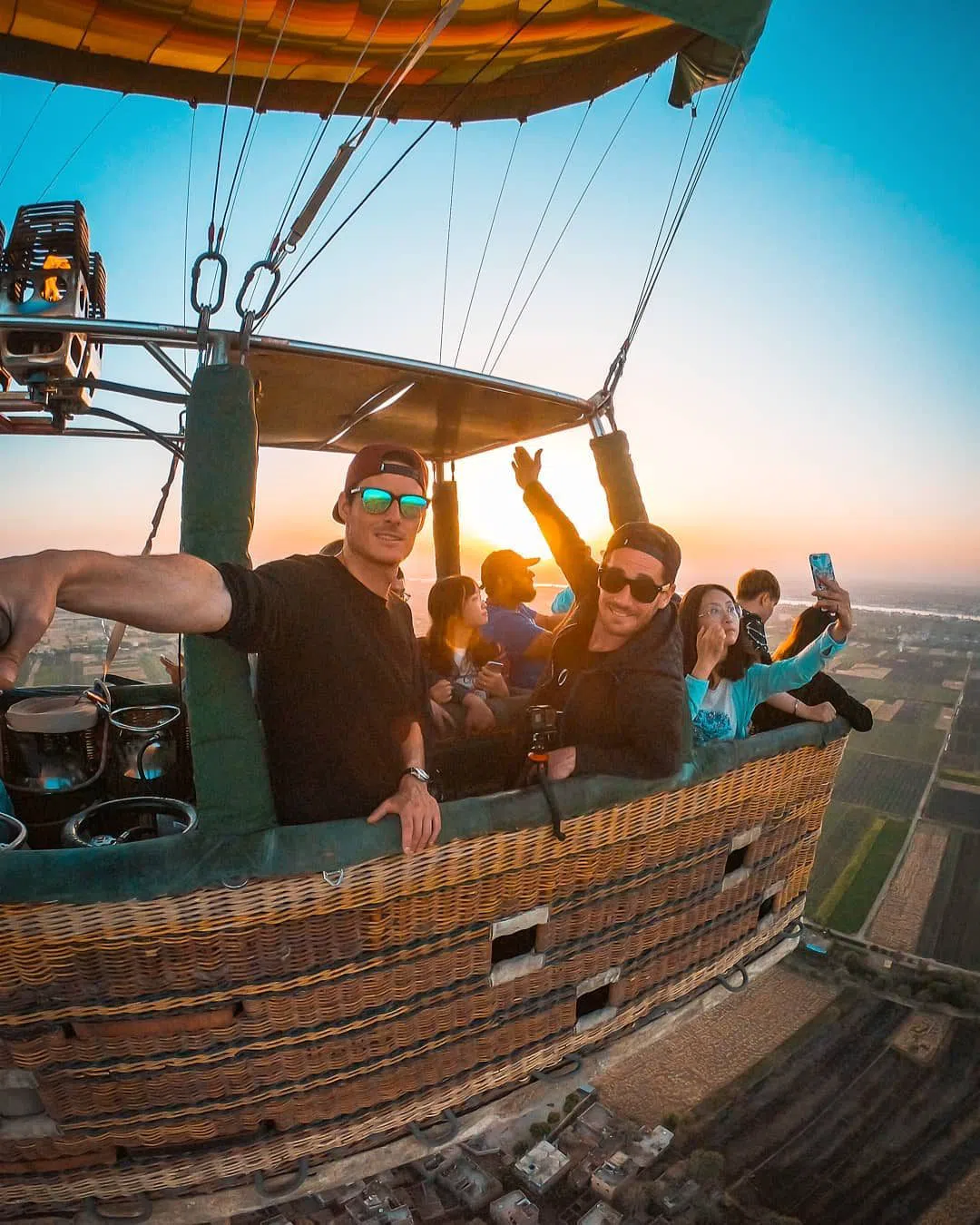
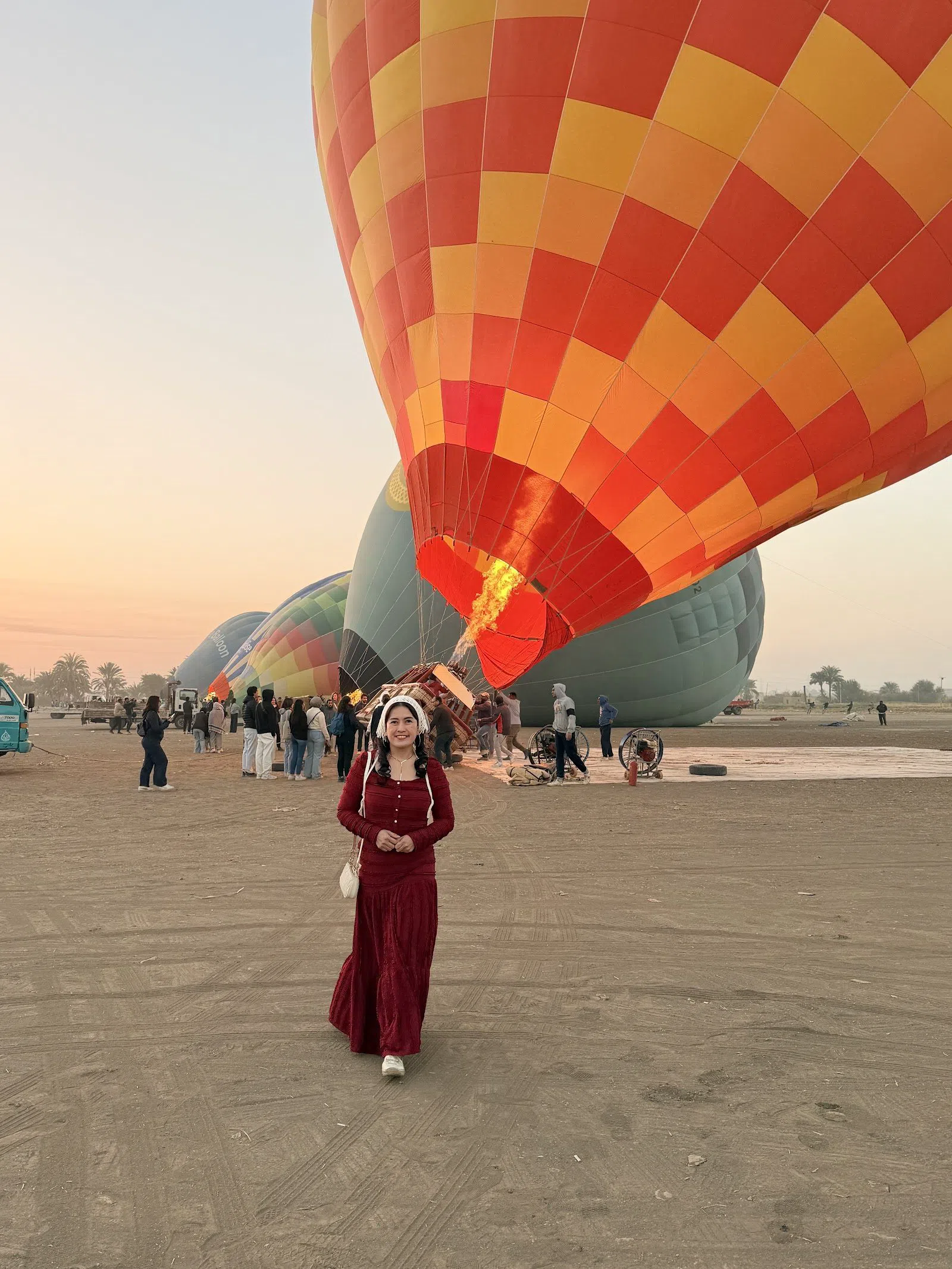
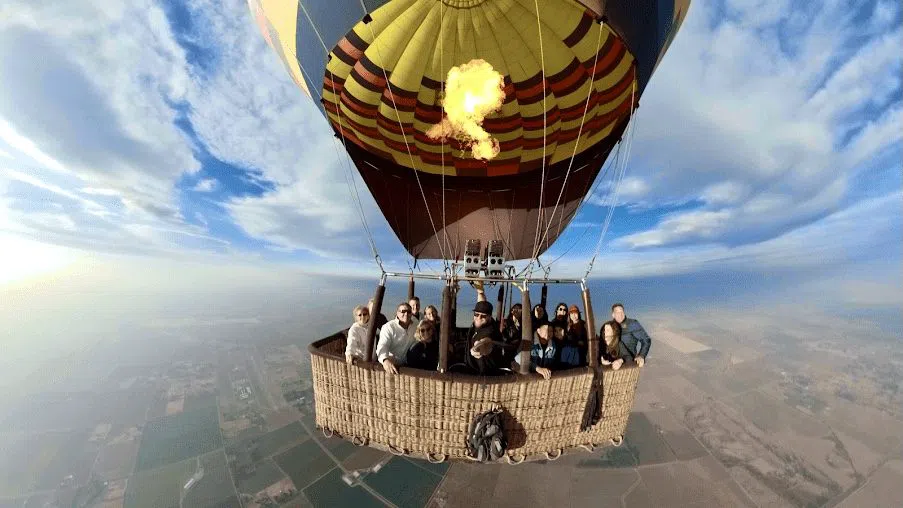
The rhythm is the same everywhere. You are collected from your hotel in the dark, ferried across or driven to the West Bank, and reach the launch field as the crew inflates the envelope with a roar of burners. Boarding a 20-to-30-person basket takes a few minutes; you climb over a waist-high wall into a compartment, and there are no seats — you stand for the whole flight, which typically runs a little under an hour in the air. It is safe and stable but demands reasonable mobility and is not suited to very young children or anyone who cannot stand comfortably for that stretch. Landings can be brisk; follow the pilot's brace instructions. Many operators, King Tut among them, hand out a flight certificate afterwards — a small ritual, but a nice one.
Practical notes
Getting there. The launches are on the West Bank; most flights include a hotel pickup in the pre-dawn dark, and some, like Aero, bundle the transfer explicitly. If yours does not, arrange your West Bank crossing the night before rather than scrambling for a taxi at 4am. Confirm the pickup time and place when you book, and give the operator your exact hotel.
Cash. Operators quote in euros or US dollars because that is how they bill visitors, and prices here run roughly €50 to €150 or $80 to $150 per person for a shared flight, with private baskets well above that. Carry enough of your booking currency to settle any balance and to tip the ground crew and pilot, who work in the cold before dawn. Egyptian pounds are useful for taxis and small spends around town, so keep a mix.
Timing. Flights go up at first light, so the earliest slots catch the best low sun on the tombs before the haze and glare build. Book at least a day or two ahead in high season — winter is peak — and leave a buffer day in case wind grounds your first attempt. Dawn is genuinely cold on the plain even when the day turns hot, so bring a layer.
Budget, honestly. The value tier (SkyScape, and the keener shared tickets elsewhere) gets you into the sky for the least outlay and can be excellent; the heritage and big-fleet names cost more but buy a longer track record and better odds of flying on a fixed date; and a private basket is a real premium reserved for occasions where the rim to yourself is the point. Whichever you choose, insist on knowing the basket size and confirm the operator is currently licensed and flying in 2026.
For where to stay within reach of a pre-dawn pickup, start with the Luxor hotel search; for temples, tombs and the rest of the West Bank on the ground, see the wider Luxor guide.
Before you go
How much does a hot-air balloon flight over Luxor cost in 2026?
Shared sunrise flights run roughly €50–150 or $80–150 per person depending on operator and tier — SkyScape sits at the budget end (~$50–100), while Sindbad's comfort ticket reaches €150. Private baskets cost well above that; Magic Horizon charters around $1,500.
What will I actually see from the balloon?
From the West Bank you look across the Valley of the Kings, the terraced temple of Hatshepsut at Deir el-Bahari, the Ramesseum, Medinet Habu and the Colossi of Memnon — the whole New Kingdom funerary landscape stitched together by the low dawn light.
Is it safe, and who should not fly?
Reputable Luxor operators are ECAA-licensed, annually inspected, and fly only when the wind allows, so weather cancellations happen. You stand for the roughly one-hour flight, so it suits anyone with reasonable mobility but not very young children or those who can't stand comfortably.
Which operator is best for a couple versus a group?
Groups are well served by the big shared fleets — Magic Horizon, Sunrise Ballooning Luxor, Hod Hod Soliman — whose baskets carry 20–32 people. Couples wanting space should look at Sindbad's capped 20-person Comfort tier or a private basket from King Tut or Aero.
How early do flights launch and when should I book?
Flights lift off at first light; the earliest slots get the softest sun on the tombs. Book a day or two ahead in high season and leave a spare morning in case wind grounds your first attempt. Dress for genuine cold before dawn.