The Luxor issue
Luxor Museum and the Slow Half of the East Bank
Karnak shuts while the sun is still high, but the museum reopens at five and Luxor Temple stays lit until nine. The hours in between are the ones to plan around.

By Hanne VermeerReading Luxor the way it was built
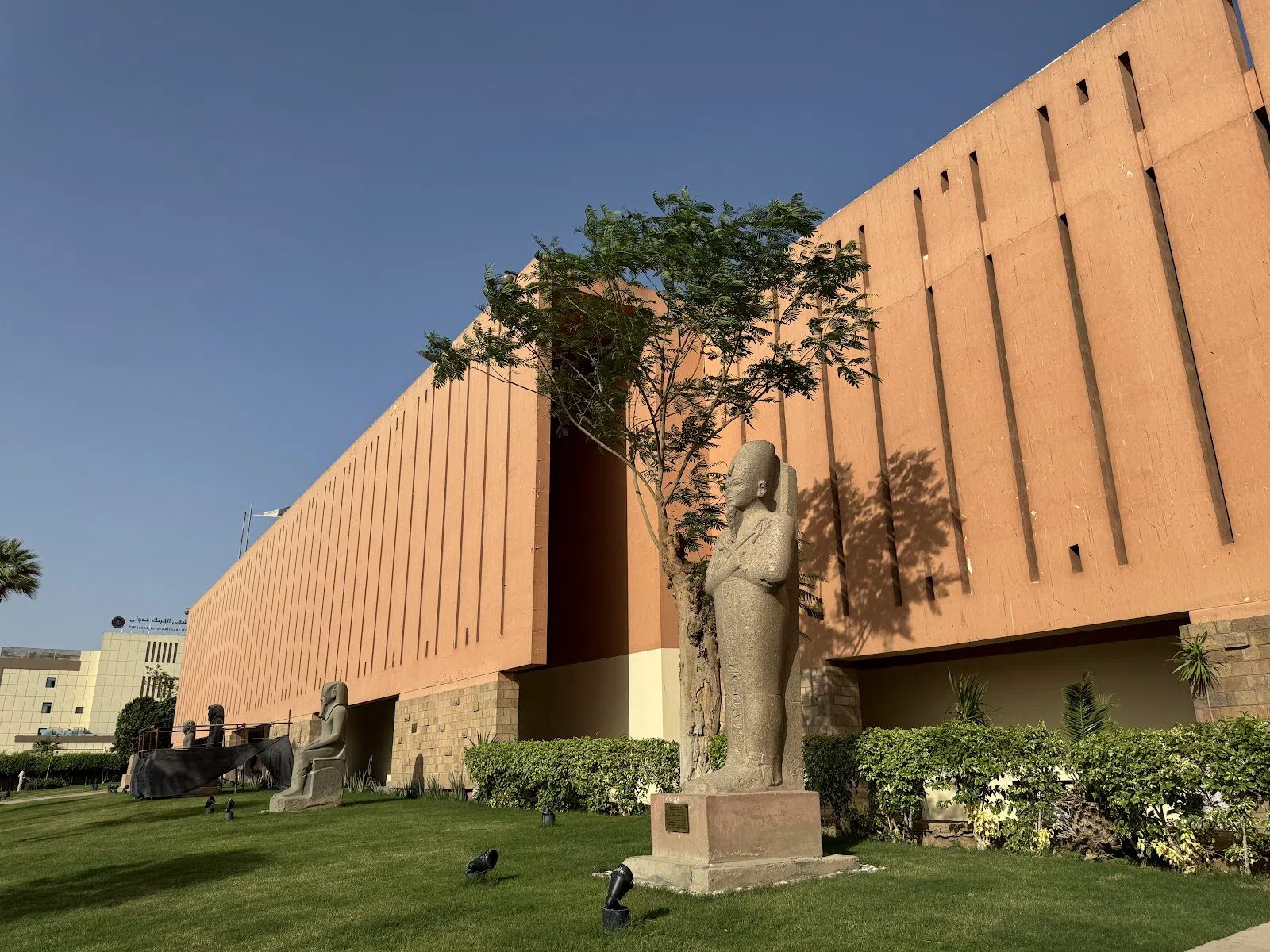
The Luxor Museum closes in the early afternoon and opens again at 17:00, and that split, an irritation on paper, turns out to be the most useful fact on the East Bank. Karnak has locked its gates by six at the latest, and the tombs across the river finish earlier still. What is left is a long, cooling stretch of late afternoon and evening that very little in Egypt stays open to fill, and here a museum, a lit temple, a market and the river all do.
The closing times that decide the day
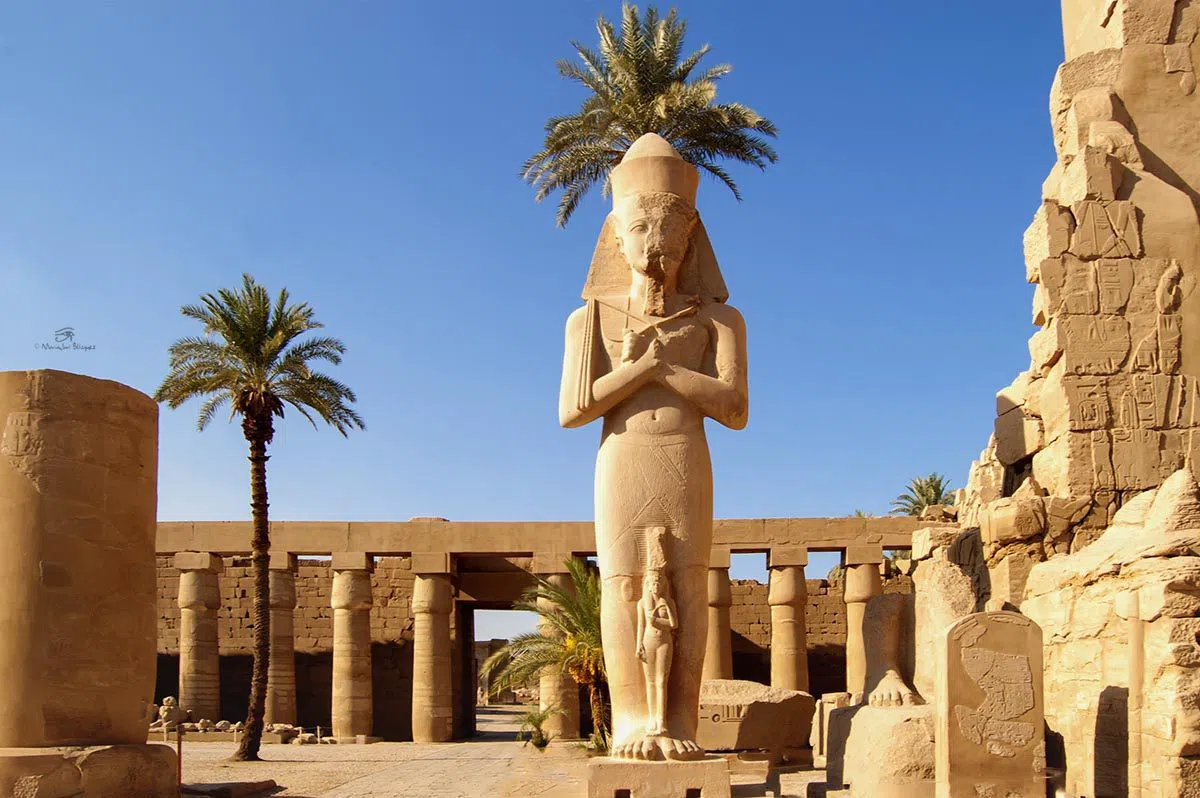
Plan backwards from the gates. Karnak Temple Complex (Precinct of Amun-Re) sits at the northern end of the East Bank, at the far end of the sphinx avenue, and it closes around 17:00 to 18:00 depending on the season. That is why so many Luxor days come apart: visitors treat Karnak as the flexible item, leave it until mid-afternoon, then discover they have spent the museum's open hours at a temple that will shut on them anyway. Entry is EGP 600 for a foreign adult and EGP 300 for a student, with the Open Air Museum inside a further EGP 60.
Karnak is also the one place in the city built to swallow a crowd. The hypostyle hall was designed to make a person feel small and it still does that whether there are twelve of you or two hundred; a coach party dissolves into it in a way it never will in a small room. If you are travelling in a group, spend your tolerance for crowds here and keep the tighter places for later. The sound and light show runs at 19:00 in English and again at 20:00, costs around EGP 300, and seats groups without fuss, though it commits the whole evening, which is the trade-off against everything below.
Plan your Luxor trip
Live prices from our booking partners.
Free cancellation on many rooms. We may earn a commission when you book.
The museum that reopens at five
Luxor Museum (Corniche el-Nil, roughly midway between the two great temples) anchors an unhurried afternoon, and it earns that by being small. It opens around 09:00, closes in the early afternoon, then reopens at 17:00 and runs into the evening. Tickets are EGP 400 for a foreign adult and EGP 200 for a student, paid by card. Phone photography is free.
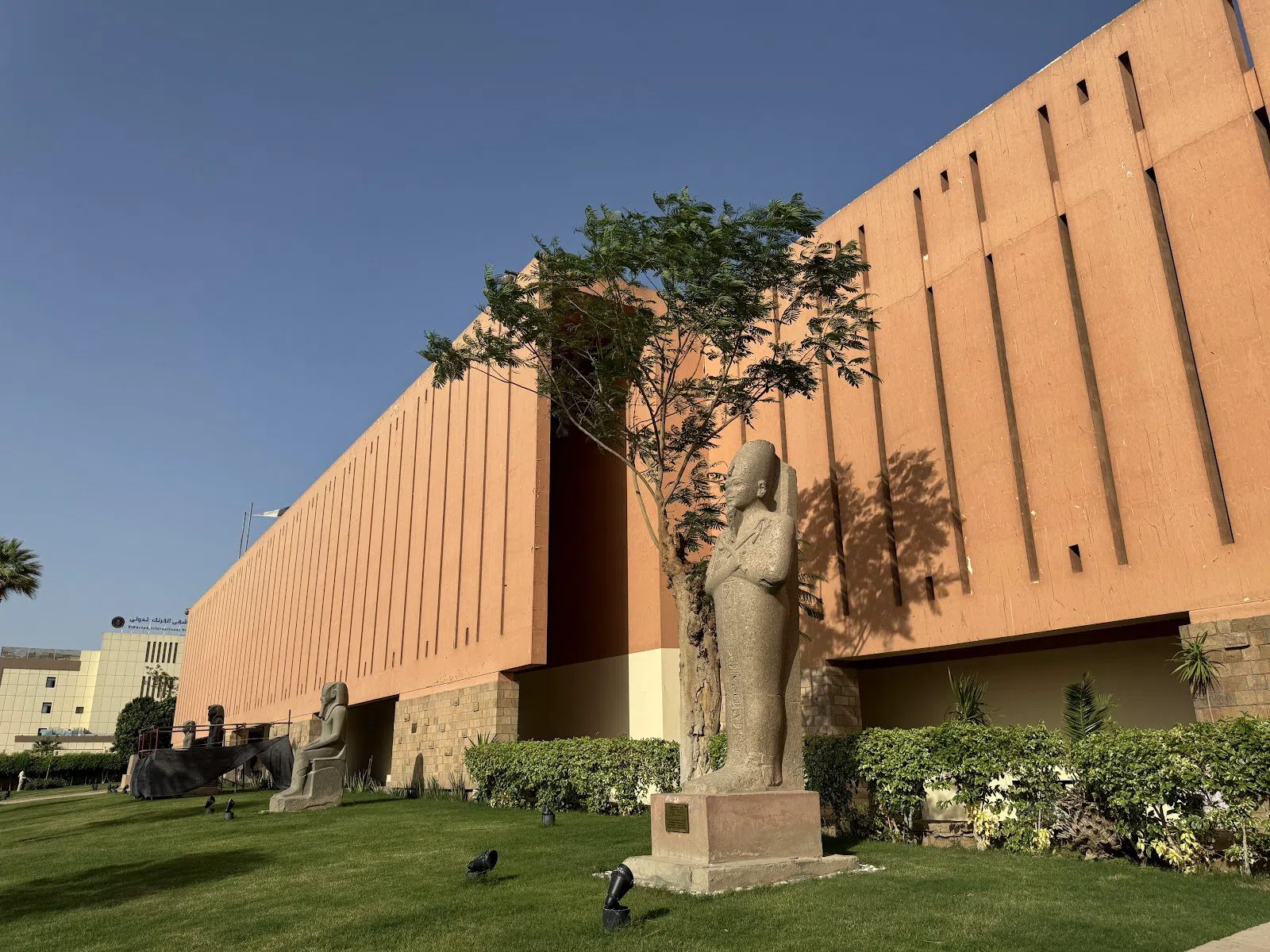
It is curated rather than exhaustive, which in Egypt is rarer than it sounds. Objects are given room, lit properly, and labelled for someone who has not read three books first. It is also air-conditioned, which after a morning at Karnak is not a trivial detail. Ninety minutes is an honest allowance, two hours if you read everything.
The Cache Hall reopened in April 2026 after a full rebuild, and it is the reason to choose the museum over a second temple. All 26 statues from the 1989 Luxor Temple find are shown together for the first time: sculptures buried under the temple court in antiquity, lifted out in one of the most complete discoveries the city has produced, and never until this year displayed as the single group they were found as. Seen after the temple itself, a few hundred metres along the Corniche, the connection does the explaining for you.
For groups it is straightforward. No booking is needed, and the halls are wide enough for a coach party. Most guides brief outside and then let people walk it at their own pace, which is the right way to use it. The evening session is the quietest slot, so a group arriving at 17:00 gets a better museum than one arriving at 11:00.
Thirty minutes on the Corniche
The Mummification Museum (Corniche el-Nil, a short walk north of Luxor Temple) is the natural second stop if the first has left you with appetite rather than exhaustion. It is EGP 220 for a foreign adult and EGP 110 for a student, and it is card only: there is no cash option at the desk, which catches people out. It keeps the same split day, mornings and then 17:00 to 21:00.
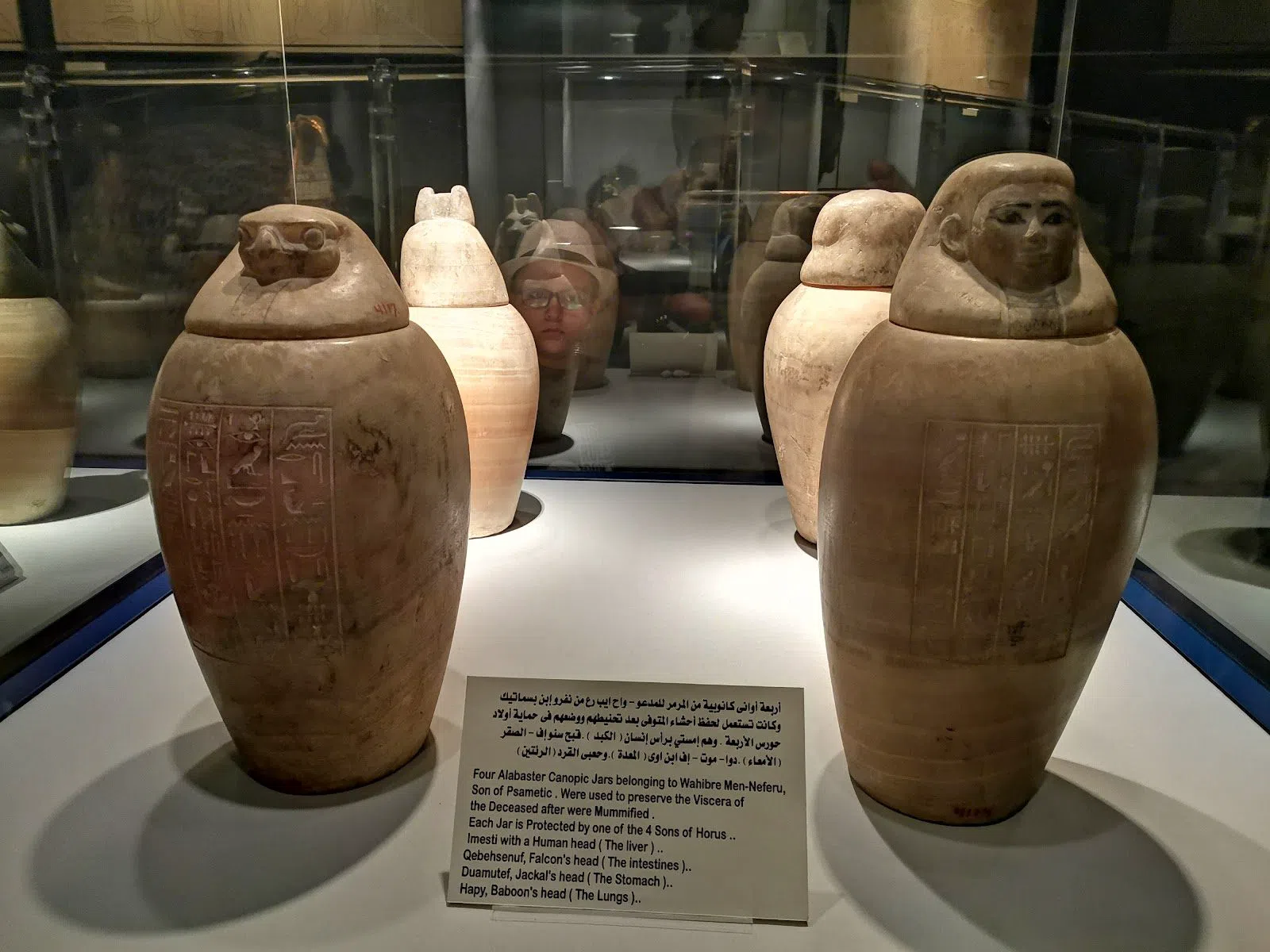
Thirty to forty minutes covers it. One subject, treated seriously: the tools, the resins, the order of operations, the animals. It is genuinely small, and a full coach group will fill it wall to wall, so split large parties into halves or aim for the 17:00 reopening when the rooms are at their emptiest. Couples and pairs can simply walk in.
Luxor Temple after the coaches have gone
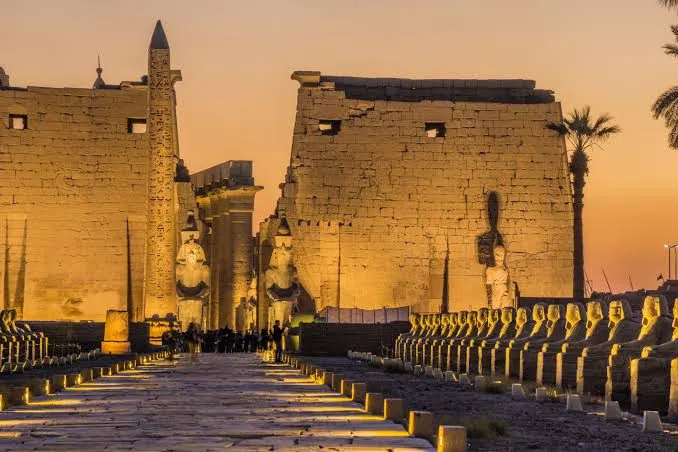
Luxor Temple (city centre, directly on the Corniche) is almost unique among Egyptian sites in staying open into the evening, to about 21:00 in winter and 20:00 in summer. That is the hinge the whole afternoon turns on: you can put the museums in the late slot and still see a major temple properly, rather than choosing between them. Tickets are EGP 500 for a foreign adult and EGP 250 for a student.
Go late. The morning coach wave has cleared by mid-afternoon, the heat has gone by six, and over the following hour the stone moves from gold to floodlit. The processional colonnade is wide enough that even a busy evening never feels like a queue, which is also why groups work here at any hour.
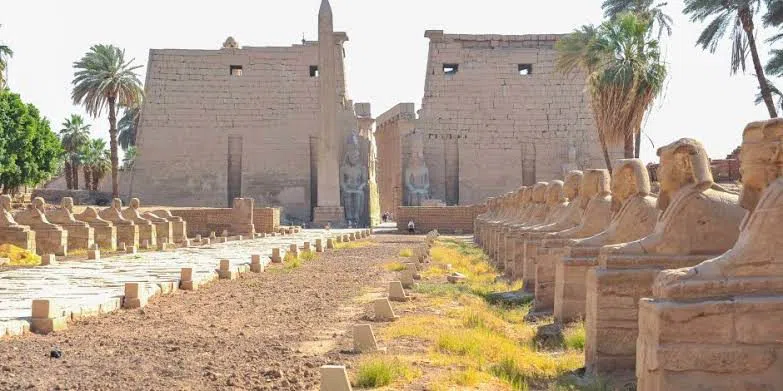
From the temple's northern end, the Avenue of the Sphinxes (Kebash Road) runs 2.7 kilometres to Karnak. It reopened to the public in 2021 after a long restoration, and there is no separate fee if you hold a Luxor Temple or Karnak ticket. Do not attempt the whole thing in the heat, and do not let anyone sell you the idea of walking it as a transfer between the two sites. Walk the first few hundred metres from the Luxor Temple end at dusk, look back at the pylon, and turn round. It is the best free half-hour in the city, and most groups sensibly do exactly this from one end or the other.
An hour when nobody can face another pylon
El-Souk (Sharia el-Souk, Luxor Souq) is five to ten minutes' walk from Luxor Temple, free to enter, and honest about what it is. The first covered stretch is aimed squarely at visitors: scarves, alabaster, papyrus, and a steady patter. Keep walking north and it turns into a working fruit, vegetable and spice market where locals shop and nobody has anything in particular to sell you. That northern end is the better hour and the calmer one. Groups are fine, but the tourist section is tight, so string out rather than clump.
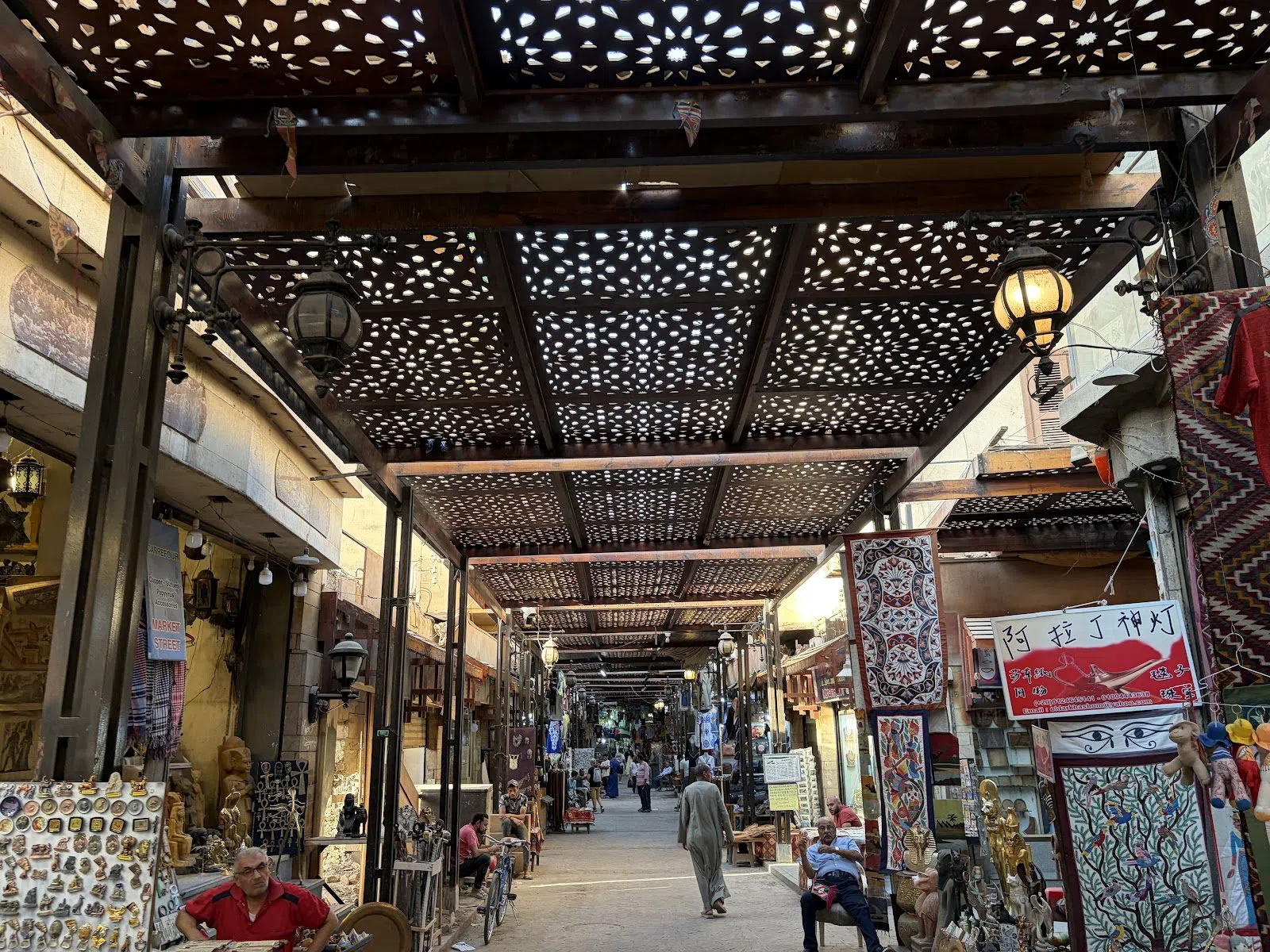
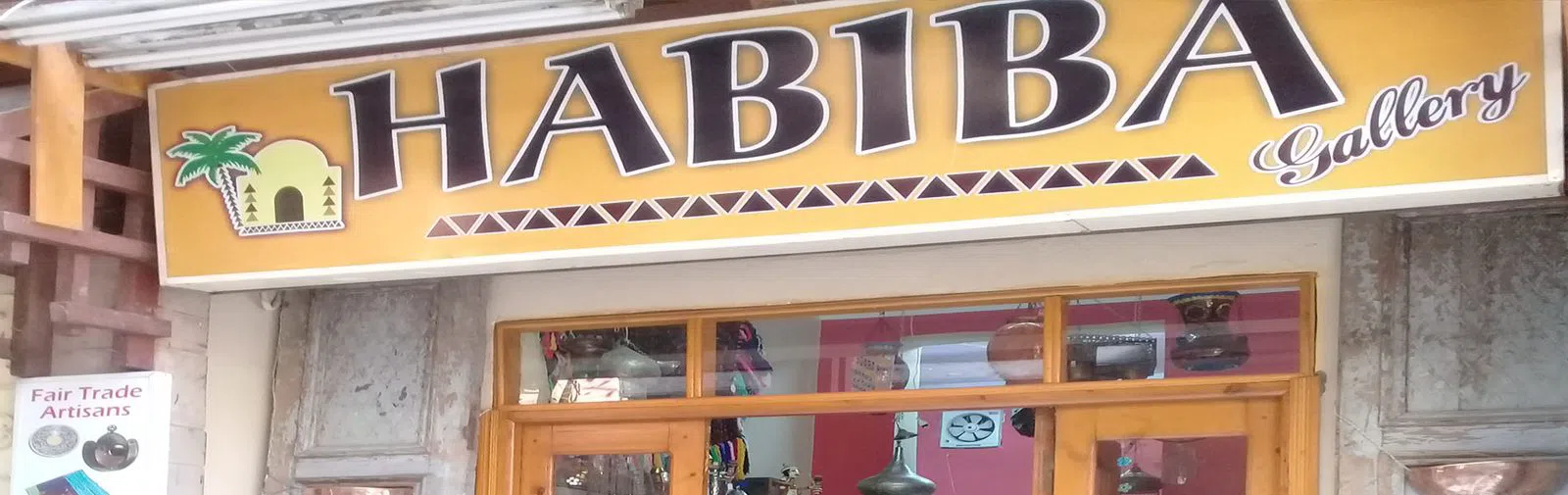
Haggling is expected and fixed prices are rare, which some people enjoy and others find exhausting. If you are in the second category, Habiba Gallery (central Luxor) solves it. Linda Wheeler, a long-time Luxor resident, runs it and buys directly from craftspeople, and everything carries a fixed price, roughly EGP 200 to 3,000 depending on the piece. There is no hard sell and no commission tout waiting outside. It is one small room, open daily from about 10:00 to 22:00, so groups need to stagger; two or three at a time is the comfortable number.
Eating around a split day
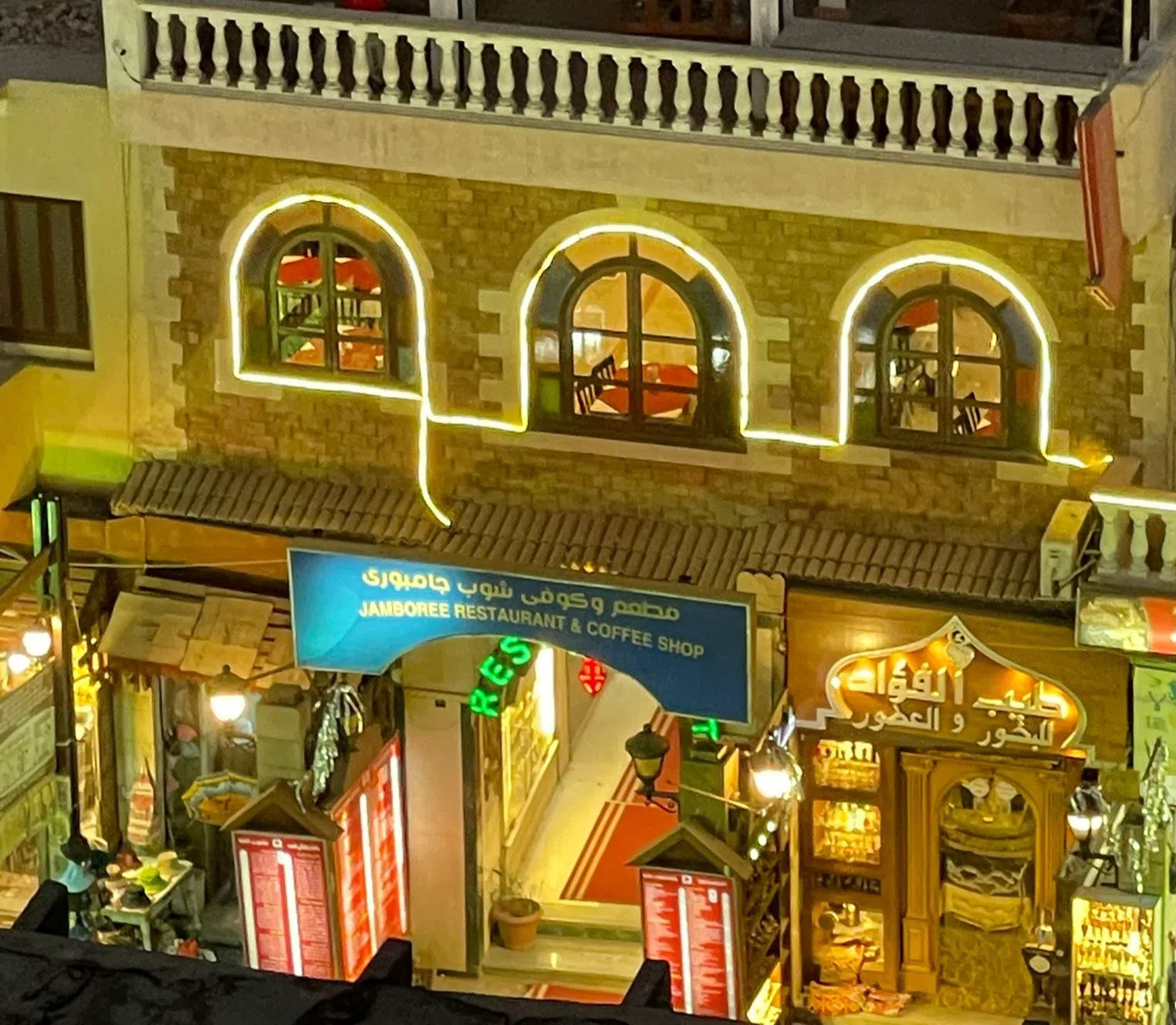
Luxor's awkward hour is mid-afternoon, when a lot of kitchens close between lunch and dinner. Jamboree Restaurant (upstairs, inside the souq) is the practical answer: open roughly 11:00 to 23:00, homely Egyptian cooking, big portions, mains around EGP 100 to 250. You eat inside the market rather than beside it, which is a different experience from the Corniche cafés. Small groups are fine upstairs, but tell them in advance if you are more than six.
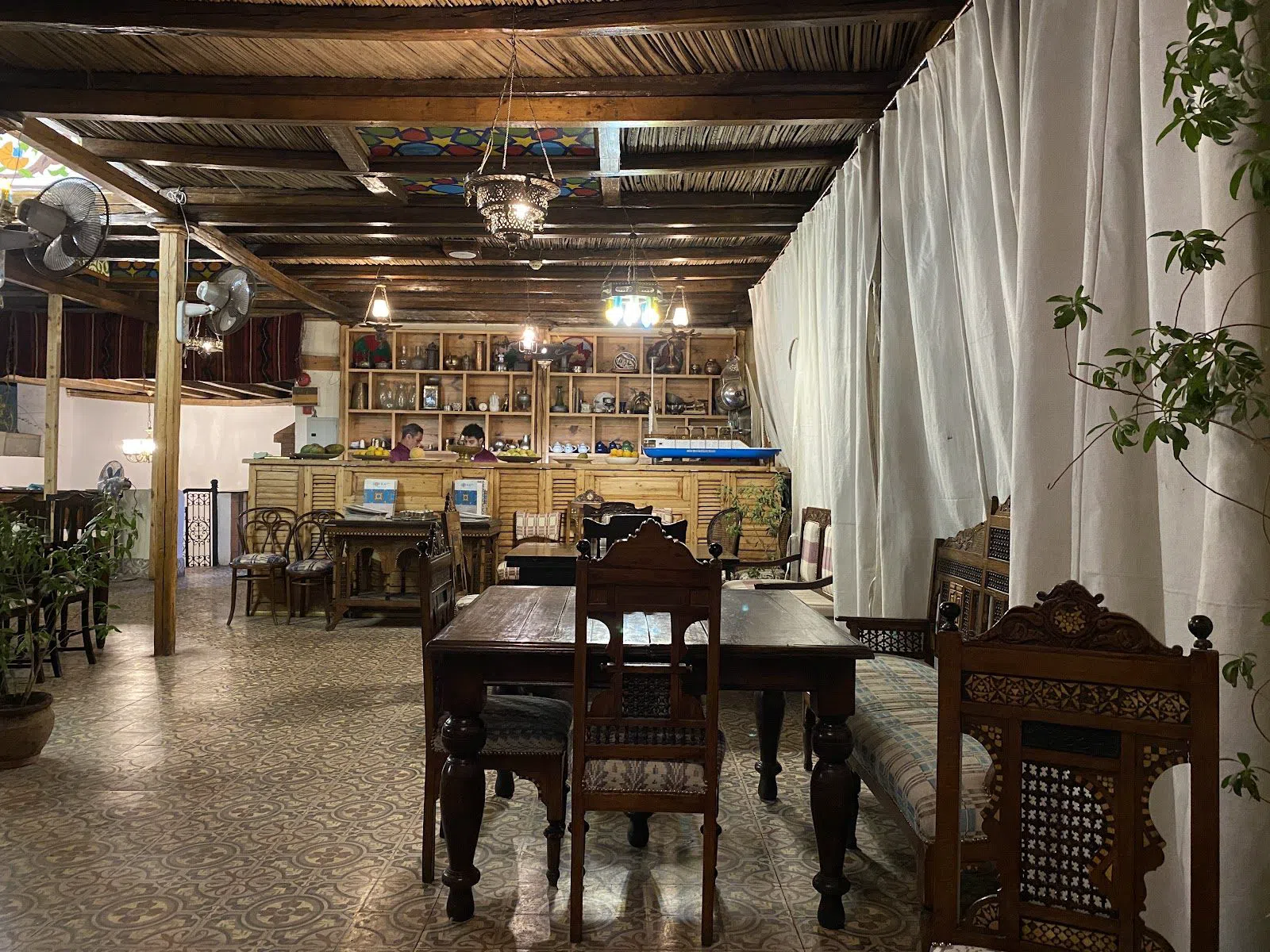
For the proper evening meal, Sofra Restaurant & Café (Manshiya, set back in the residential streets) is the default and deserves to be. Mezze, tagines, molokhia, no alcohol, mains roughly EGP 150 to 400, open from late morning to around midnight. Being away from the temple gates is the point: it is a destination rather than a convenience. It takes groups and handles them well, with the roof as the group space, but evening tables need booking several days ahead.
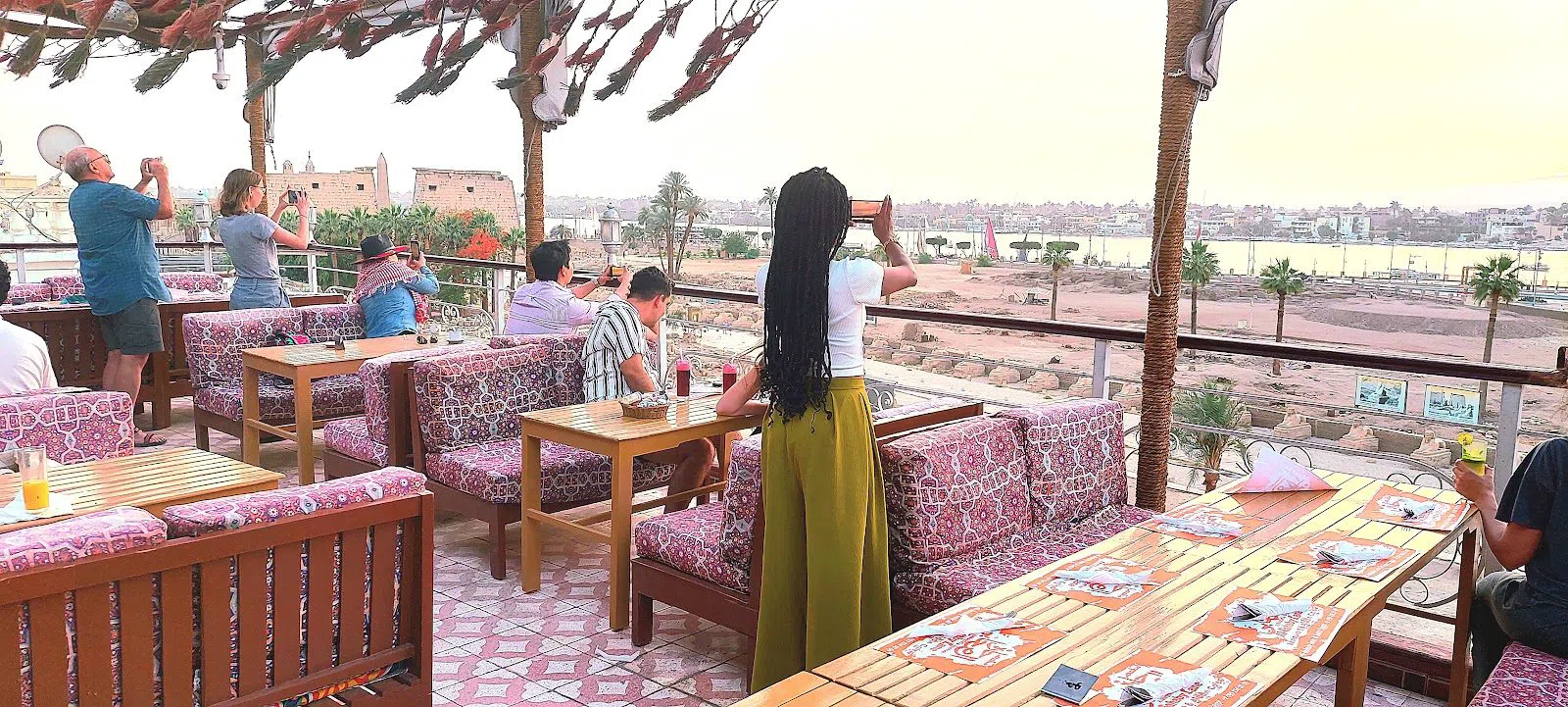
Al-Sahaby Lane Restaurant (Nefertiti Hotel rooftop, two minutes from the Luxor Temple gate) is the cheapest way to see the temple lights properly, a drink up here rather than a second ticket. Mains run about EGP 150 to 350, tea or juice EGP 40 to 80. The lane takes its name from the family who opened the restaurant in the 1920s. The roof is modest: small groups yes, coach parties no, and sunset tables want reserving.
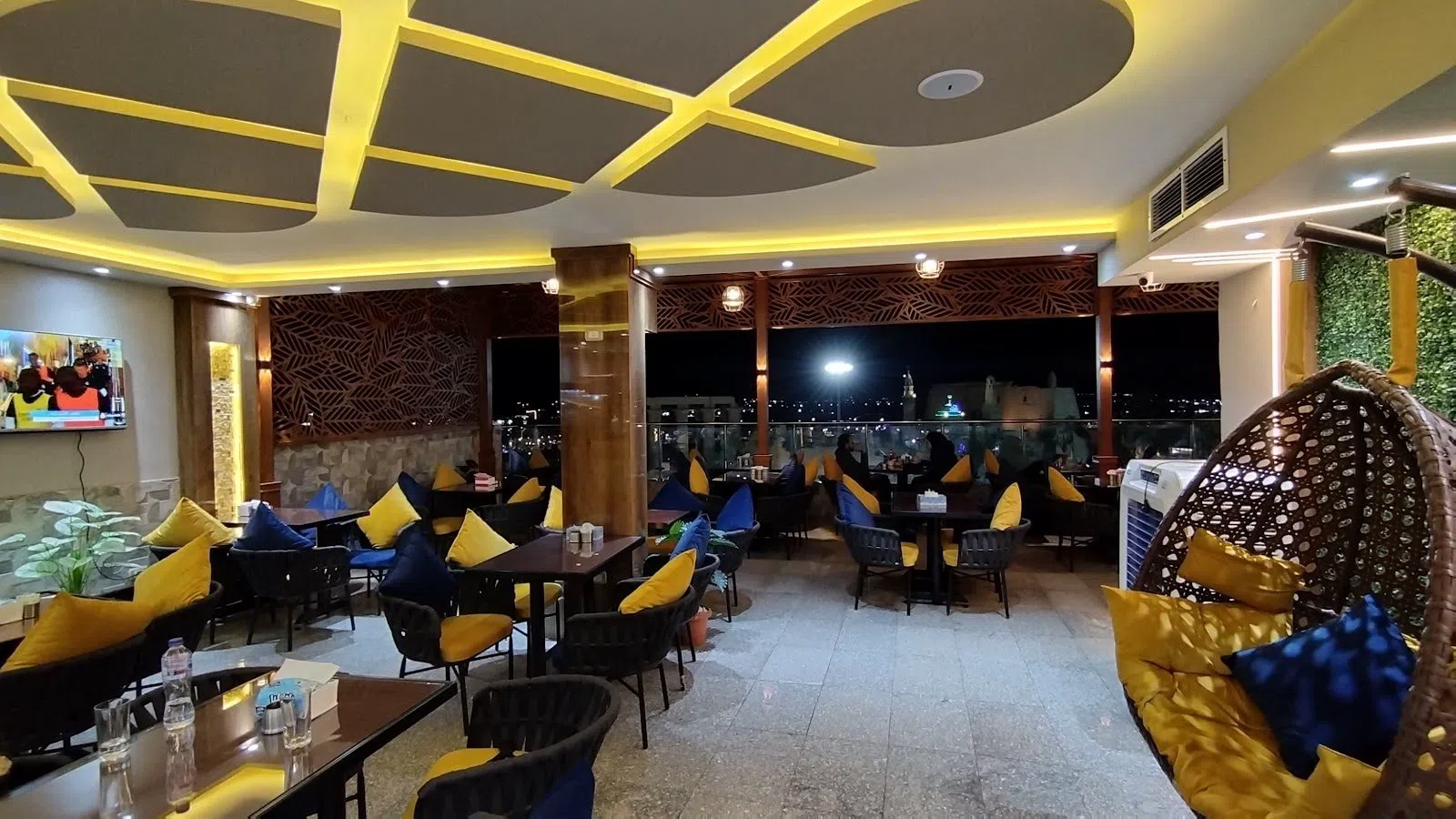
Aboudi Coffee Break (Corniche el-Nil, above the bookshop) has the best overlook of Luxor Temple in the city for the price of a drink, EGP 50 to 120, with light plates EGP 100 to 250. The bookshop beneath it has been selling Egyptology titles for generations, which is a reasonable excuse to arrive early. It stays open through the afternoon and late, unlike most temple-side cafés, so it covers the dead hour as well as the evening. Walk in; there is no booking culture and no dress code.
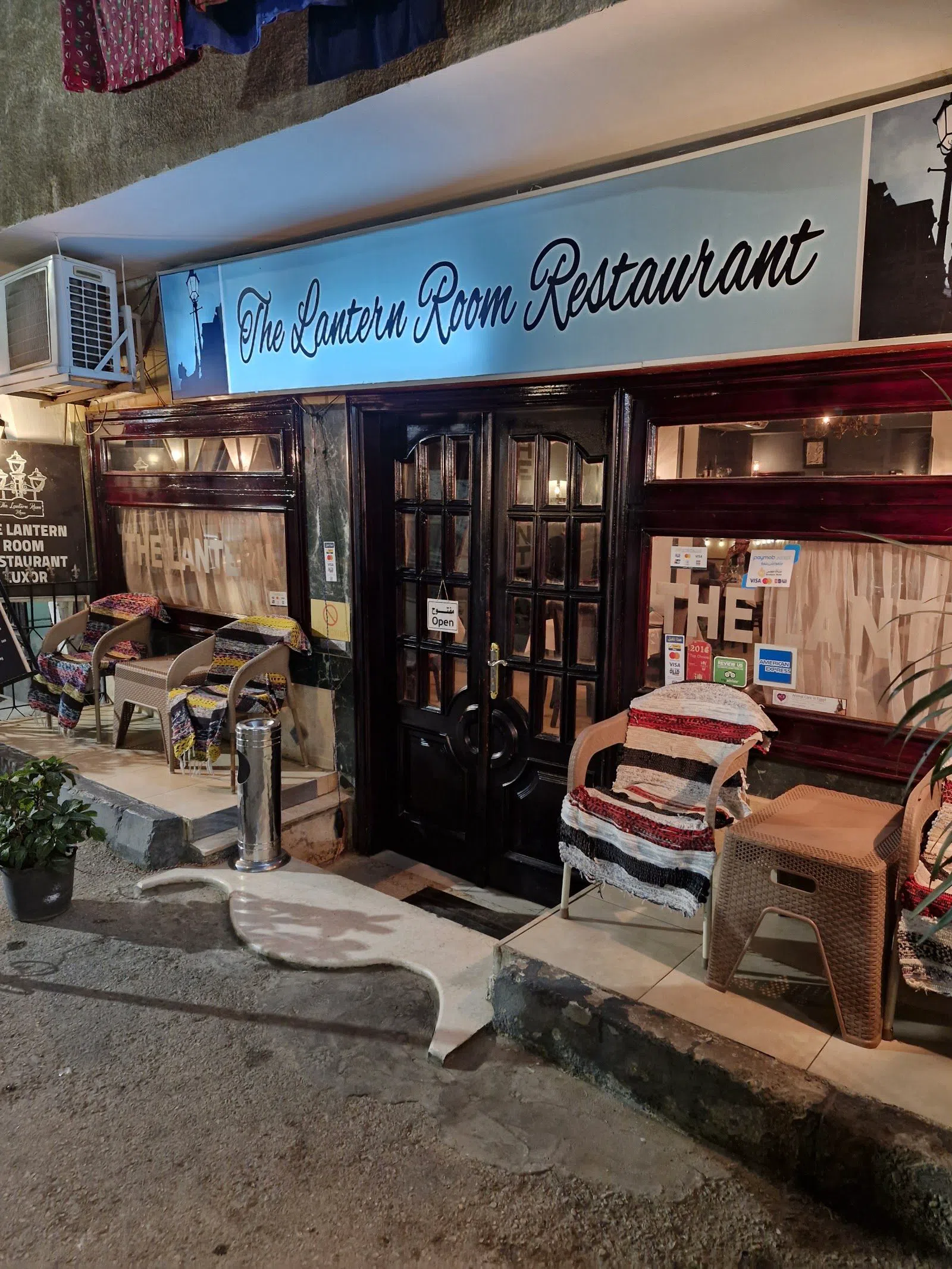
The Lantern Room Restaurant (a few streets back from the Corniche) is a long-running Egyptian-and-English kitchen open from early afternoon to about 22:30, mains roughly EGP 150 to 350. It is genuinely tiny, six to eight people maximum, and only with a phone call ahead. Capacity, not closure, is the risk here, so confirm on the day before sending anyone across town.
The same afternoon, from the water
If the party has walked enough, move the afternoon onto the Nile. A sunset felucca to Banana Island from the Luxor Corniche costs roughly EGP 400 to 800 an hour for a private boat, or around EGP 900 to 1,800 per person for an organised Banana Island trip with the landing and mint tea included. Two hours from the Corniche jetties is the standard shape, with the wind doing the work; without the island, an hour out and back at sunset is enough. Whole-boat hire suits six to ten. Agree the price, the destination and the return time before you cast off, because every dispute on the river starts with one of those three being left vague.
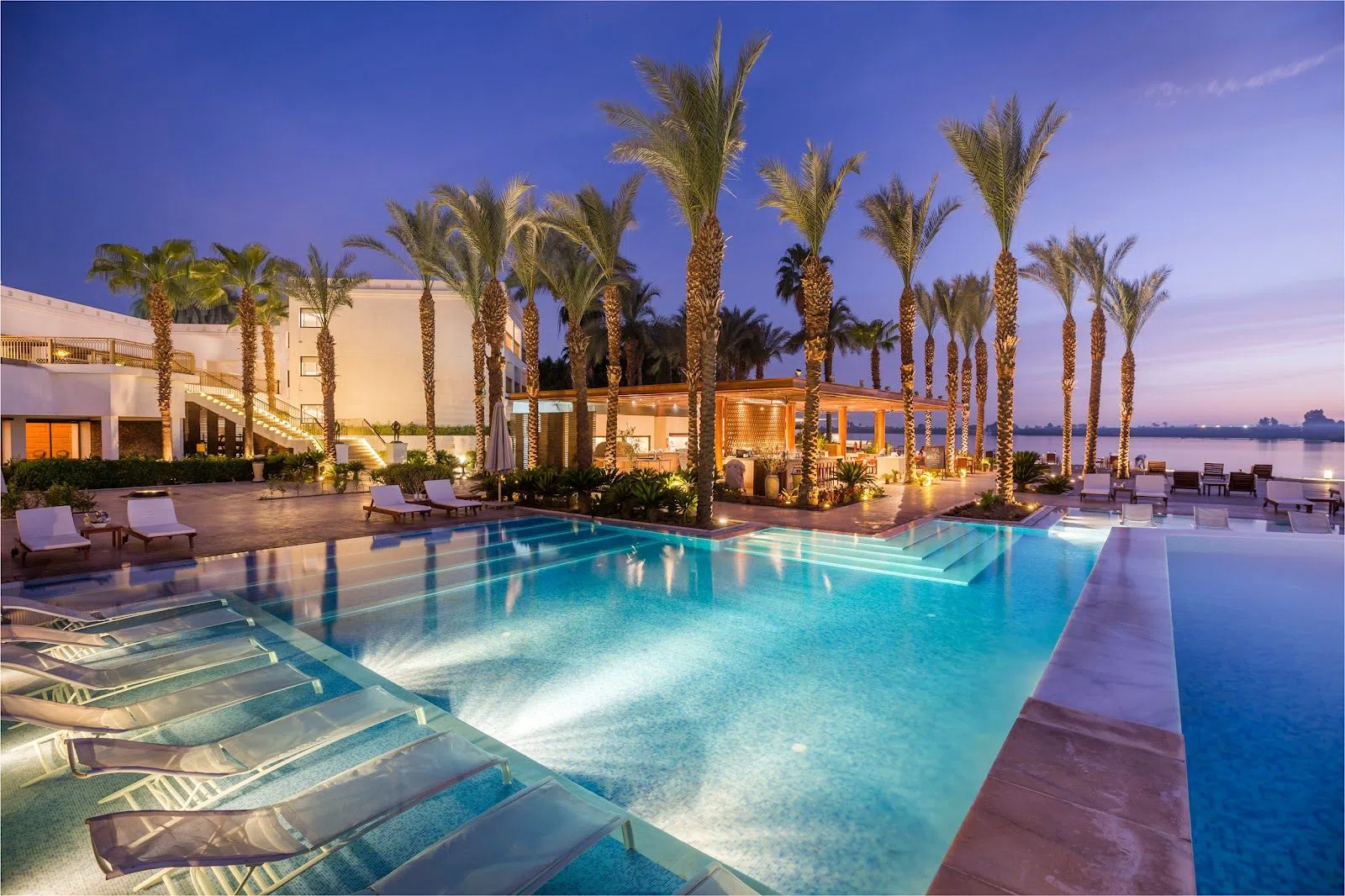
Tea on the Winter Palace terrace is off the table: that hotel closed in early 2026 for a full restoration and is not due back until 2027 as the Mandarin Oriental Winter Palace. In the meantime the Hilton Luxor Resort & Spa (on the Nile, north of the centre) sells day passes and day-use rooms to non-residents at roughly EGP 1,200 to 2,500 per person depending on season and inclusions, with a shuttle into central Luxor. That is expensive next to a felucca and cheap next to a wasted afternoon, particularly with children. Groups are accepted. If you would rather be based on this side of the river for the whole trip, the Luxor hotel search covers the Corniche and the quieter streets behind it.
Getting around, paying and timing it
Distances in the centre are short. Luxor Temple, the Luxor Museum, the Mummification Museum and the souq are all walkable along or just off the Corniche; Karnak and the Hilton are a taxi or caleche ride. Agree any fare before you get in, in Egyptian pounds and out loud, and expect a caleche driver to suggest a detour to a shop; a firm no is enough.
Carry cash for the souq, the feluccas, the cafés and the taxis, and expect the opposite at the museums: the Luxor Museum takes card, and the Mummification Museum is card only with no cash accepted at all. Prices here are in Egyptian pounds because that is what you will be asked for at the desk.
Timed as one block: Karnak before 15:00 or not at all; the souq, a gallery or a cold drink through the dead hour; the Luxor Museum at 17:00; Luxor Temple lit from about 19:00; dinner after 20:00. Tickets for one foreign adult across the museum, the temple and the Mummification Museum come to EGP 1,120, and students pay exactly half at every site named here on production of a card. Add EGP 200 to 500 for food and a drink, and the felucca or the day pass on top only if you want them.
For the West Bank, the seasons and the rest of the city, the Luxor guide has the wider picture.
Before you go
What time does the Luxor Museum reopen in the afternoon?
It runs a split day: roughly 09:00 to early afternoon, then it reopens at 17:00 and stays open into the evening. The evening session is the quieter of the two, so it suits groups, and anyone who wants the Cache Hall to themselves.
Can I do Karnak and the Luxor Museum on the same day?
Yes, but only in that order. Karnak closes around 17:00 to 18:00, so it has to be a morning or early-afternoon visit; the museum then picks up at 17:00 and Luxor Temple stays open to about 21:00 in winter and 20:00 in summer. Reversing the order is what goes wrong on most Luxor days.
Do I need cash for Luxor's museums?
No, and at one of them cash is no use at all. The Mummification Museum takes cards only, and the Luxor Museum takes cards too. Keep Egyptian pounds for the souq, taxis, cafés and feluccas.
How much does an unhurried East Bank afternoon cost?
Tickets for one foreign adult come to EGP 1,120 across the Luxor Museum (EGP 400), Luxor Temple (EGP 500) and the Mummification Museum (EGP 220). Add roughly EGP 200 to 500 for food and a drink. Students pay half at every site, and a private felucca adds EGP 400 to 800 an hour.
Is tea on the Winter Palace terrace still possible?
No. The hotel closed in early 2026 for a full restoration and is not expected to reopen until 2027 as the Mandarin Oriental Winter Palace. For a Nile-front afternoon with a pool, the Hilton Luxor Resort & Spa sells day passes to non-residents at about EGP 1,200 to 2,500 per person.