The Luxor issue
Getting Around Luxor Without Losing Half the Day
What the ferry, the tuk-tuk, a hired car and the sleeper train actually cost, so your Luxor mornings go on the tombs instead of haggling on the ramp.

By Hanne VermeerReading Luxor the way it was built
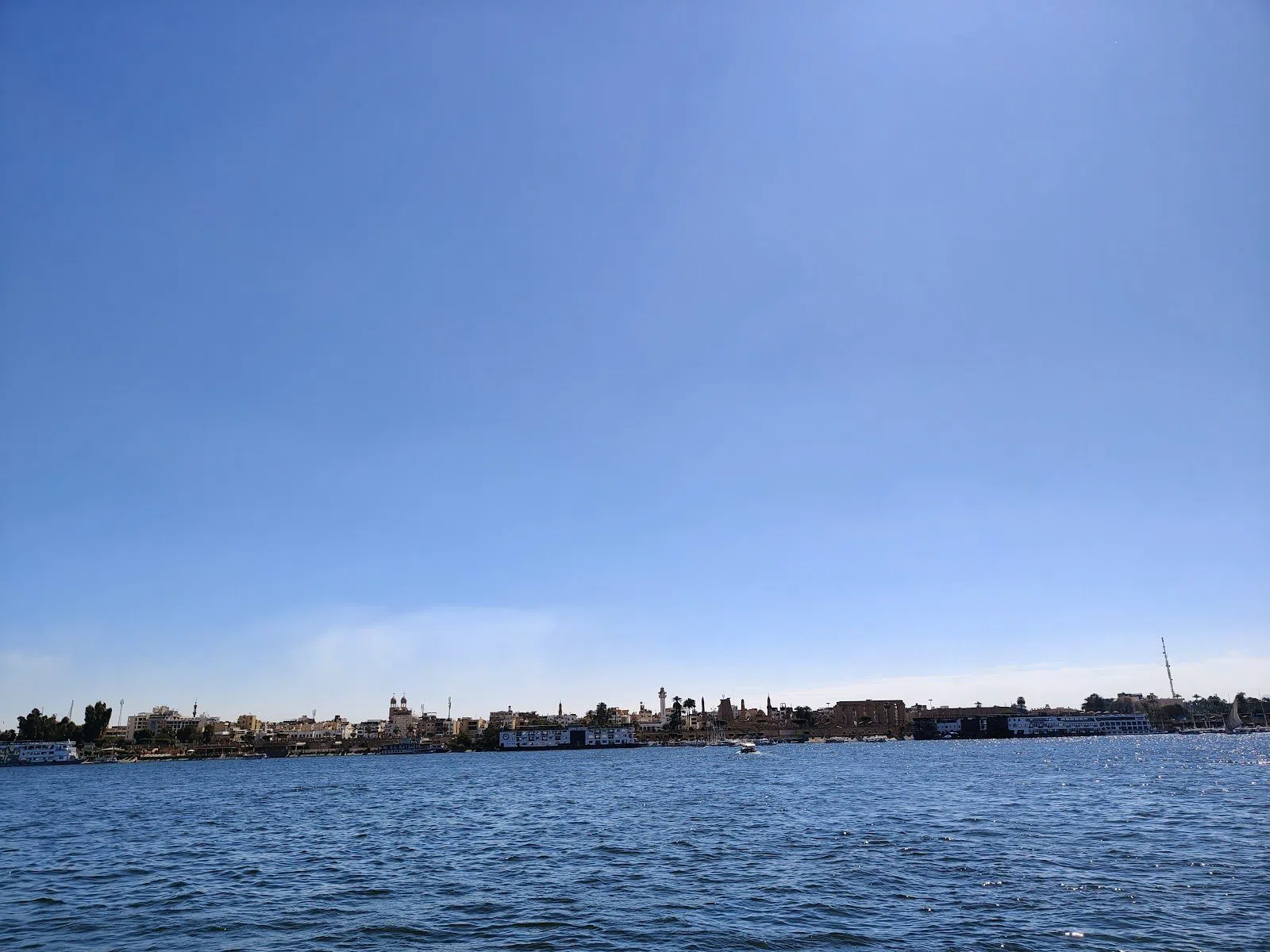
The Nile does not run through Luxor so much as split its working day in two. Temples, hotels, the souk and the railway sit on the East Bank; the tombs, the mortuary temples and the flat green farm lanes are on the West. Most of the time travellers lose here is lost at the water's edge, negotiating a crossing that costs less than a bottle of water.
What follows covers the whole transport picture, from the ten-pound ferry up to a private car with an Egyptologist in the front seat, and who each one actually suits. Luxor is small. The useful part of the East Bank is a walkable strip of Corniche, and the West Bank sites cluster within a few kilometres of each other, so distance is never the problem. The problem is choosing the right tool for each gap and not paying tourist rates for what locals do for pocket change.
The public ferry does most of the work
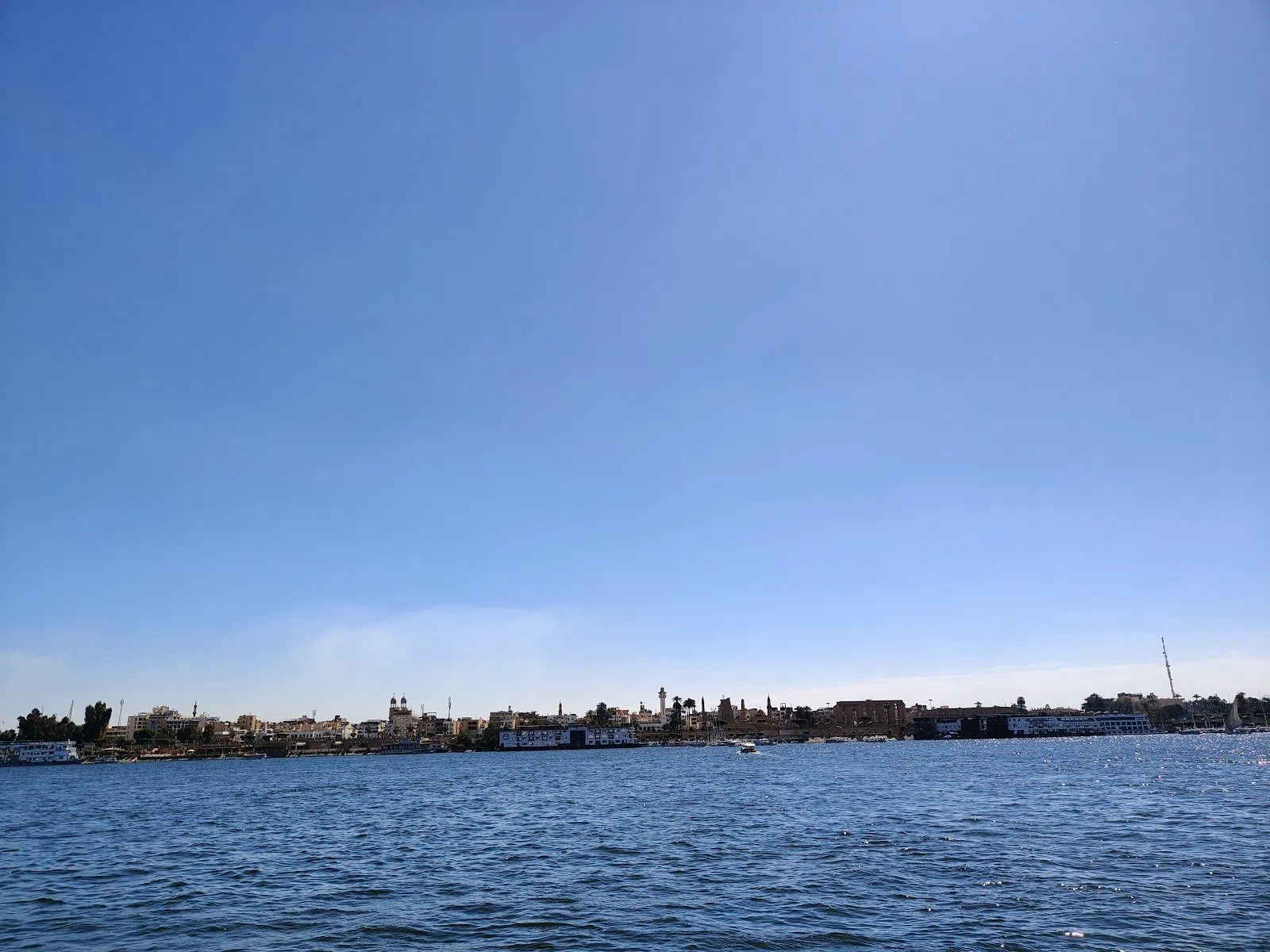
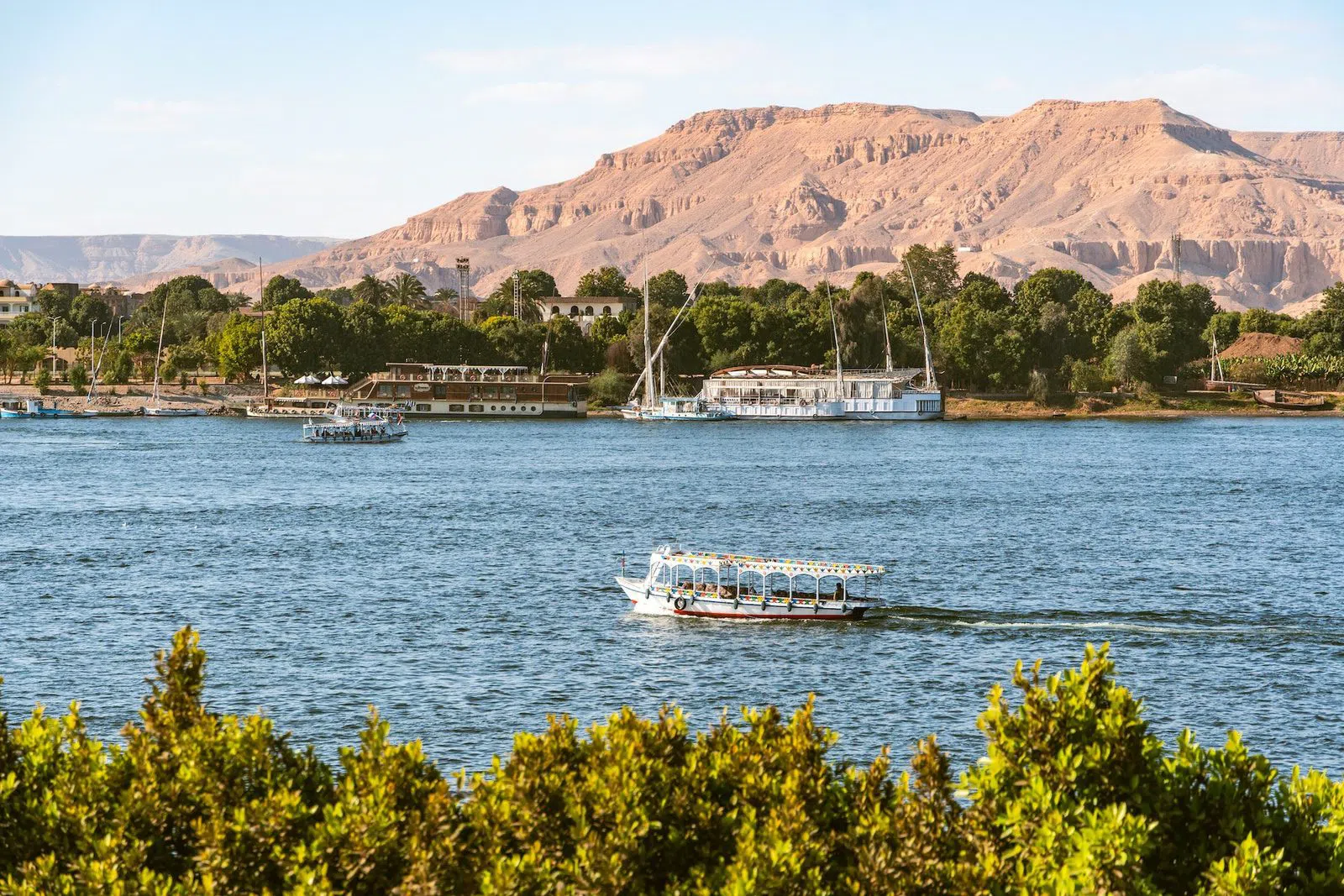
Luxor Nile Ferry (the landing sits at the Luxor Museum end of the Corniche) is the public national ferry, and for crossing between the two banks it is the cheapest option and, at most hours, the fastest. Boats leave roughly every thirty minutes, tickets are bought at the kiosk, and the fare is 10 to 25 EGP per person each way in cash. Bring small notes, because nobody will be breaking a 200. There is no booking and no capacity limit that will affect you: a party of two or of twenty buys tickets and walks on. Bicycles travel on deck.
The rule that saves the most aggravation is to buy at the kiosk, not from whoever intercepts you on the ramp with a friendly question about your hotel. The fare quoted on the ramp is a different fare entirely, and the crossing takes only a few minutes once you are aboard, so pre-arranging anything gains you nothing.
The ferry's real time cost is on the far side. You land at a bank where taxis, tuk-tuks and bicycle hire all sit within a short walk, and it is that walk, in August at noon, that people underestimate. Cross early.
Plan your Luxor trip
Live prices from our booking partners.
Free cancellation on many rooms. We may earn a commission when you book.
When paying for your own boat is worth it
Private motorboat launches at the Luxor ferry landing wait alongside the public boats and are hired whole rather than per head, roughly 50 to 150 EGP for the boat, one way, always agreed before you step in. That distinction is where money goes missing: confirm out loud that the price is for the boat and not per person, because the same number quoted per head turns a bargain into a bad deal for a family of five.
A launch earns its fare in three situations. You have just missed the ferry and do not want to stand in the sun for the next one. You are carrying luggage. Or you want to be dropped closer to the West Bank taxi rank than the public landing puts you. For two to six people splitting one fare it is a small, sensible expense. For a solo traveller in daylight with no bags, it is the ferry with a surcharge.
Short hops on the East Bank
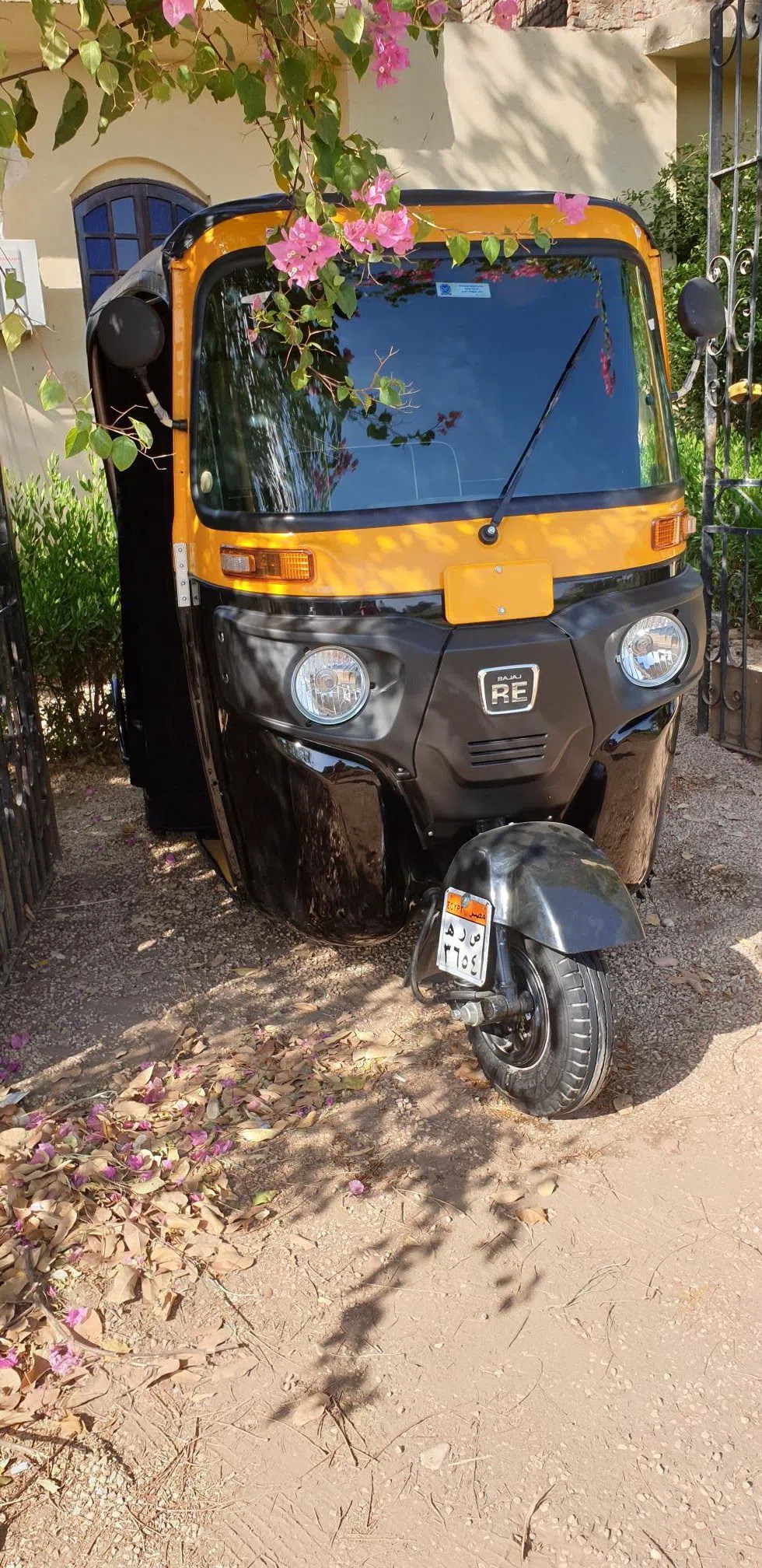
Luxor tuk-tuks swarm the streets between the railway station, the souk and the Corniche, and they exist for exactly the gap that defeats visitors: two kilometres, too far to walk in the heat, too short to be worth the theatre of a taxi negotiation. Expect 15 to 50 EGP for a short hop, always negotiated, always before you sit down.
Two passengers ride comfortably and three at a squeeze, so a group of six travels as a small convoy. Locals do this routinely and drivers organise it without being asked. Agree one price per vehicle for the whole convoy rather than letting each driver freelance at the destination. Keep 10 and 20 EGP notes in a pocket; producing a large note at the end of the ride reliably produces a shortage of change.
Tuk-tuks are open-sided, which is a pleasure at dusk and unpleasant in a sandy wind. They are also not the vehicle for a long West Bank day; for that, see the car options below.
The West Bank rewards a bicycle
West Bank bicycle hire at the ferry landing costs 100 to 200 EGP per bike per day, and the fleets are large enough to kit out a group of six to ten at once, though in high season it is worth asking the day before rather than assuming ten machines will be free at eight in the morning. Hire on the East Bank instead and carry the bike over on the ferry: the price is usually better and the choice of bikes wider.
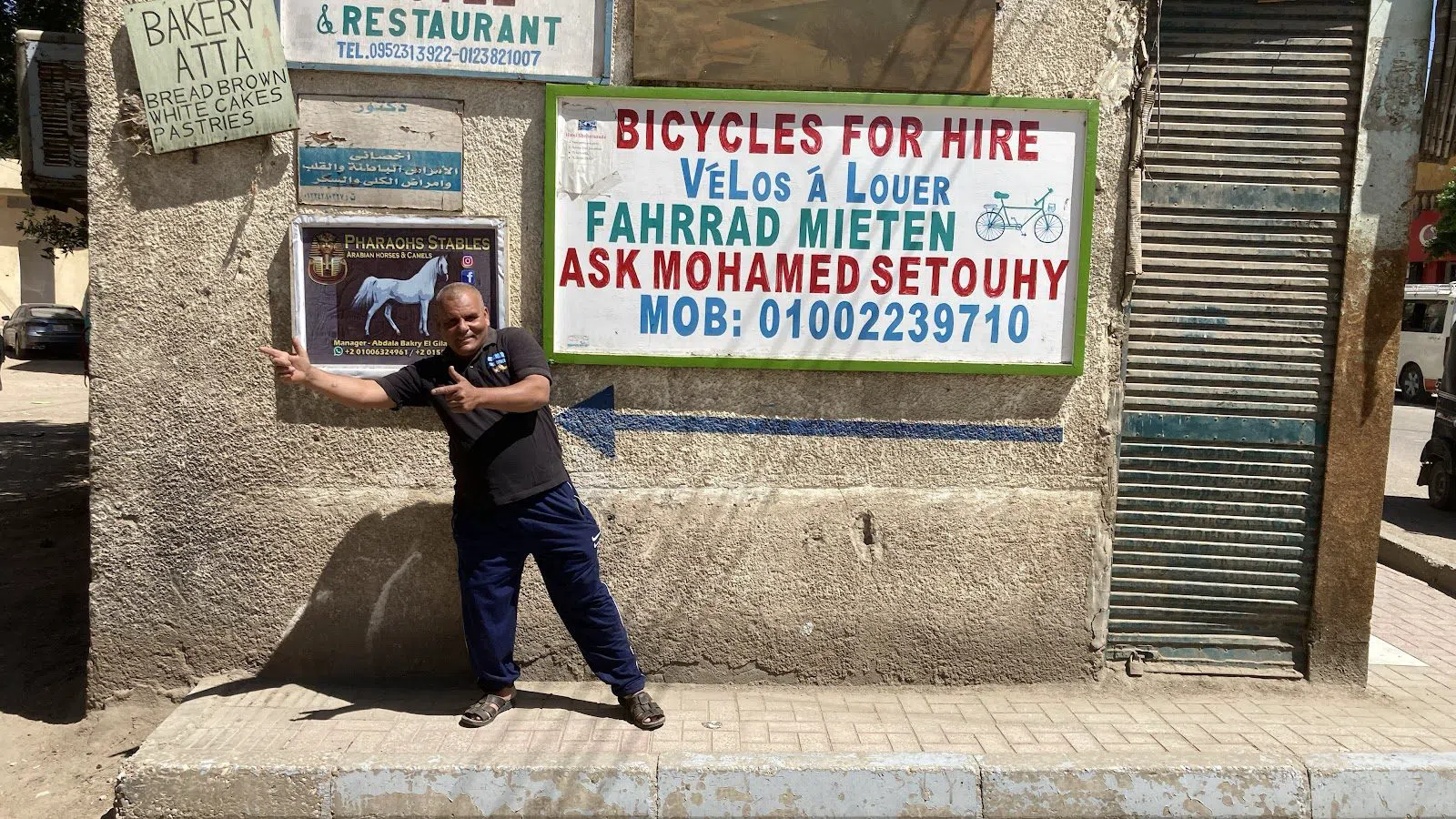
The case for cycling is real. The lanes between the tombs and the mortuary temples are flat, paved and close to empty, and moving between sites at your own pace, stopping where the fields open out, is the most pleasant version of a West Bank day. The case against deserves stating just as plainly: this is desert-edge riding with almost no shade, the gradients up to the ticket areas are longer than they look on a map, and from May to September an afternoon on a bicycle is a genuinely bad idea. Ride from sunrise, be off the bike by mid-morning in summer, and carry more water than you think you need.
Valley of the Kings taftaf electric shuttle is the one free ride in Luxor that people miss and then regret. It is included in the entry ticket, runs continuously, seats a coachload at a time and needs no booking, and it covers the exposed kilometre between the ticket hall and the tombs, a stretch that is flat, dull and brutal in full sun. Walk it if you want the extra photographs; otherwise take the shuttle and save the energy for the tombs themselves. Note that the site is now cashless, so bring a card for the entry ticket.
A car, a driver and someone who knows the tombs
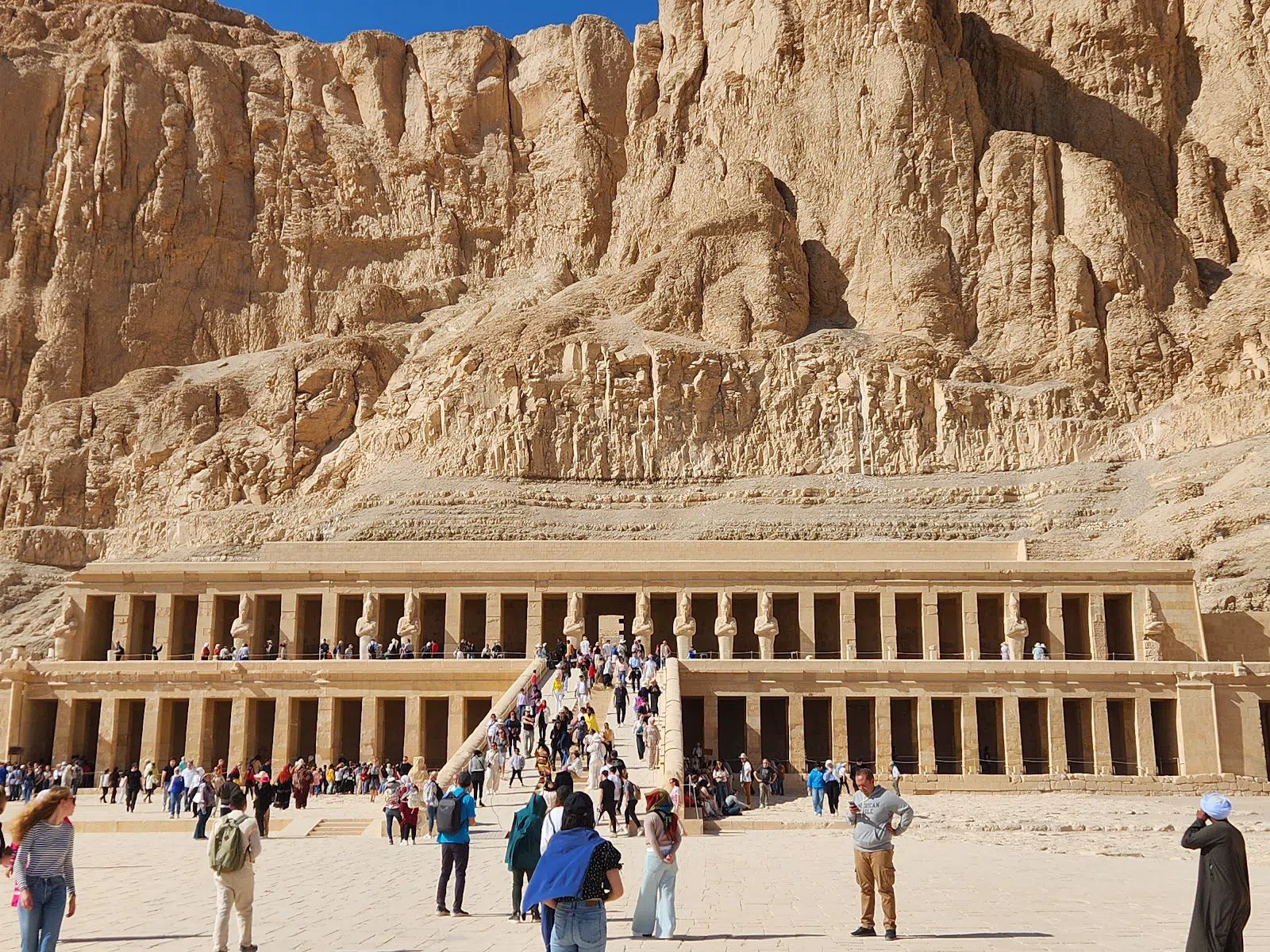
For a full West Bank day, or for stringing several sites together without hauling a group in and out of tuk-tuks, a private car with a guide is the sensible answer.
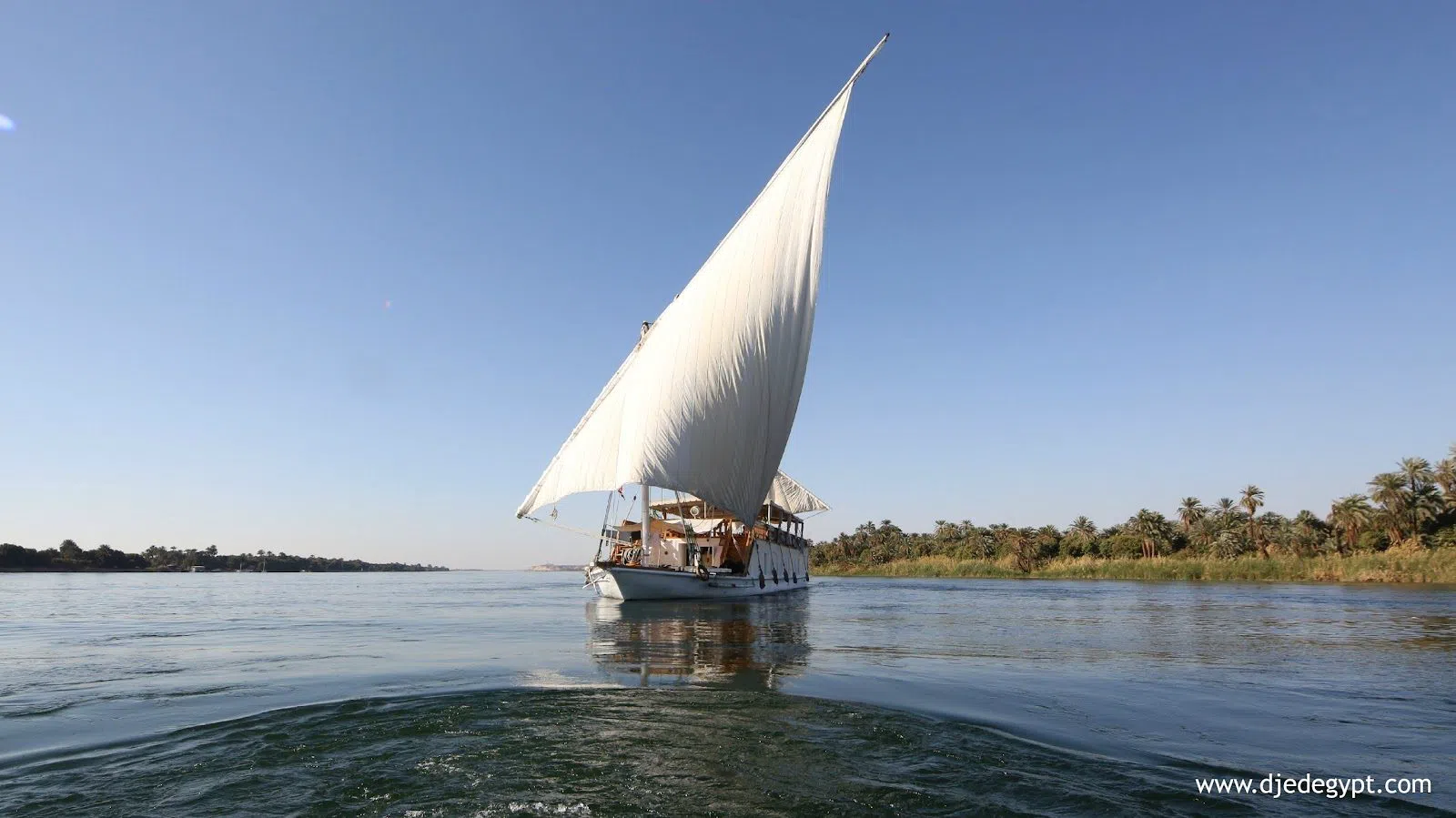
Djed Egypt Travel runs tiered pricing from two people up to parties of five or more, all private rather than pooled, at roughly US$35 to 55 per person for a half day and US$45 to 120 per person for a full day, with the per-head figure dropping sharply as the group grows. They are licensed by the Egyptian Travel Agents Association (ETAA #1333) and IATA-accredited, which is the paperwork worth checking in a market where anyone with a cousin and a minivan can call themselves a guide. At four or more people, a private car stops being a splurge and costs roughly what a day of separate taxis would anyway.
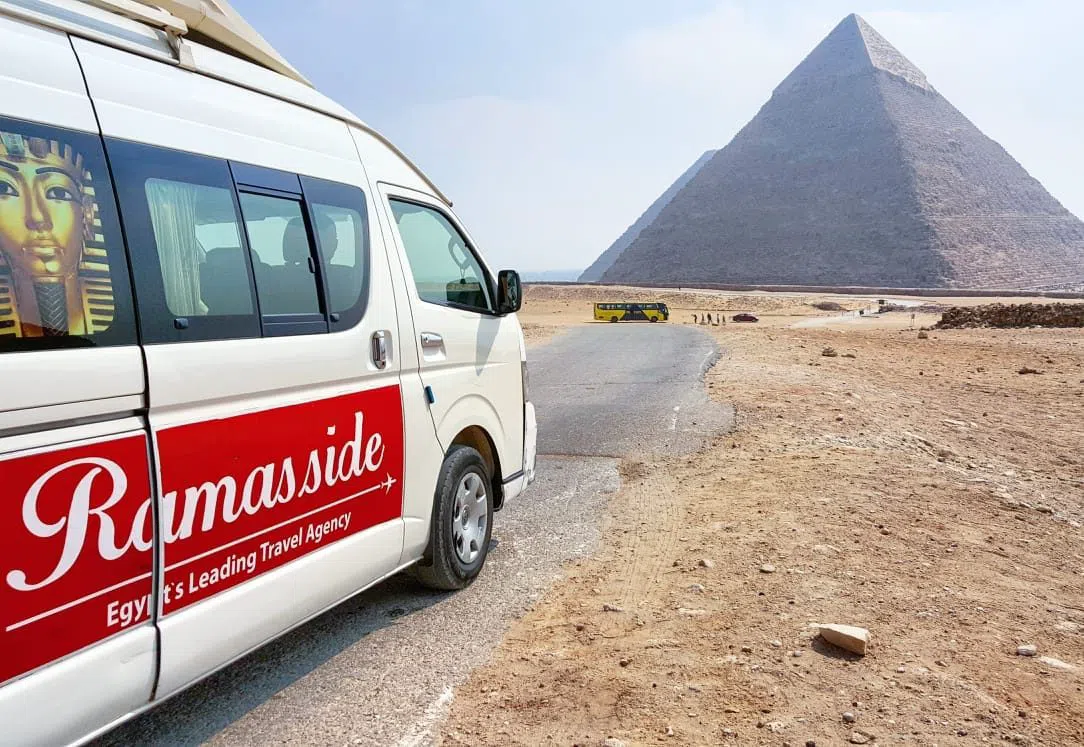
Ramasside Tours is a long-standing Luxor operator charging US$60 to 150 per day for car, driver and guide depending on party size, and it handles families and groups of four to eight in a single vehicle. Recent reviews consistently praise punctuality and the guides' knowledge. The practical advantage over a coach excursion is sequencing: a good private driver takes the West Bank sites in the order that keeps you ahead of the tour buses rather than the order printed on a brochure.
Who this suits is worth being clear about. Couples pay the highest per-head rate and may prefer the ferry-plus-bicycle approach for one day and a private car for another. For groups of four and up, private hire is the comfortable choice and the economic one.
Arriving and leaving without the scrum
Welcome Pickups — Luxor Airport transfers removes what is comfortably the most tiring negotiation of the trip, the one you conduct at arrivals with luggage and no local currency. Vehicles are sold for up to three, up to eight and up to twelve passengers at a flat fare, from about €14, €20 and €38 respectively, and the booking tracks your flight number, which matters in a city where a great many arrivals land late at night. If you pre-book one thing in Luxor, make it this. It also pays to know which side of the river you are sleeping on before you land; the Luxor hotel search makes that easy to check against the sites you have prioritised.
Abela Trains operate the overnight sleeper that reaches Luxor station on the Corniche side of town, in twin cabins sold at roughly US$100 to 160 per person one way with meals included. Groups book adjacent compartments and families connect two cabins. One detail catches out people working from older advice: Abela took the route over from Watania and, since October 2024, the northern departure is from Bashtil (Upper Egypt) station rather than Ramses. The run into Luxor takes about eleven hours.

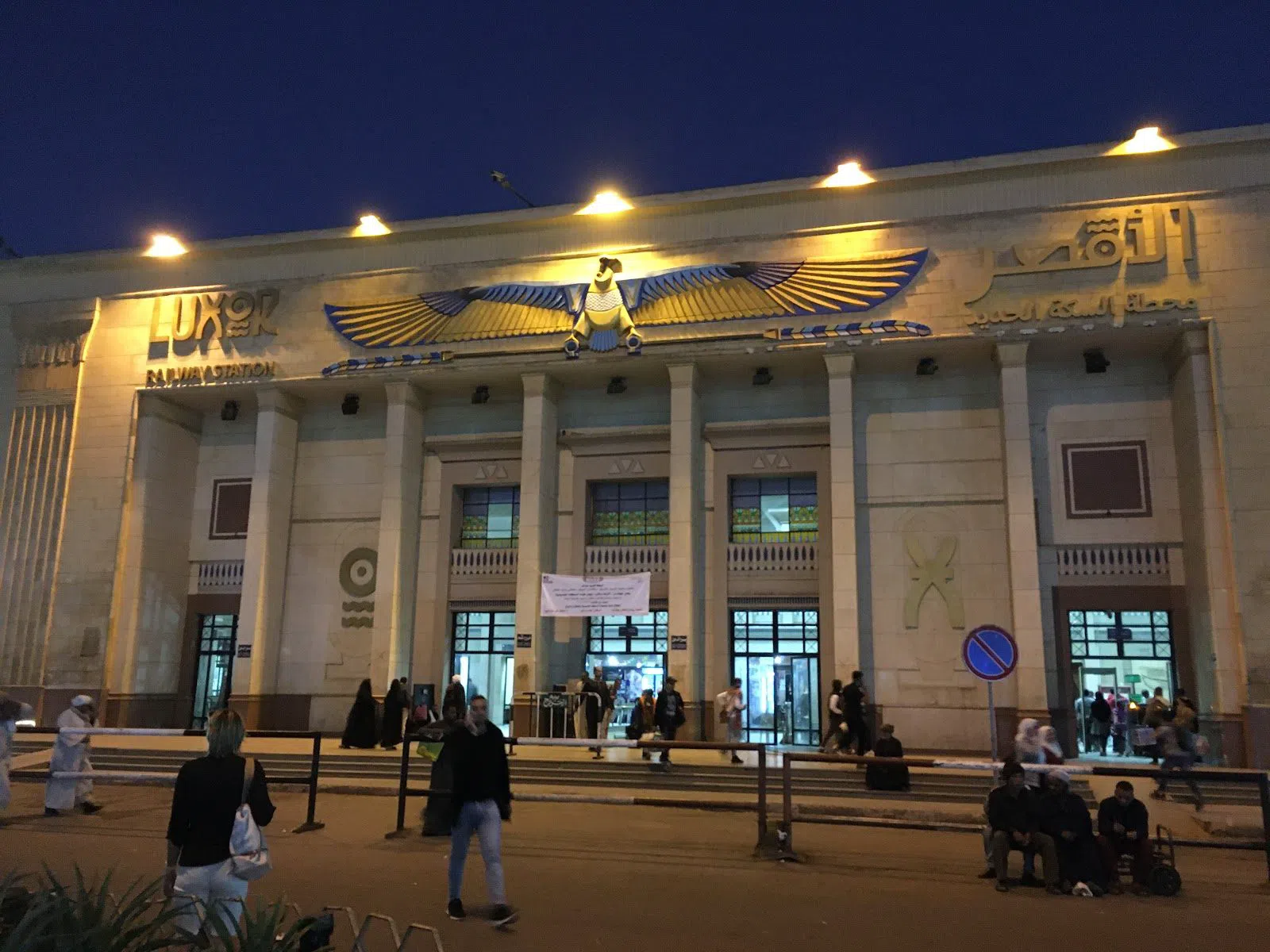
Egyptian National Railways VIP and Express day trains are the daytime alternative, with reserved seating, so a group books a block in one coach and there are no group restrictions to work around. The VIP express services, trains 2011, 981 and 983 among them, cover the southern run in about three hours in air-conditioned first class, at roughly US$10 to 25. The catch is the booking: the ENR website still only sells at local prices to Egyptians, so buy at the station's tourist window or through an agent rather than fighting the site.
Go Bus Egypt handles the overland link to the Red Sea coast, twice daily in four to five hours, at around US$5 to 15. Whole rows are bookable with seats assigned at the time of booking, and the office sits beside the train station with English-speaking staff, so you can price the train and the coach in a single stop, ten minutes apart, before committing to either.

The pre-dawn crossing by balloon
Ballooning in Luxor is sightseeing rather than transport, but it is also the reason a lot of people are awake at five in the morning, and both major operators handle the river crossing for you.

Sindbad Balloons has flown here since 2005 and is openly selling its 2026 season at €100 standard, €120 deluxe and €150 comfort, hotel pickup included. Standard baskets take up to 28; the Comfort tier caps at 20 for more elbow room, and whole-balloon private charters are available. The timings are the selling point: a 5:30am pickup and 6:30am launch put you back on the East Bank in time for a normal day of sightseeing instead of writing off the morning.
Magic Horizon Balloons, from an office on Khaled Ibn El Walid Street opposite the Nile Palace Hotel, runs the largest fleet in Egypt, with baskets carrying up to around 32 and dedicated private charters from about US$1,500; standard seats start near US$135 per person for a forty-minute flight. The trip includes the river crossing by boat, which is in itself the cleanest way west at that hour.

The caveat on both: a 28- or 32-person basket is a shared, shoulder-to-shoulder experience with a wait at the launch field while the fleet inflates. Couples who want quiet should budget for a charter or accept the crowd cheerfully.
An hour on the water that is not about getting anywhere
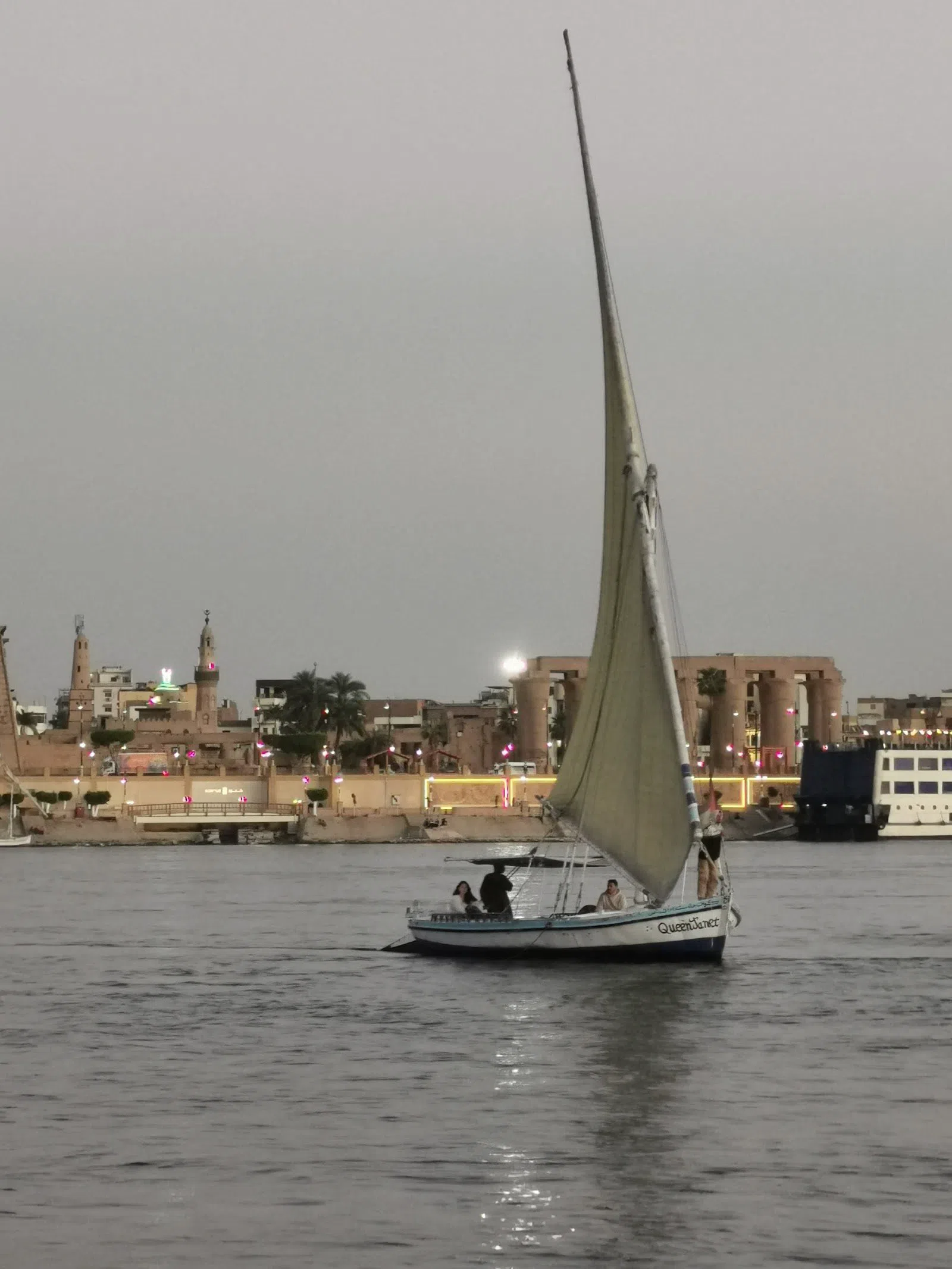
Feluccas on the Corniche are hired whole and are comfortable for six to eight, at roughly US$10 to 20 per person for an hour or US$25 to 40 for a longer Banana Island run. They are slower than the ferry and no way to reach an appointment. Their hour is the one before sunset, when the light comes off the west cliffs and the river traffic thins, and it is the most agreeable stretch of the Nile in Luxor. Settle route, duration and price on the bank before boarding; mid-river is a poor place to discover a misunderstanding about how long an hour is.
Practical notes
Carry small EGP notes for the ferry, tuk-tuks and bicycle hire, since none of them will change a large bill. The Valley of the Kings is the exception, because the site is cashless and you need a card for entry tickets. Hold larger notes back for private boats and drivers.
Cross the river early. From May to September, anything involving a bicycle or an exposed walk should be finished by mid-morning, which is why the balloon operators run their pickups at 5:30am. Late afternoon belongs to the East Bank and the felucca hour.
Every price above described as negotiated really is, 15 to 50 EGP for a tuk-tuk hop, 50 to 150 EGP for a private launch, and the number is agreed before you sit down or step aboard, never afterwards. Fixed-fare options exist precisely so you can skip this: the ferry kiosk, the airport transfer, the balloon booking, the train ticket window.
A frugal day is entirely realistic. Ferry both ways, a bicycle and the free taftaf shuttle come to well under 300 EGP per person. A private car with a licensed guide for a full West Bank day lands between US$45 and US$120 per person and drops fastest for groups of four or more. For a fuller picture of what to pair these journeys with once you are across the water, the Luxor guide covers the sites themselves.
Before you go
What is the cheapest way to cross the Nile in Luxor?
The public Luxor Nile Ferry costs roughly 10 to 25 EGP per person each way, paid in cash. It runs about every thirty minutes from the landing near the Luxor Museum end of the Corniche. No booking is needed, it takes groups of any size and it carries bicycles on deck. Buy at the kiosk rather than from whoever approaches you on the ramp.
Do I need a private driver and guide for the West Bank?
Not necessarily. A couple can have a good day on the ferry, a hired bicycle and the free taftaf shuttle at the Valley of the Kings. For four or more, a private car with a licensed guide costs little more than separate taxis and gets you round the sites ahead of the coaches: Djed Egypt Travel from about US$45 to 120 per person for a full day, Ramasside Tours US$60 to 150 per day for the vehicle.
Is it safe and practical to cycle on the West Bank?
Yes, for most of the year. The lanes between the tombs and mortuary temples are flat, paved and quiet, and a bike costs 100 to 200 EGP a day. Shade is almost nonexistent, so in summer ride from sunrise and be finished by mid-morning. Hire on the East Bank and carry the bike across on the ferry; the price is better and there is more to choose from.
How do I get from Luxor Airport to my hotel late at night?
Book ahead. Welcome Pickups sells flat-fare transfers from about €14 for up to three passengers, €20 for up to eight and €38 for up to twelve, and the booking tracks your flight number. That matters, because a lot of Luxor arrivals land after midnight.
Can I buy Egyptian train tickets online as a visitor?
Not at the fares you see advertised. The Egyptian National Railways website still sells local prices to Egyptians only, so buy VIP and express day-train tickets at the station's tourist window or through an agent. Abela Trains sells its sleeper cabins separately, at around US$100 to 160 per person one way, meals included.