The Luxor issue
How to See All of Luxor Without Losing the Day to Heat
A Luxor plan built around dawn and dark, so the tombs, temples and museums all stay on the list, with pools, gardens and cooled rooms to sit out the middle of the day.

By Giulia FerranteJudging Luxor one loaf of bread at a time
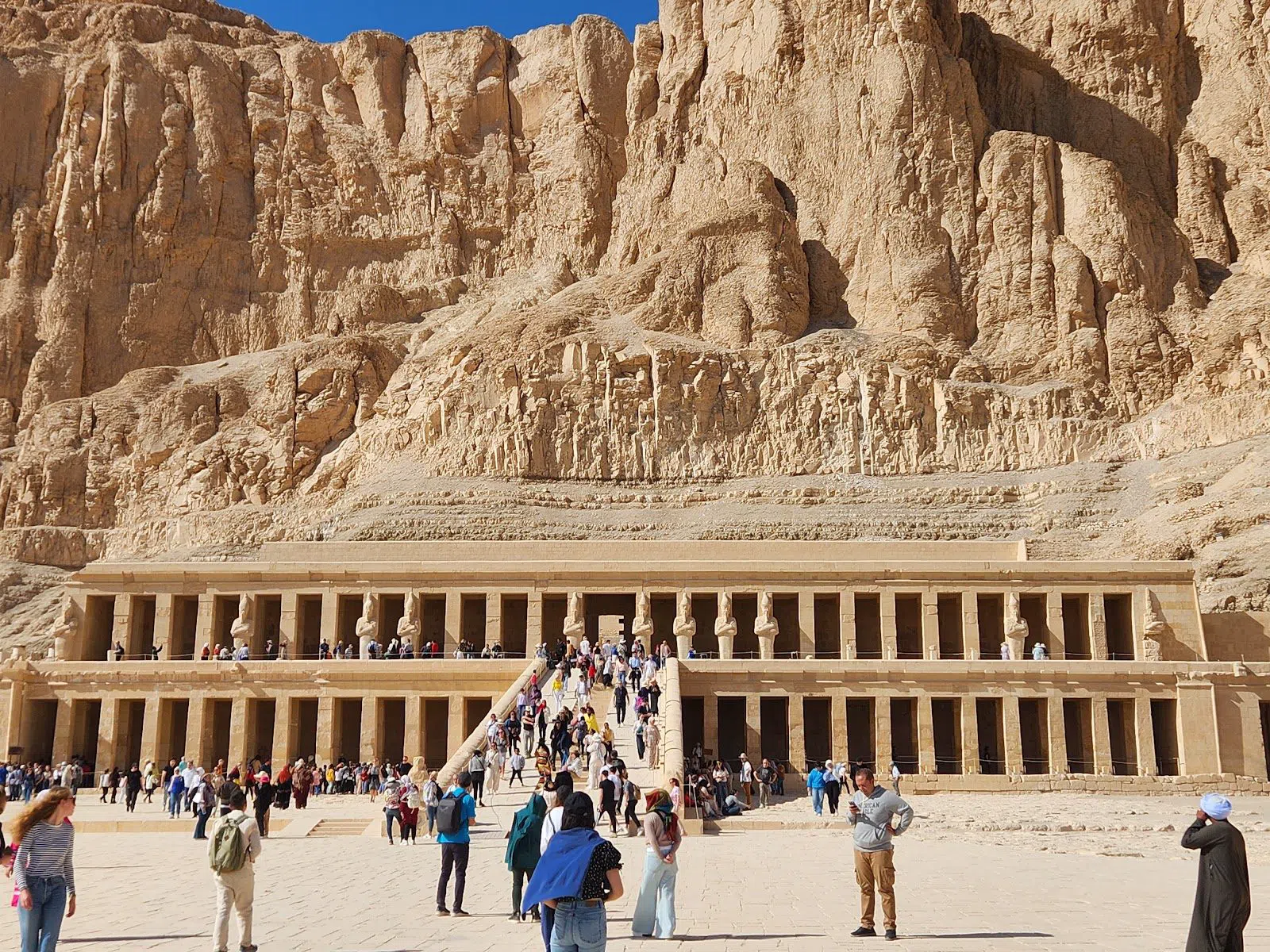
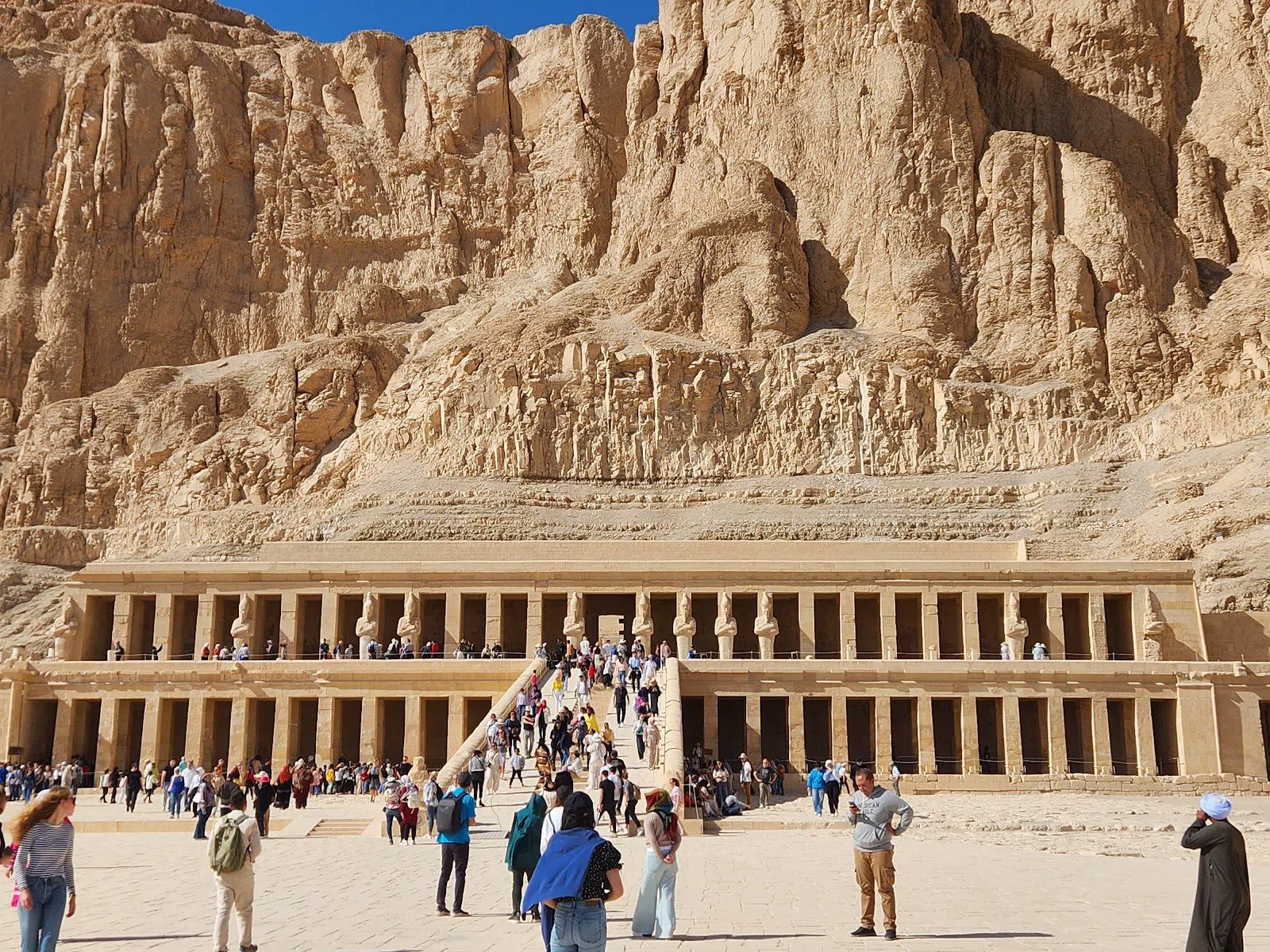
By half past nine on a June morning the limestone terraces at Deir el-Bahari are already too hot to put a hand on, and by one o'clock the Corniche belongs to the carriage horses and to whoever is paid to be outdoors. Luxor in the heat is not a city you push through; it is a city you cut in half, taking the stone at first light and again after dark and handing the middle of the day to cold water, cooled galleries and real tree shade. Done that way you drop nothing. I have never once cut a site here to survive a summer, only moved it.
The shape of a day that actually works
Three fixed facts hold this together. The archaeological sites open at 06:00, and the first ninety minutes are the only comfortable outdoor hours you will get. Most of them close around 17:00 or 18:00, so the afternoon window is short and the late light is worth planning around. And two of the biggest draws stay open after sunset, which is what makes a full sightseeing day possible without standing in direct sun at noon.
So the rhythm is: outdoors from 06:00 to about 10:00, roofed or in water from 10:00 to 16:00, outdoors again from 16:00 until the floodlights come on. Anyone advising you to do the West Bank in the afternoon has not tried it in August. Split your days by bank rather than by theme, West Bank one morning, East Bank the next, because the crossing itself eats the good hours.
Plan your Luxor trip
Live prices from our booking partners.
Free cancellation on many rooms. We may earn a commission when you book.
Going up before the sun does
If you are going to be awake at 05:00 anyway, Sindbad Balloons (launch fields, West Bank) is the most efficient hour in Luxor. Pickup is around 05:30 for a 06:30 launch, you are airborne for 30 to 45 minutes, and you land with the whole West Bank mapped in your head (the tomb valleys, the mortuary temples, the exact line where irrigated green stops and desert starts) before the day has any heat in it. You are back for breakfast with your morning intact, which matters more here than it sounds.
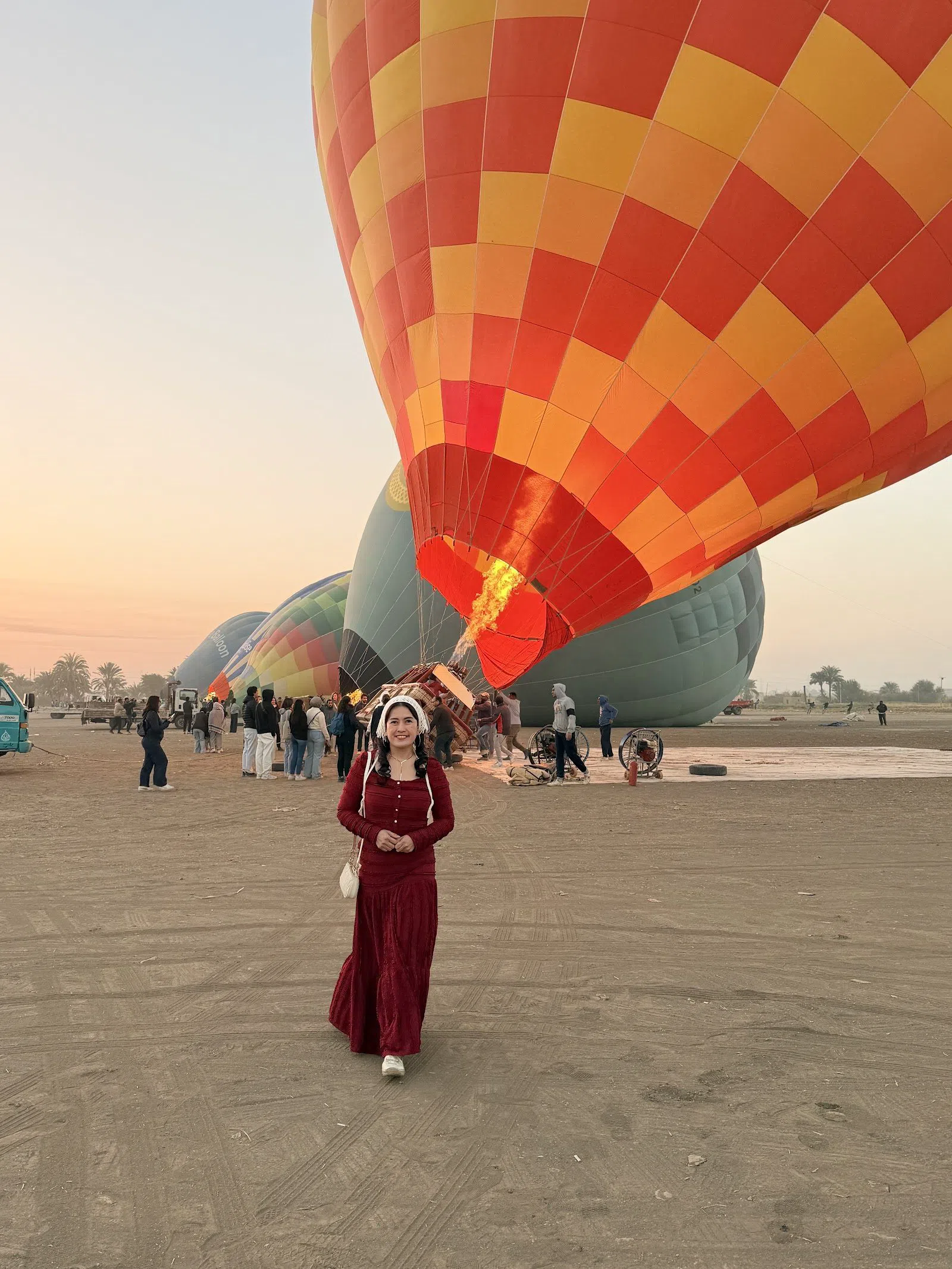
Prices run from about €100 for a standard basket, €120 deluxe, €150 for Comfort, and private baskets are quoted on request. Standard baskets carry up to 28 people and Comfort caps at 20, so a family or a small group fits without special arrangement. Couples who want quiet should pay up for Comfort or book privately rather than hoping for a light load.
The first ninety minutes in the Valley
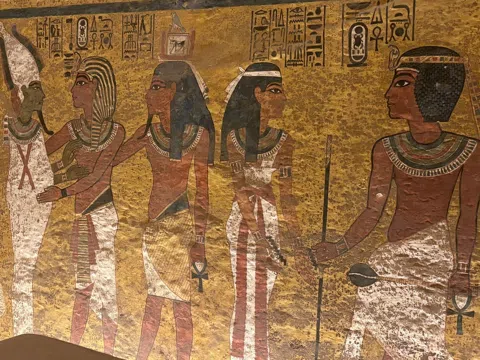
Valley of the Kings (West Bank) is treeless, and the valley floor holds heat like a kiln. Be at the gate for 06:00. The standard ticket covers three tombs at a mid-range price, with Tutankhamun and Seti I sold separately on top. Decide before you queue, because the ticket office is not where you want to deliberate. Last entry is around 17:00 in summer, but the late slot is a false economy: the corridors trap heat and breath, and by mid-morning a busy tomb is warmer inside than the valley outside.
Guides are not allowed to lecture inside the tombs and must brief you at the entrance, so parties break into small clusters in whatever shade the rock face offers. That is the argument for arriving first: at 06:15 you get the briefing and the descent in near-empty air. By 09:00 you are queuing in the open for the privilege of standing in a warm painted corridor behind forty other people.
Hatshepsut while the cliff is still cool
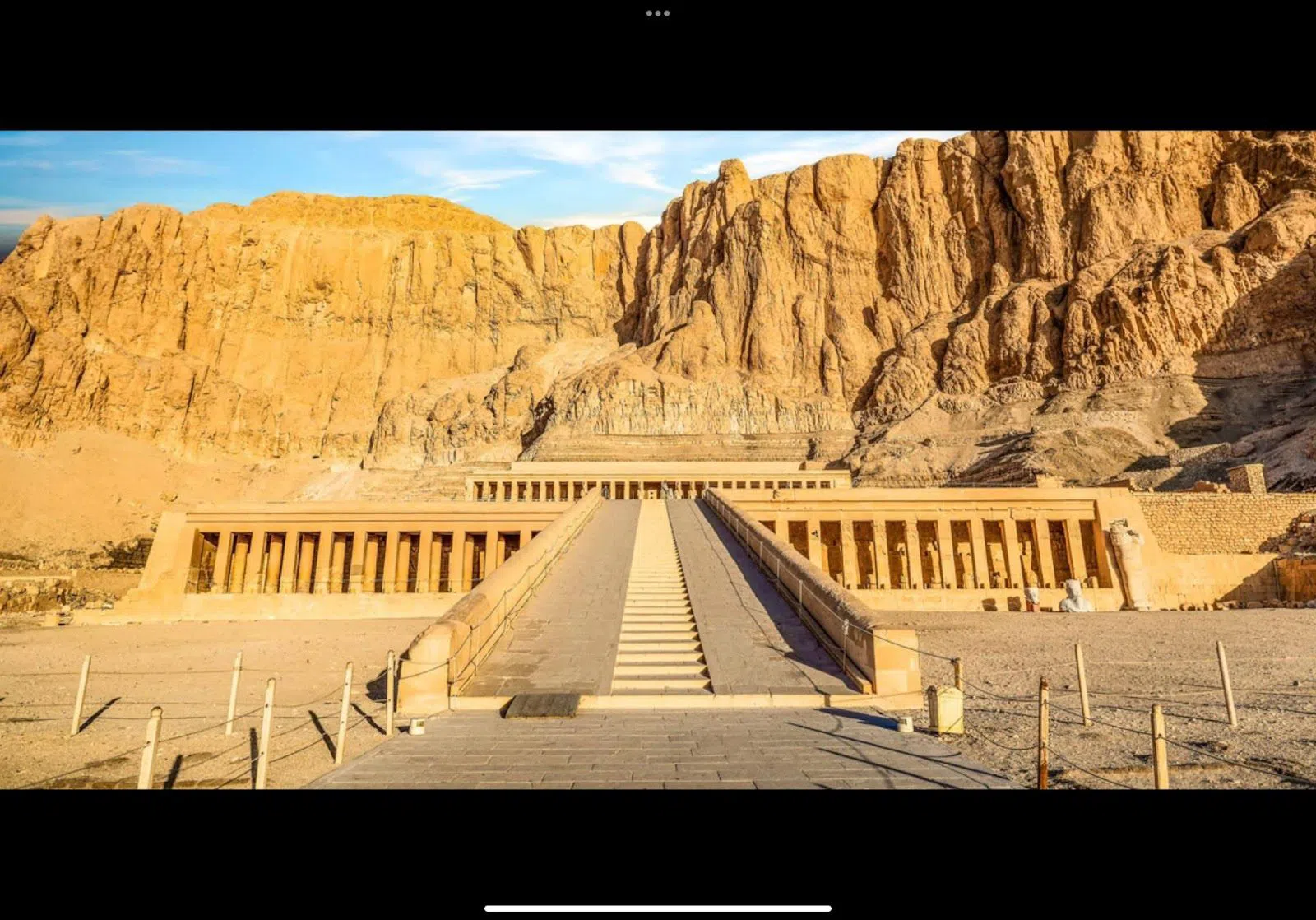
Temple of Hatshepsut (Deir el-Bahari) (West Bank) is open 06:00 to 18:00 and is the hardest sun-trap in Luxor. The cliff behind the terraces throws heat straight back onto the stone, and there is no useful shade anywhere on the ramps. This is a first-light stop or it is nothing. Entry is low-to-mid, with an optional shuttle buggy from the car park to the forecourt for a little extra. Take it on the return leg if the walk in has already told you what kind of day it is going to be.
Coach parties are routine here and the site absorbs them well, but the terraces funnel everyone onto the same two ramps. If you have come off a balloon flight, go straight from the landing field rather than back to the hotel first; you will be on the upper terrace by 07:30 with the light still low and the crowd still forming below you.
Roofed rooms and real trees between the valleys
The West Bank's problem is not the sites, it is the gaps between them. Howard Carter House (West Bank, between the valleys) solves one of them. It is roughly 220 EGP for adults and about half for students, open through the day from around 08:00 to 17:00, and it is roofed and ventilated, built in the Hassan Fathy tradition of natural cooling. The rooms are small, so it works for parties under about fifteen; a full coach queues through in shifts. Treat it as a deliberate interval, not an afterthought.
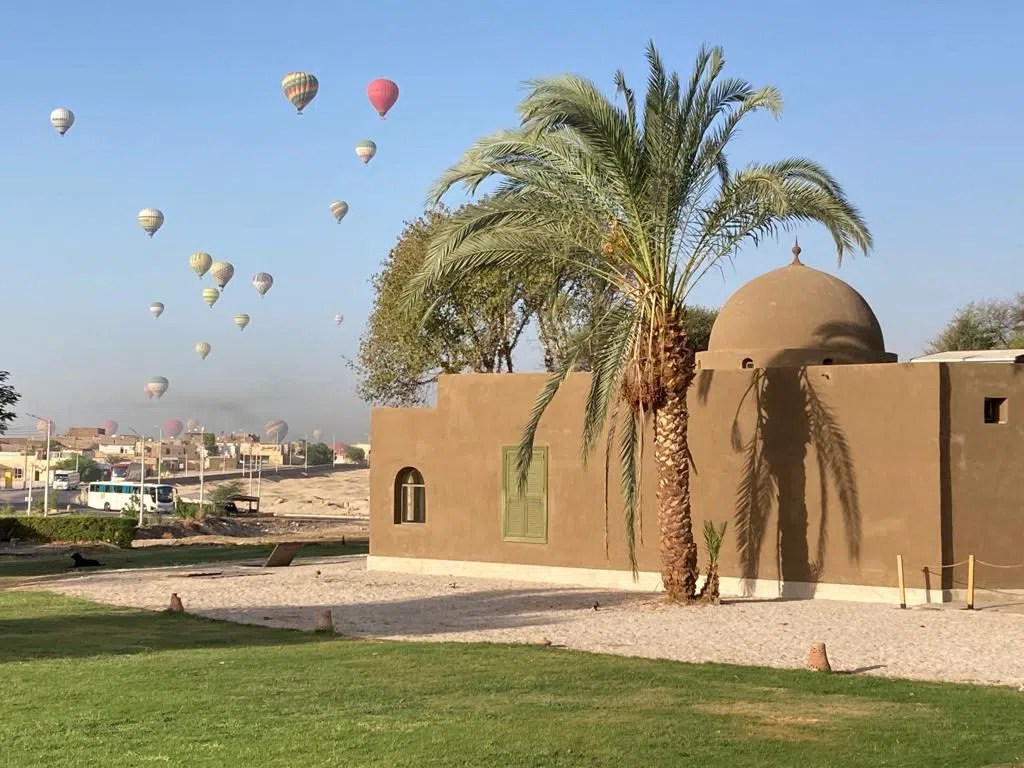
For lunch, Marsam Hotel (West Bank, a short drive from Hatshepsut) is the only place on this side of the river where I would willingly sit out the middle of the day. The garden shade is real tree cover rather than a canvas sheet over hot ground, a difference you feel within ten minutes. The kitchen is largely organic and cooks what it has picked, so lunch is whatever is good that morning: soup, bread, vegetables from the garden, grilled meat if you want it, at low to mid-range prices, call it a few hundred EGP a head with drinks. It is informal and small, fine for a handful of people, and you must call ahead for more than that. Not a coach stop.
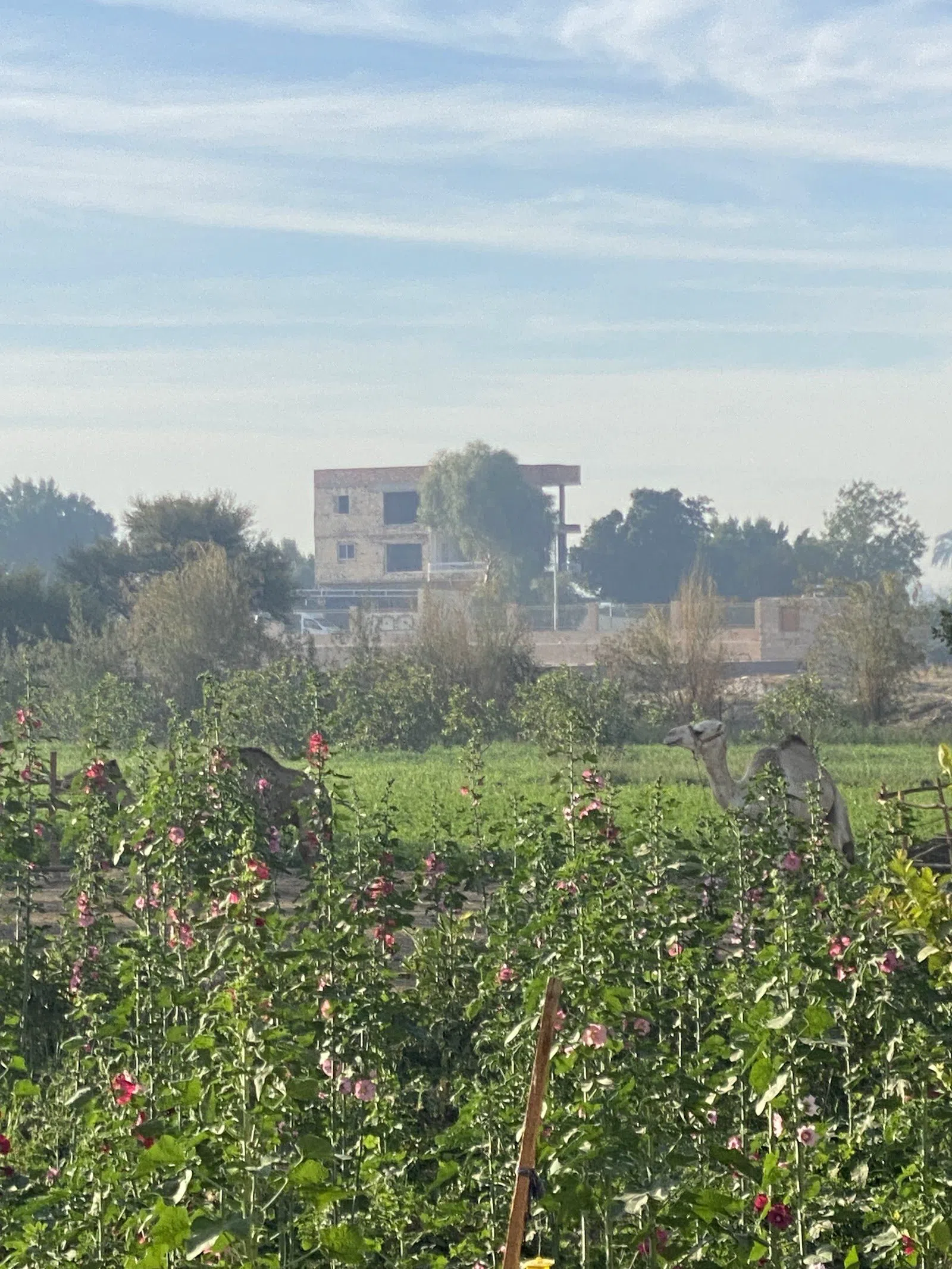
At the other end of the scale, Al Moudira Hotel (West Bank, out past Medinet Habu) is where this side of the river finally offers deep shade, a pool and a hammam. It is high end for lunch and pool use as a non-resident, small groups only, and you must call ahead; it has the feel of a country house, not a day-use resort. Pairing an early Valley run with an afternoon here turns a brutal West Bank day into a civilised one, and it is the version of the plan I recommend to couples without hesitation.
Medinet Habu in the last two hours
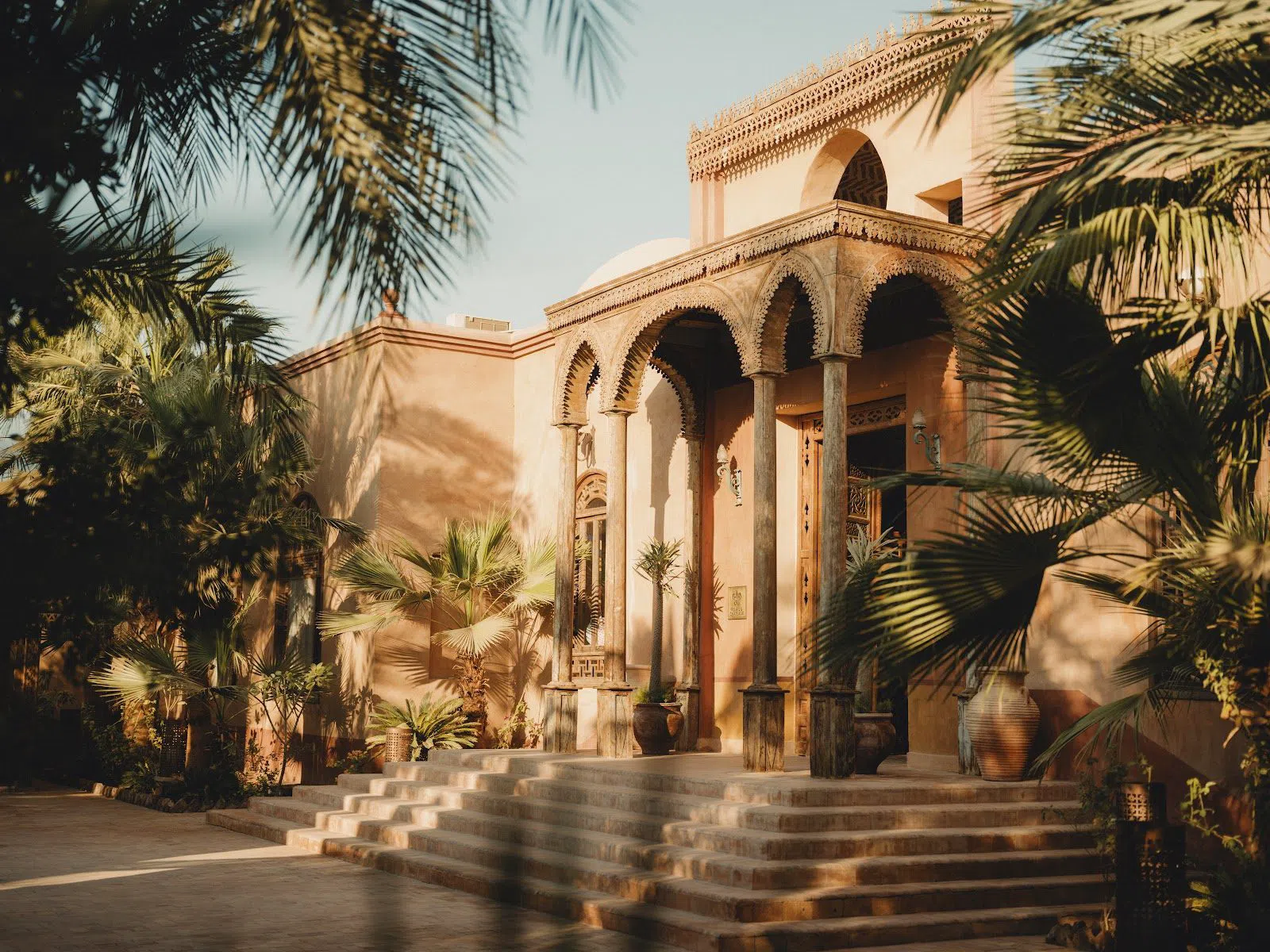
Save Medinet Habu (West Bank, south of the mortuary temples) for the end of the afternoon. It is around 200 EGP, open 06:00 to 17:00, and it is at its best in the final two hours, when the sun drops behind the western hills, the courts fall into shadow and low raking light picks the surviving colour out of the sunk reliefs, which are as deep as anything you will see here. It handles groups comfortably, with coach access at the gate and room to spread out, and it is far quieter than the Valley. Aim to be inside by 15:00 and you get the shade, the colour and the space at once.
Karnak at dawn and again at seven
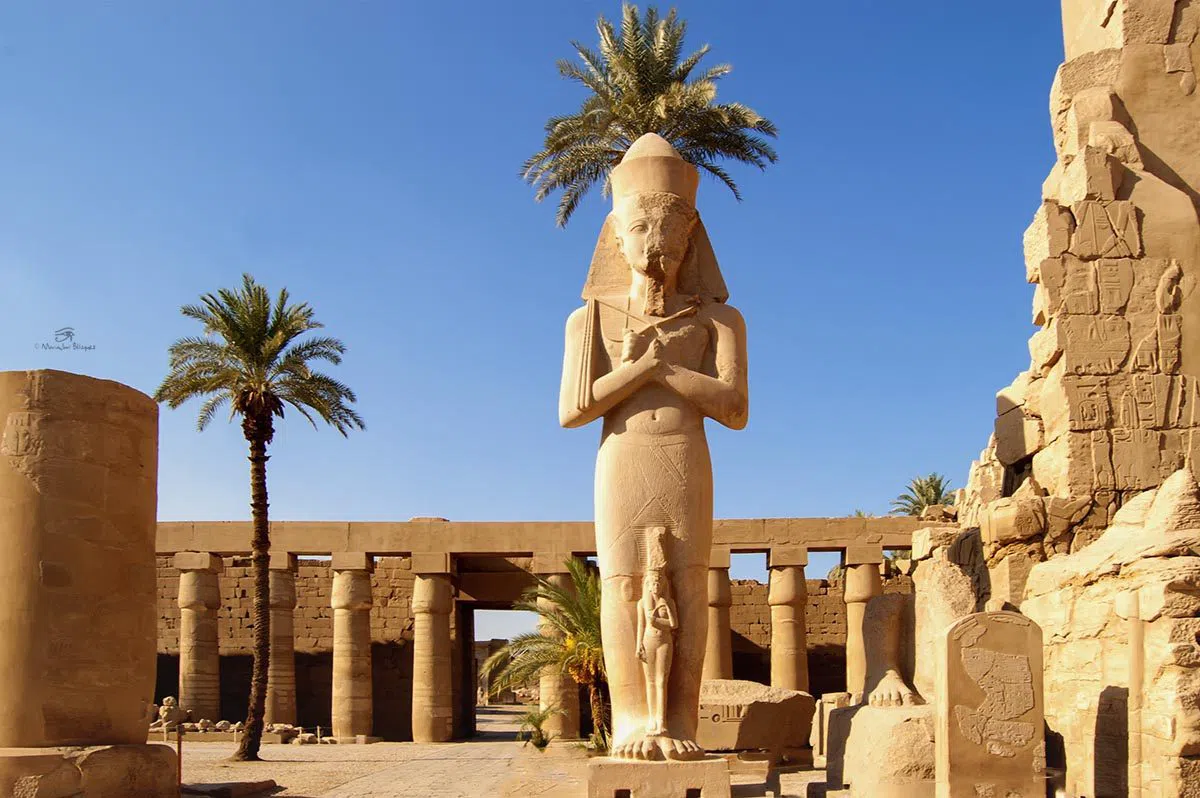
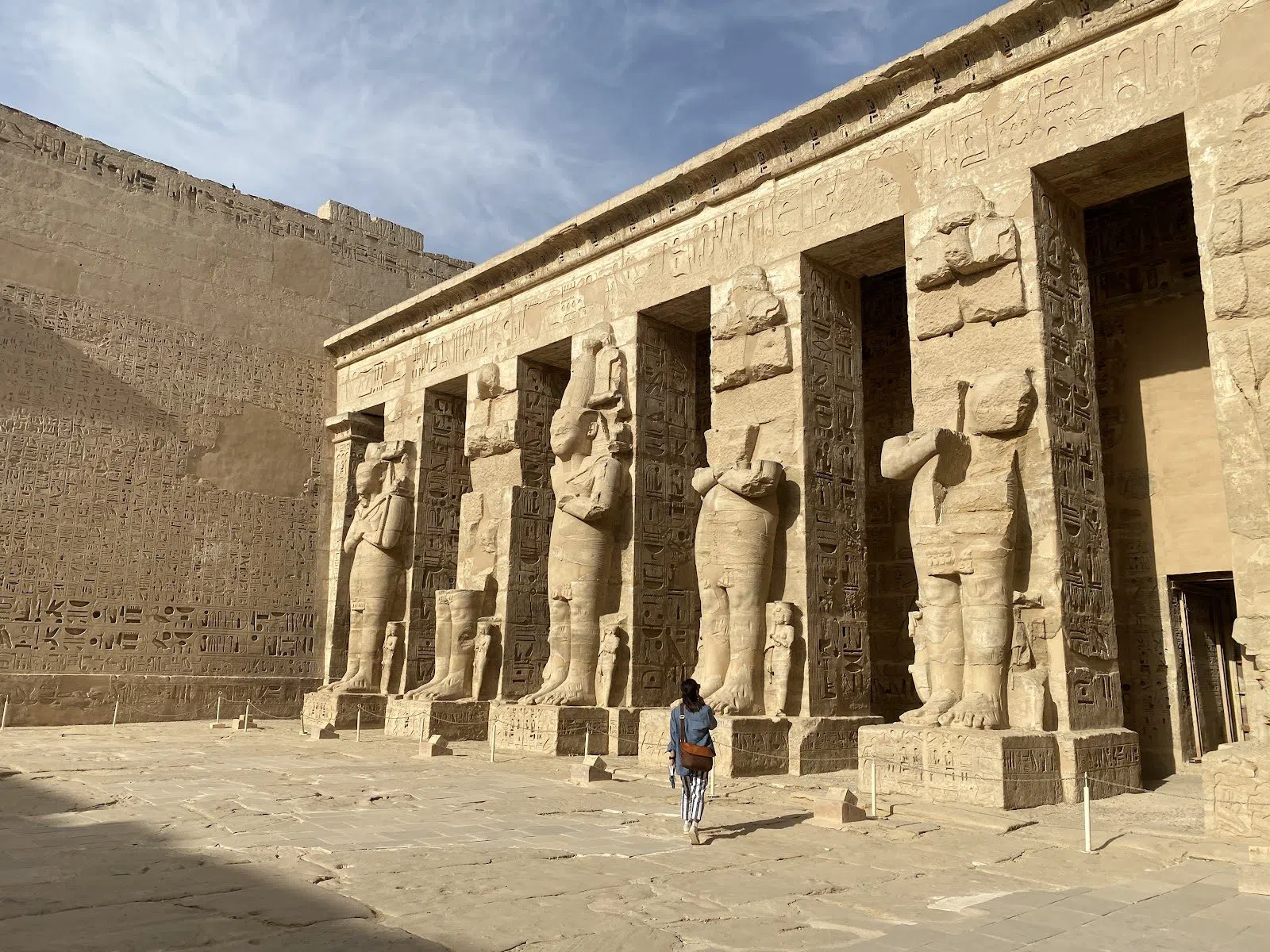
Karnak Temple (northern East Bank) is the one major site with real shade. The Hypostyle Hall columns stand so close together that you can work the entire hall in shadow, so Karnak tolerates a later start than anything on the West Bank, though it still opens at 06:00 and closes around 18:00, and the open courts in between are merciless. Daytime entry is mid-range. The evening sound-and-light show is a separate ticket of roughly 300 EGP; the 19:00 performance lets you return the same day with no sun at all, and it seats large parties together, which is why it works for groups that would struggle to stay coherent in a hot courtyard.
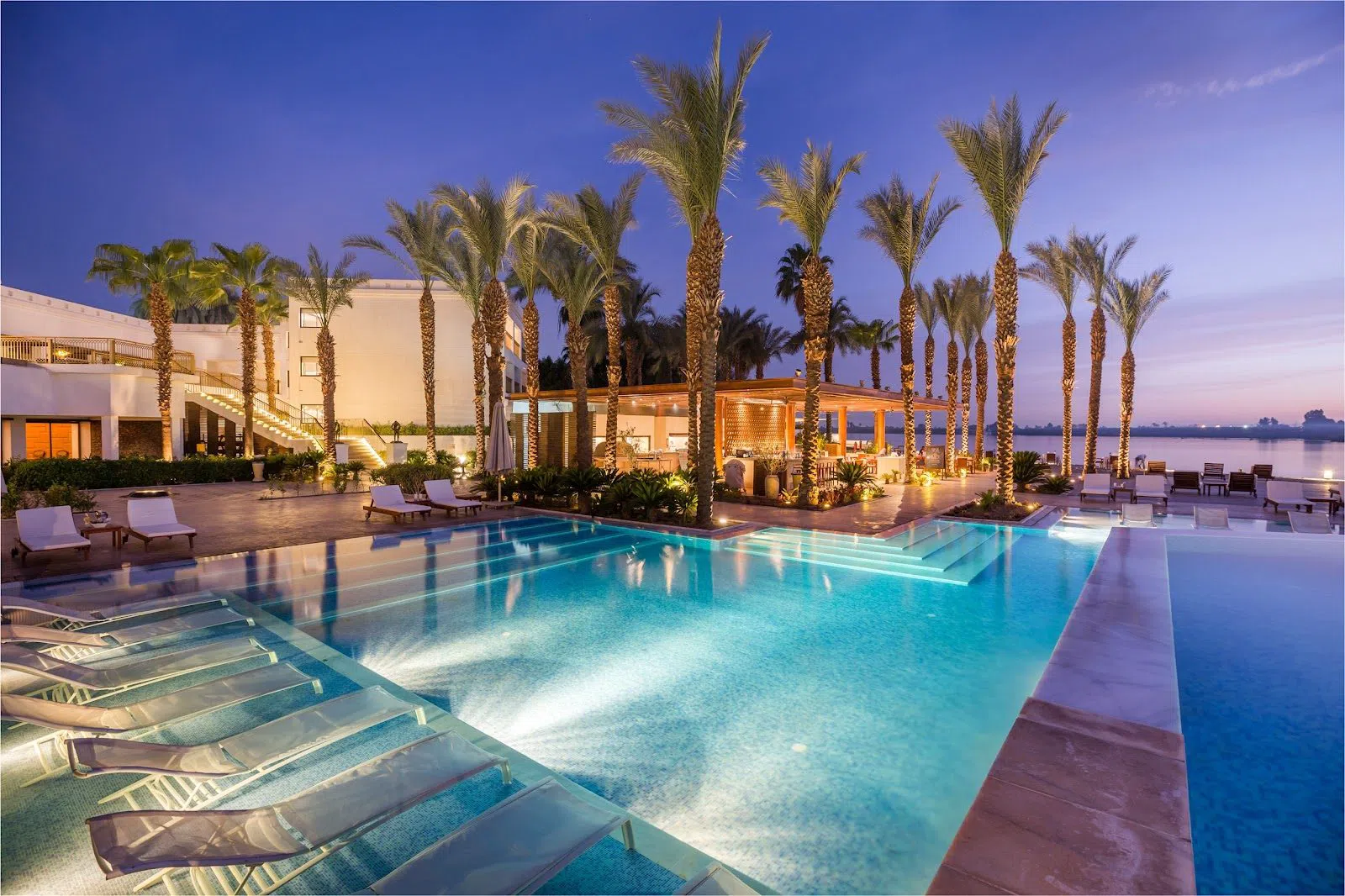
Between the two visits, Hilton Luxor Resort & Spa (northern East Bank, a short walk from Karnak) is the strongest indoor midday option in the city if you want more than a lounger: Nile infinity pools and a twelve-room spa with thermal areas, three restaurants and five bars. Clear the temple at dawn and you can be in cold water by ten. Day-use and spa packages should be arranged in advance, and be precise at the booking stage. Pool access is not always bundled into a day-use rate, and confirming what your rate includes before you arrive saves an argument at the desk.
The cooled hours in town
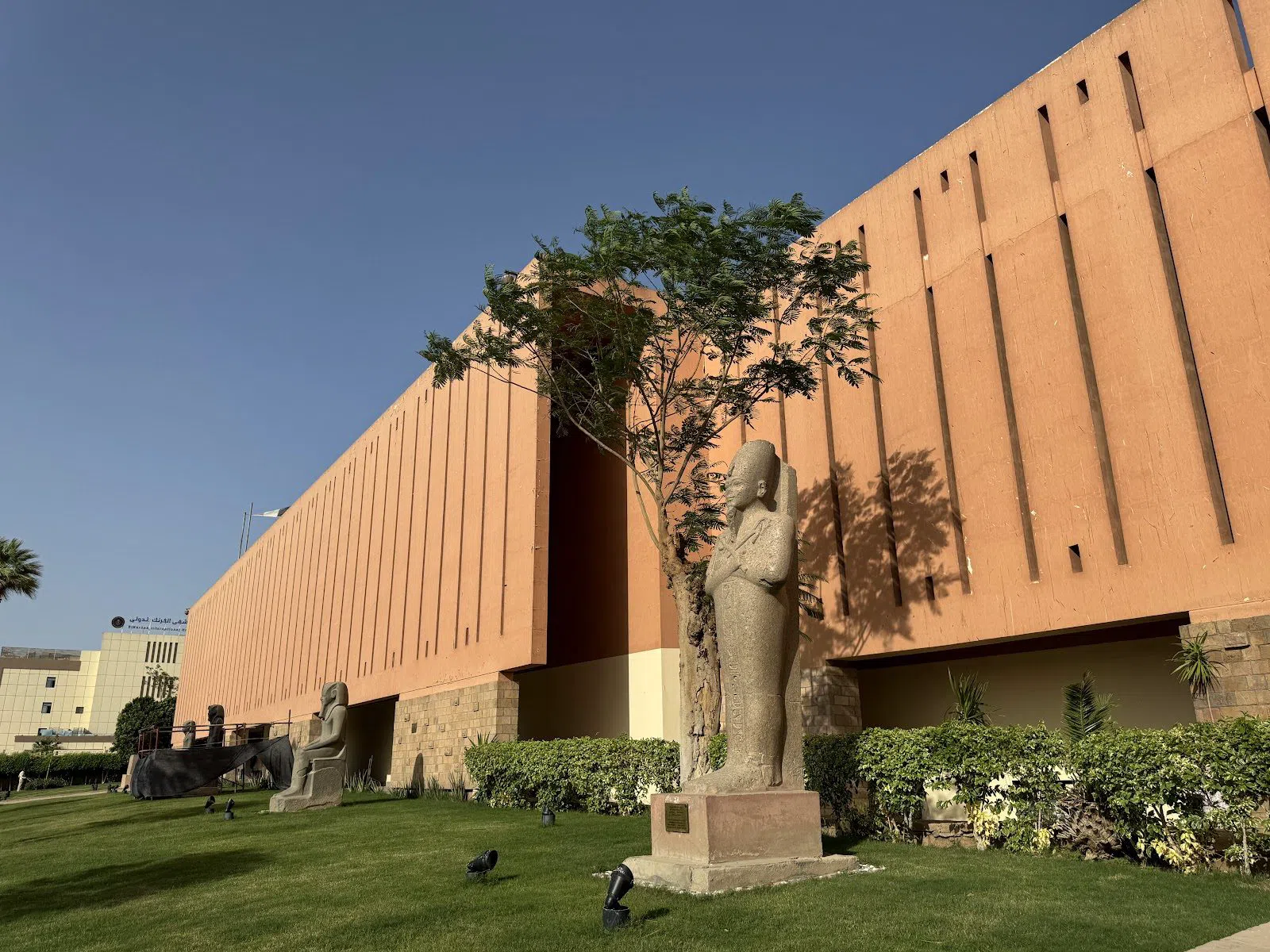
Luxor Museum (Corniche, East Bank) is the best way to spend hours you cannot be outdoors. It runs two sessions, mornings from 09:00 and again from 17:00 into the evening. It is properly cooled, and it is tightly edited rather than exhausting: ninety minutes does it justice. Entry is low-to-mid, though published rates vary by visitor category, so confirm at the window. The galleries are deliberately dim and fairly tight, so coaches get split into waves at the door.
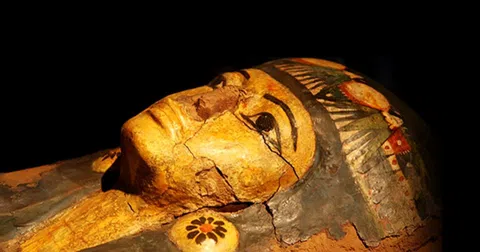
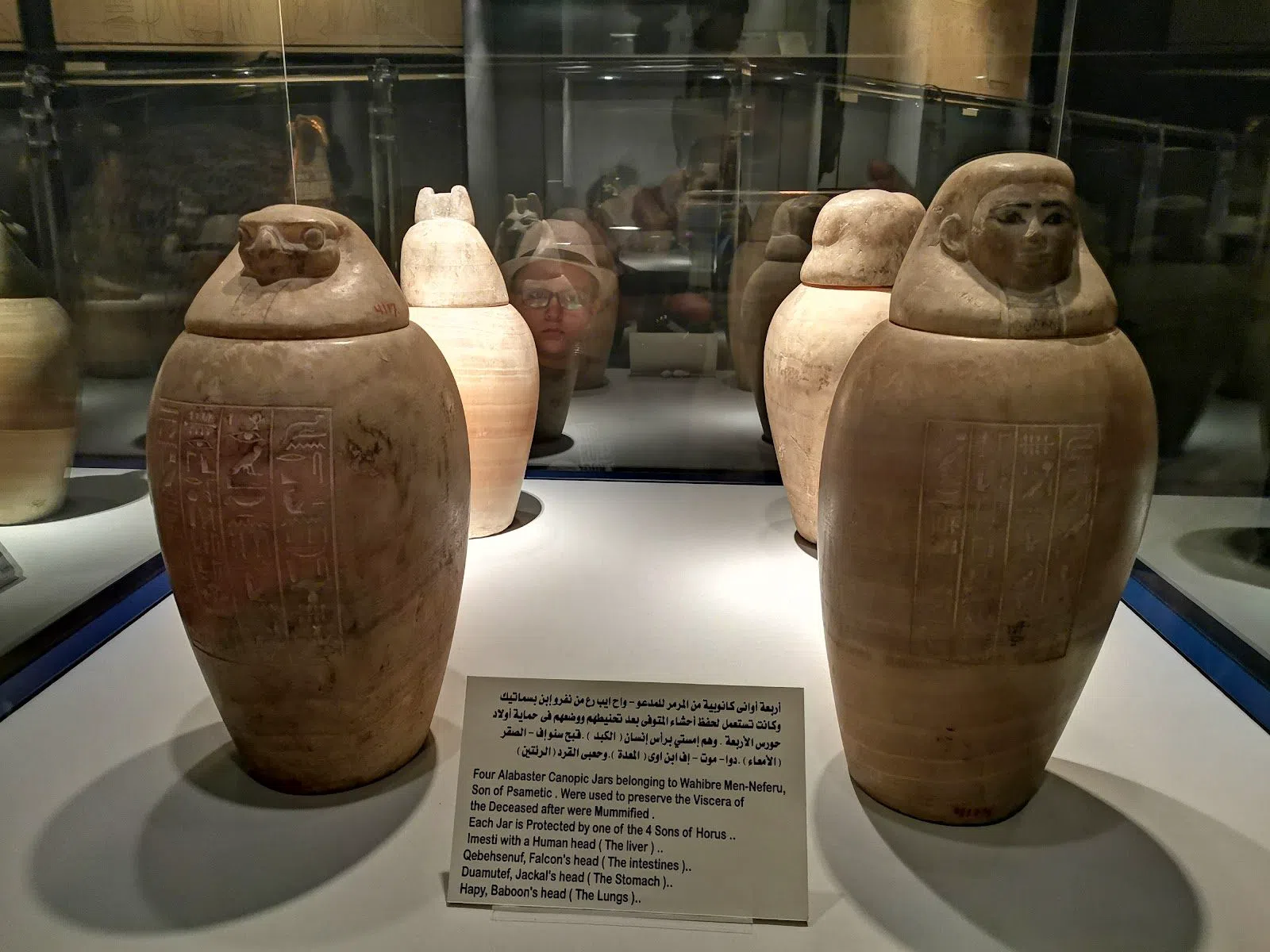
Mummification Museum (Corniche, a few minutes' walk north of Luxor Temple) is a forty-minute stop with a low entry fee, open roughly 09:00 to 14:00 and again 17:00 to 21:00. It is small, air-conditioned and directly on the river, so when the heat has beaten you at noon you can duck in and still be somewhere worth being. A dozen people fit; a full coach does not.
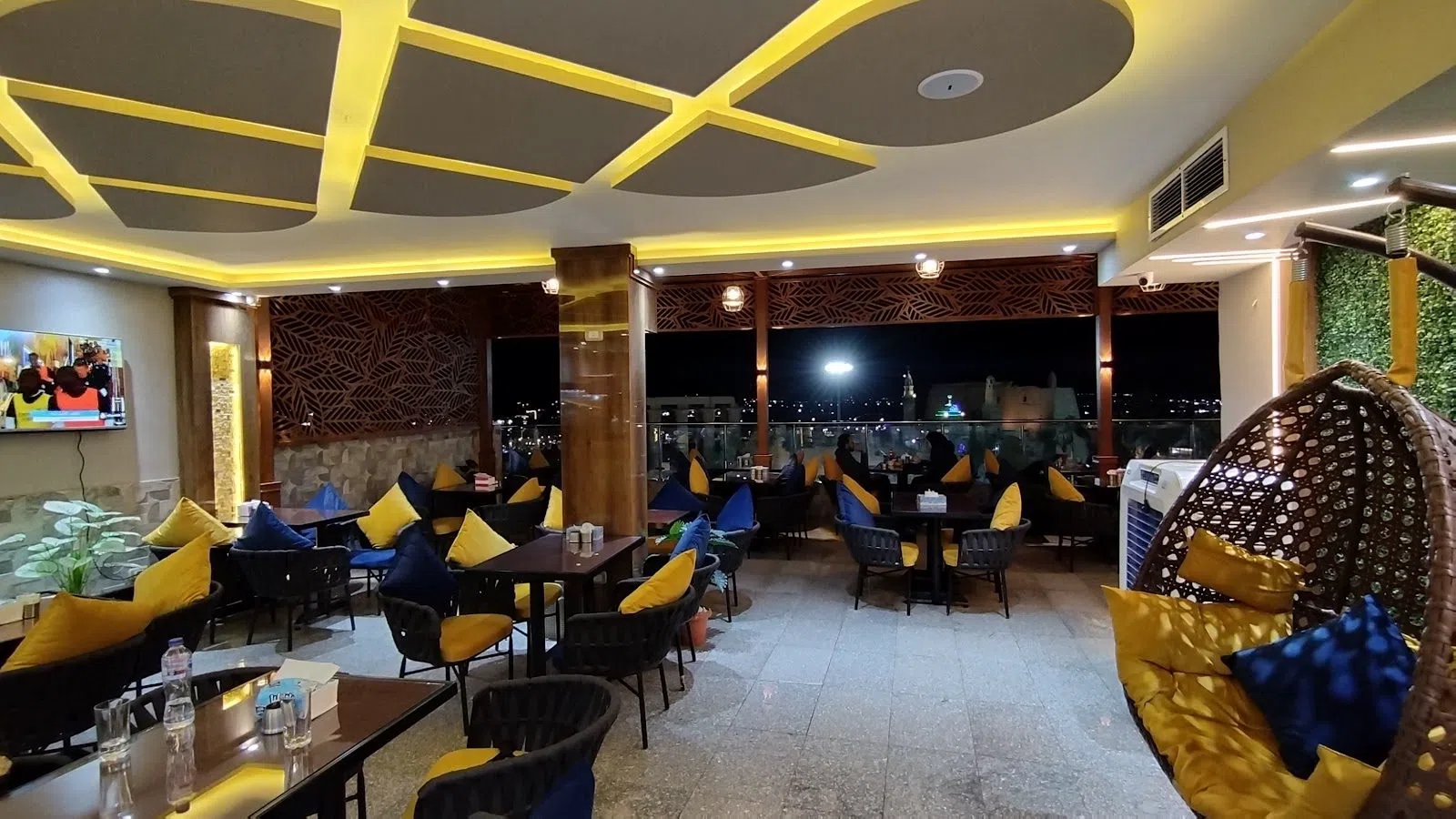
For the awkward gap between finishing the East Bank sites and the evening reopenings, Aboudi Coffee Break (opposite Luxor Temple, East Bank) is the answer: open 08:00 to 22:00 every day, cooled inside, several floors, no bookings, and cheap. Coffee, cold juices and simple Egyptian plates that will not trouble a few hundred EGP for two. Ask for the karkadeh cold. The roof is worth having at dusk, once the street below has stopped radiating.
Gardens and pools for the flat middle of the day
Pavillon Winter Luxor (central East Bank, on the Corniche) is the only serious green shade in the middle of town and it is walkable from the temple. The grand Winter Palace itself is closed for restoration and reopens under the Mandarin Oriental name in 2027, but the Pavillon is running and still shares those gardens and the pool. Food and drinks are mid-range; pool access for non-residents is by arrangement, so ask before you turn up with a towel. Small groups are fine for lunch or the terrace, and anything larger needs booking ahead.
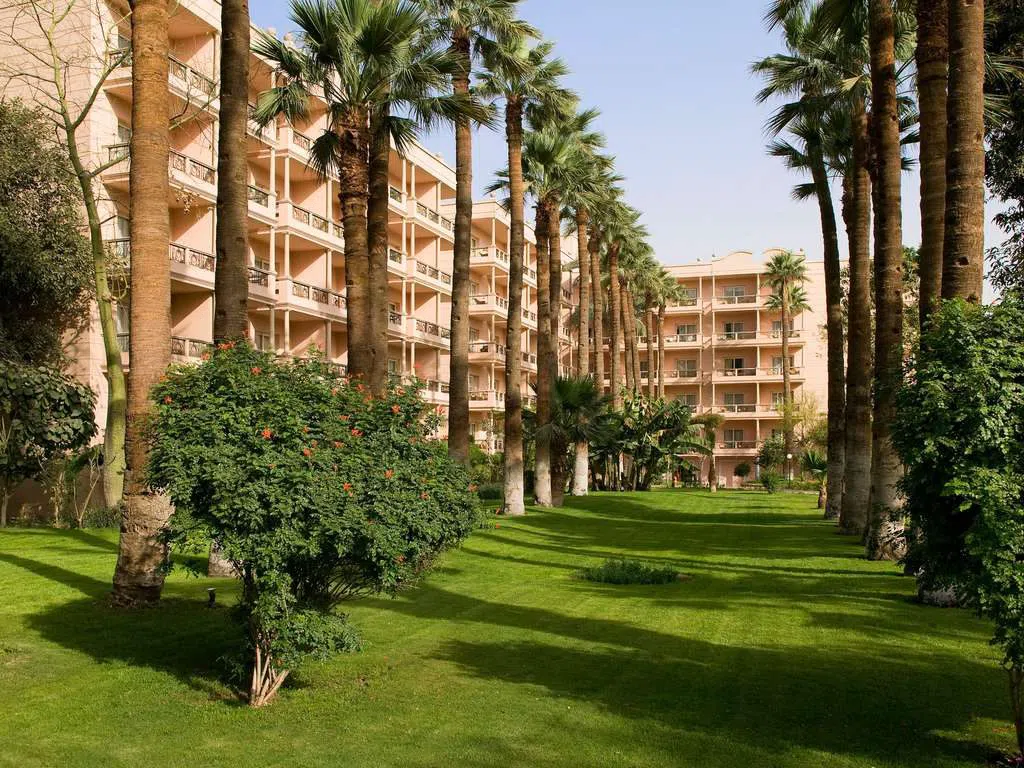
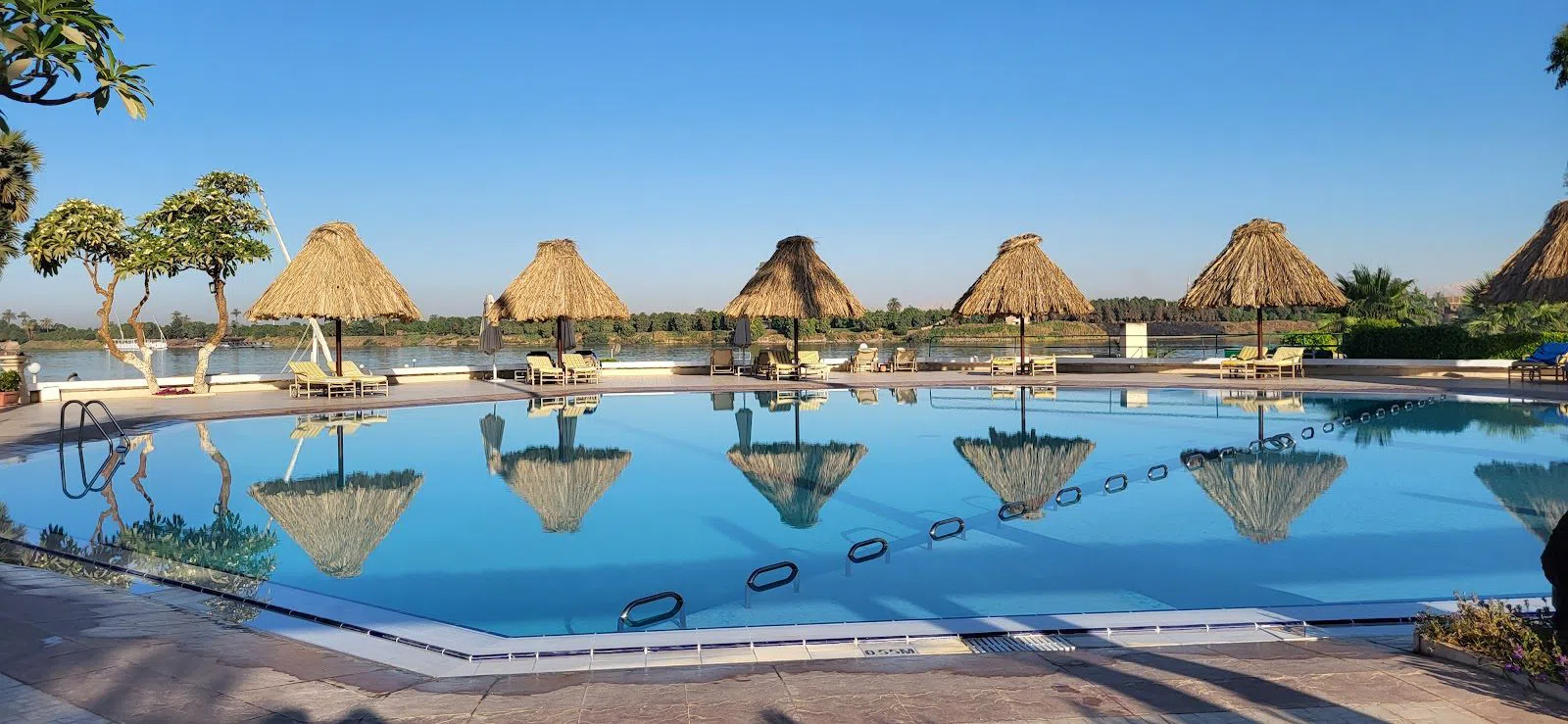
About fifteen minutes south of town, Jolie Ville Luxor Hotel & Spa Kings Island (private Nile island) is the one place you can hand an entire afternoon to without feeling you have written the day off. The planting is mature and deep enough that the island runs several degrees cooler than the Corniche, and it is the most group-capable property in Luxor: meeting halls taking up to 900, ten-plus restaurants and bars, coach parties handled as routine. Day passes have been available; confirm current terms directly rather than assuming. If you would rather sleep somewhere with that kind of shade instead of commuting to it, compare rates through the Luxor hotel search.
After the stone stops radiating
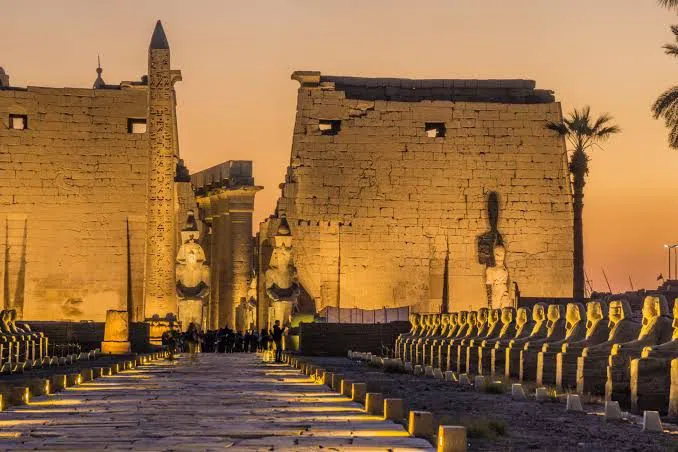
Luxor Temple (central East Bank, on the Corniche) is the closing move. It stays open until 21:00, almost unique in a country where sites shut by 17:00, and the same-day ticket allows re-entry, so you can look in briefly in the morning and come back when the floodlights are on and the stone has cooled. It is around 400 EGP for adult foreign visitors and roughly half for students with ID. You walk in from town without needing transport, and the evening slot spreads the crowd out enough that even large parties move easily.
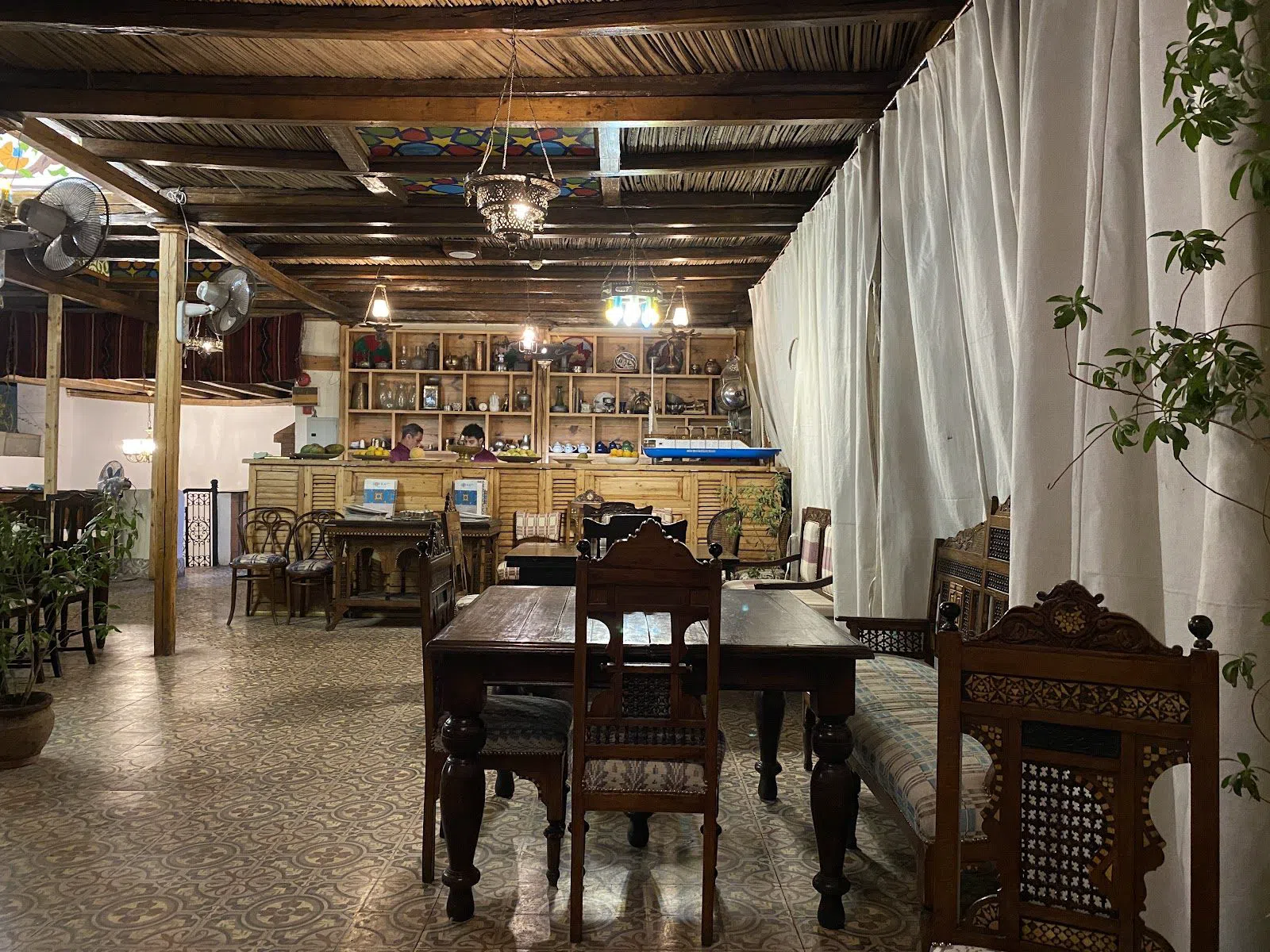
Dinner afterwards belongs to Sofra Restaurant & Café (Mohamed Farid Street, East Bank), open 11:00 to midnight and roughly 400 to 600 EGP a head. The cooled ground-floor salons are the point at midday, the roof terrace after dark. It takes bookings, absorbs larger parties across its several rooms, and it delivers, which is useful on the day the heat wins and you want to eat properly without leaving your room.
Who each place actually suits
Coach groups: Karnak, the Valley, Hatshepsut, Medinet Habu, Luxor Temple, Jolie Ville, Sofra. All of them have the parking, the width or the seating to take you as a block. Couples and pairs: Al Moudira, Marsam, Howard Carter House and the Mummification Museum, all small enough that a coach changes the experience for everyone in the room. Anywhere involving a pool you do not sleep beside (the Pavillon, the Hilton, Jolie Ville, Al Moudira) needs a phone call first. Non-resident access is a courtesy here, not a right, and it is granted far more readily when you have asked.
Practical notes
The West Bank is a car-and-driver day. Hire one for the full morning rather than paying per leg, because standing at a gate negotiating a ride in the sun is exactly what this plan exists to avoid. The local ferry crosses the Nile cheaply and constantly for foot passengers, which is the sensible way to reach the East Bank sites and town. Agree every taxi fare before you get in.
Carry Egyptian pounds. Site ticket offices, the ferry, small cafés and drivers all run on cash, and card acceptance is patchy outside the hotels. Small notes matter more than large ones.
Hold the timings in your head: 06:00 gates, 17:00 or 18:00 closings, Luxor Temple open until 21:00 and the 19:00 show at Karnak. Museums reopen at 17:00. Build every day around those numbers and nothing else needs to change.
A realistic full day comes to this: the Valley's standard ticket plus one add-on, around 200 EGP for Medinet Habu, about 220 EGP for Howard Carter House, roughly 400 EGP for Luxor Temple, roughly 300 EGP for the Karnak show, lunch from a few hundred EGP at Marsam to 400 to 600 EGP a head at Sofra, plus a car for the West Bank morning. A balloon flight from about €100 sits on top of that. Add two litres of water per person before noon and more after; you will drink more than you expect, and the only real way to lose a Luxor day is to spend the middle of it outdoors. For everything else in the city, start with the Luxor guide.
Before you go
What time should I start sightseeing in Luxor in summer?
At the gate for 06:00, when the archaeological sites open. The first ninety minutes are the only comfortable outdoor hours, and they decide whether the Valley of the Kings is a good visit or a queue in full sun. From about 10:00 to 16:00, plan to be indoors, in water or under trees.
Which sites in Luxor are open in the evening?
Luxor Temple stays open until 21:00 and its same-day ticket allows re-entry, so you can see it floodlit after a morning look. Karnak runs a sound-and-light show at 19:00 on a separate ticket of roughly 300 EGP. Luxor Museum reopens at 17:00 into the evening, and the Mummification Museum runs a 17:00 to 21:00 session.
Where can I go at midday when it is too hot to be outside?
Luxor Museum is properly cooled and needs about ninety minutes; the Mummification Museum is a forty-minute stop on the Corniche; Aboudi Coffee Break opposite Luxor Temple is air-conditioned and cheap. For water, the Hilton Luxor Resort & Spa has Nile infinity pools and a twelve-room spa, and Jolie Ville on its private island has deep, mature shade. On the West Bank, Howard Carter House is roofed and naturally cooled, and Marsam has genuine tree shade.
Is a sunrise hot-air balloon flight worth it in the heat?
Yes, and partly because of the heat. Sindbad Balloons picks up around 05:30 for a 06:30 launch and 30 to 45 minutes airborne, which uses the coolest hour of the day and puts you back at breakfast with the morning still usable. From about €100 standard, €120 deluxe, €150 Comfort, private baskets on quote.
How much cash should I carry for a day of sightseeing in Luxor?
Enough Egyptian pounds for tickets, transport and food, since card acceptance is patchy outside hotels. Budget about 400 EGP for Luxor Temple, 200 EGP for Medinet Habu, 220 EGP for Howard Carter House and 300 EGP for the Karnak evening show, plus the Valley of the Kings standard ticket and any add-ons, a car for the West Bank morning, and 400 to 600 EGP a head if you eat at Sofra.