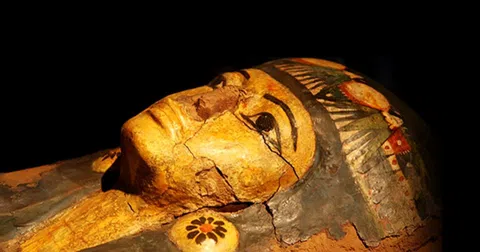
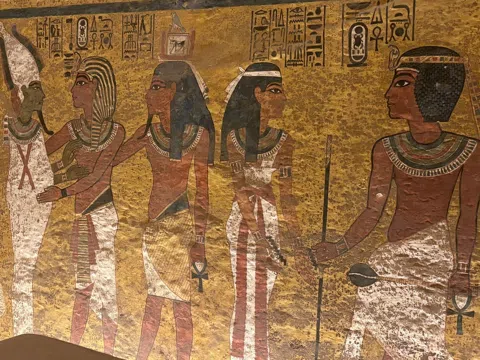
The Luxor issue
Two Days in Luxor at a Pace That Won't Wreck You
A realistic two-day plan for Luxor that works around the heat, with honest ticket prices, one early start instead of three, and the stops worth dropping.

By Hanne VermeerReading Luxor the way it was built
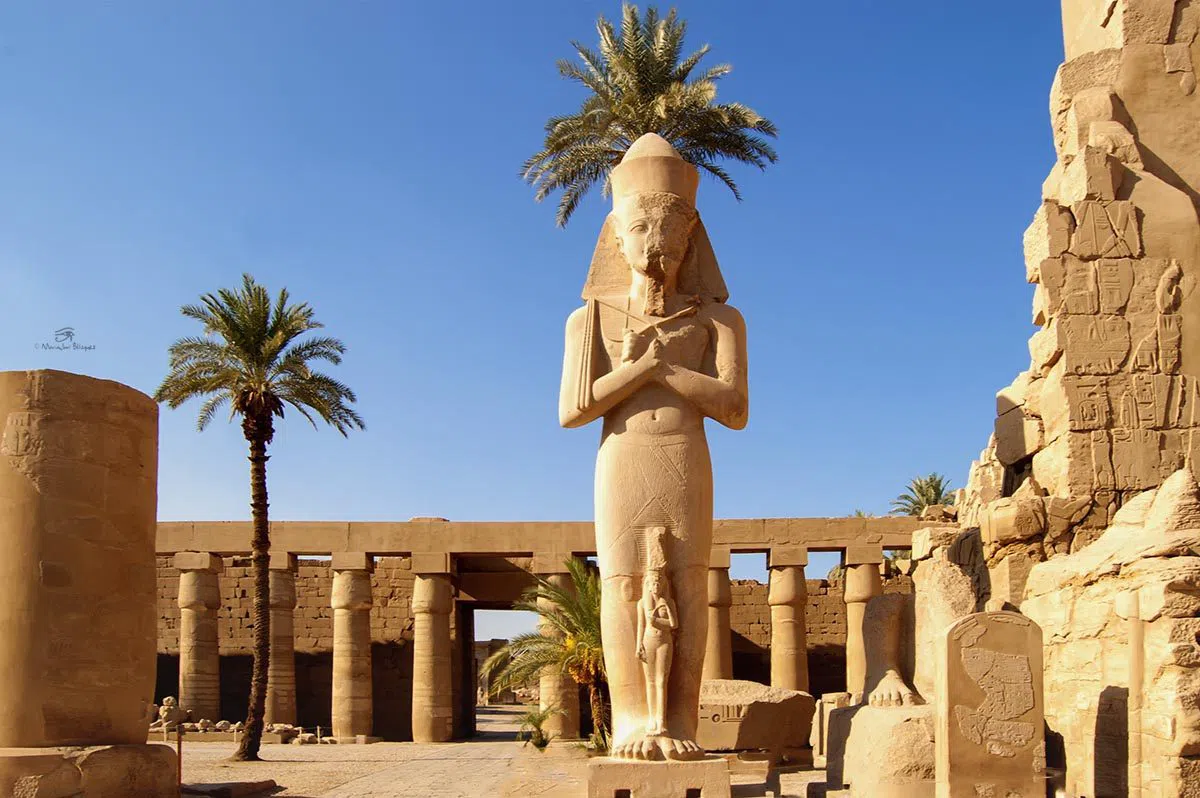
At six in the morning the sandstone at Karnak still holds the night's cold, and you can stand under the papyrus columns with maybe a dozen other people. By eleven the same hall is a furnace full of coach parties, and by two the whole city has gone indoors. Luxor runs on that gap, and two days here succeed or fail entirely on whether you plan around it or pretend it isn't there.
How the two days divide
The Nile does the organising for you. The east bank holds the living town and two enormous temples that were built where people actually lived; the west bank, where the sun set, holds the tombs and the mortuary temples. One bank per day is the only version of this that leaves you standing at the end.
Take the east bank first. It is walkable, it forgives a late arrival, and it has the only major site in Egypt with a proper night opening, so you can spread it across a morning and an evening and write off the middle of the day without losing anything. Save the west bank for day two, because it needs a car arranged the night before, a genuine pre-dawn start, and legs that haven't already done ten thousand steps.
What you should not do on a two-day stay is bolt on the long round trip to the temples up and down the valley. Ten hours in a minibus will cost you one of your two days and most of the next morning. If you want something beyond Luxor, there is a one-hour version further down this piece.
Plan your Luxor trip
Live prices from our booking partners.
Free cancellation on many rooms. We may earn a commission when you book.
Karnak at six, before the coaches
Karnak Temple Complex (north end of the east bank Corniche, about three kilometres from the town centre) opens at 06:00 in winter and closes at 17:30, running to 18:00 between May and September. Entry is roughly 600 EGP, about $12. Be at the gate when it opens. Arrive an hour later and the hypostyle hall stops being a piece of architecture and becomes a queue.
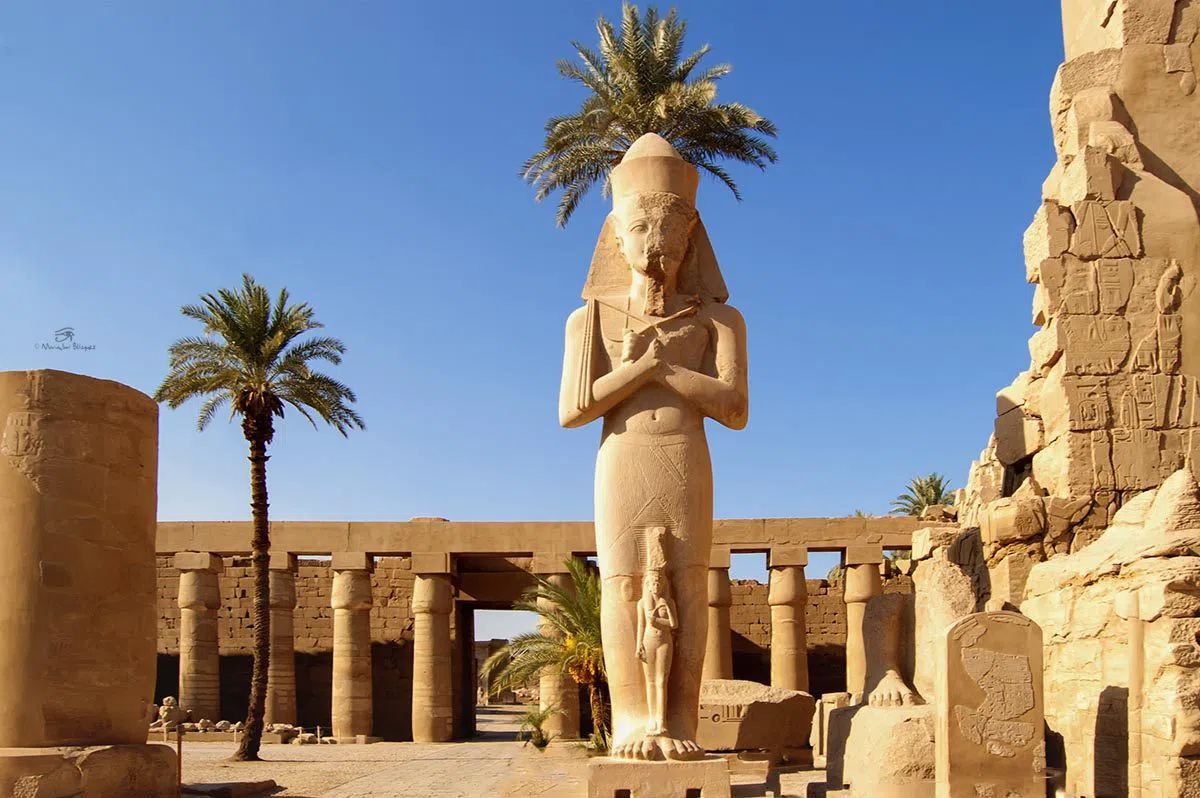
Karnak was built and rebuilt over roughly two thousand years by pharaohs who mostly wanted to out-build their predecessors, which is why nothing about it is coherent and all of it is enormous. The processional courts are wide enough to swallow several coach parties without anyone feeling crowded, so it handles groups of any size better than almost anywhere else in the city. Licensed guides are the norm and worth taking here more than at any other site, because without one the sheer accumulation of stone stops meaning anything after about twenty minutes.
Give it two to two and a half hours and leave by half past eight. The nightly Sound & Light show runs at 19:00, 20:15 and 21:30 in rotating languages, costs around 500 EGP on top, and is sold in group blocks. On a two-day trip, skip it. It eats the evening that the east bank's better night attraction has a stronger claim on, and you will be getting up at four the next morning.
What to do when the sun wins
Between roughly noon and four, sightseeing in Luxor is an act of self-harm for most of the year. Plan for it rather than fighting it.
The Mummification Museum (east bank Corniche, just north of Luxor Temple) opens 09:00-14:00 and again 17:00-21:00, and costs somewhere between 100 and 200 EGP. It is small (one long gallery, forty-five minutes, and a large group is better splitting into halves) but genuinely useful, because it explains the process whose end products you will be looking at all day two. Slot it in after Karnak, around ten or eleven, while its morning session is still open.
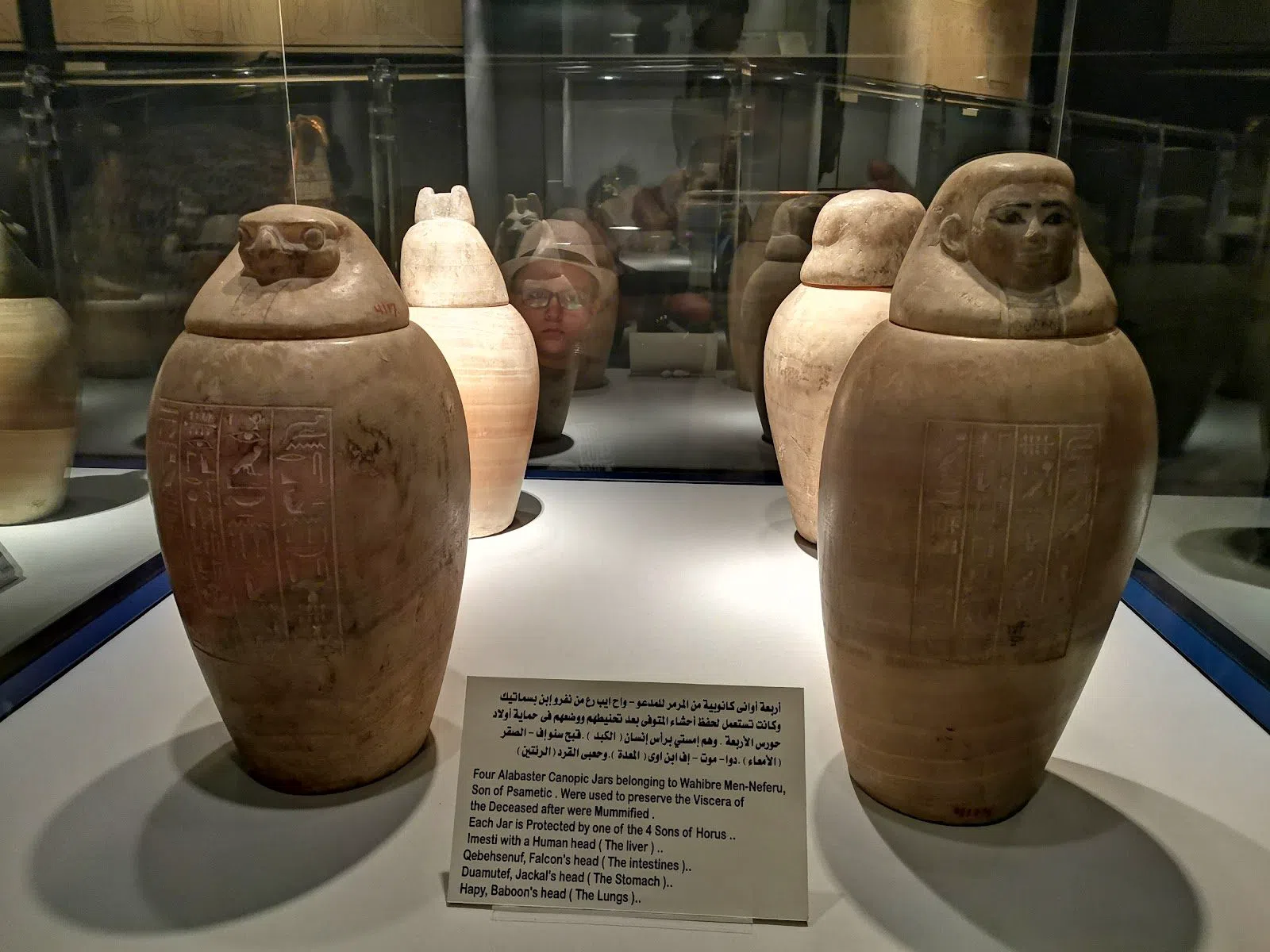
Then stop. Go back to your hotel, eat, sit somewhere shaded and do nothing until about half past four. People who enjoy Luxor take that afternoon off; people who endure it don't.
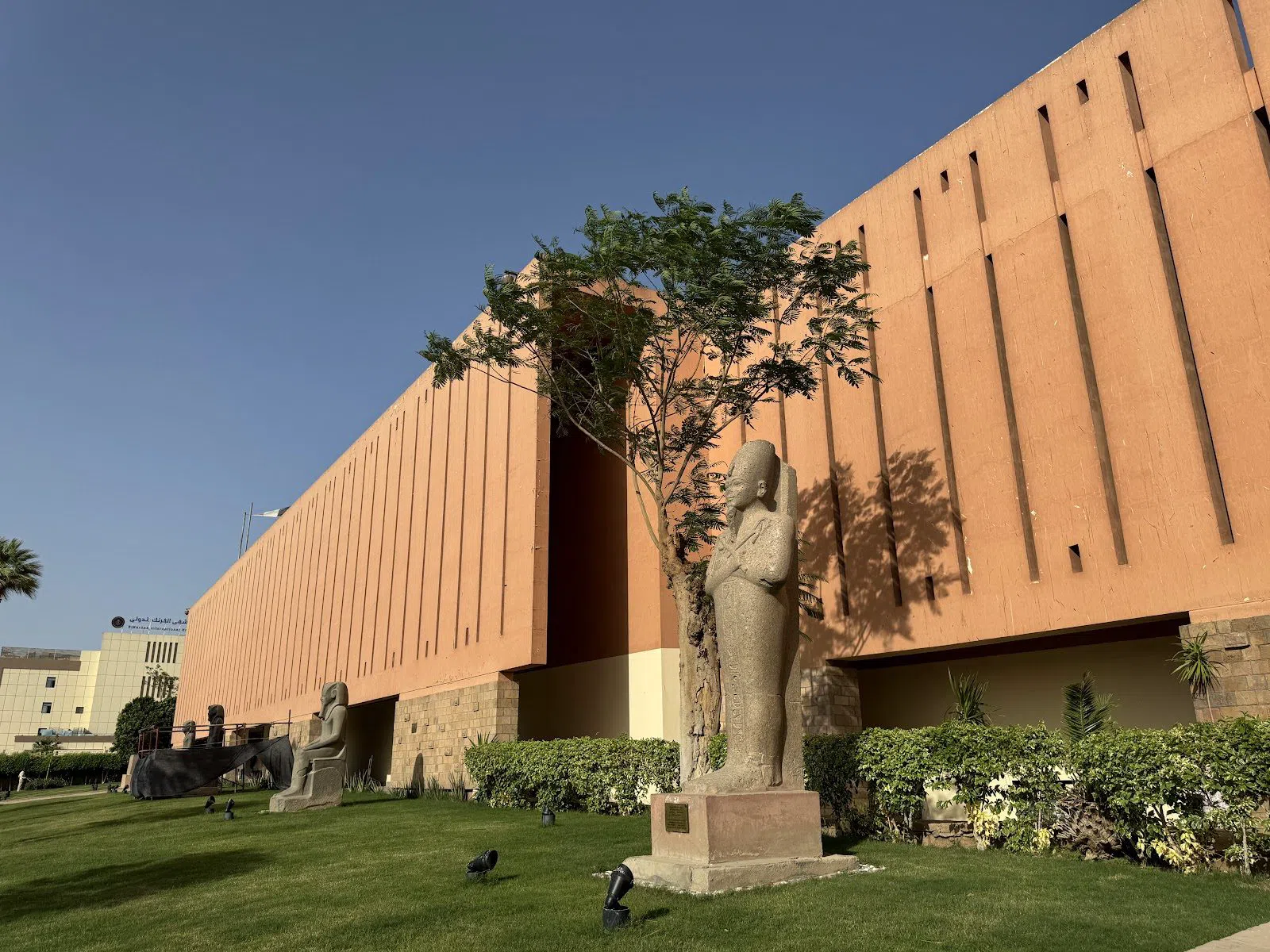
When you resurface, the Luxor Museum (east bank Corniche, midway between the two temples) runs a second session from 17:00 to 21:00 with the ticket desk closing at 20:30, and charges between 100 and 350 EGP depending on the ticket tier. It is air-conditioned, compact, and beautifully lit, and an hour covers it comfortably even in a group. Coming in the evening rather than the morning is the one scheduling choice that fixes day one.
Luxor Temple after dark, then dinner two minutes away
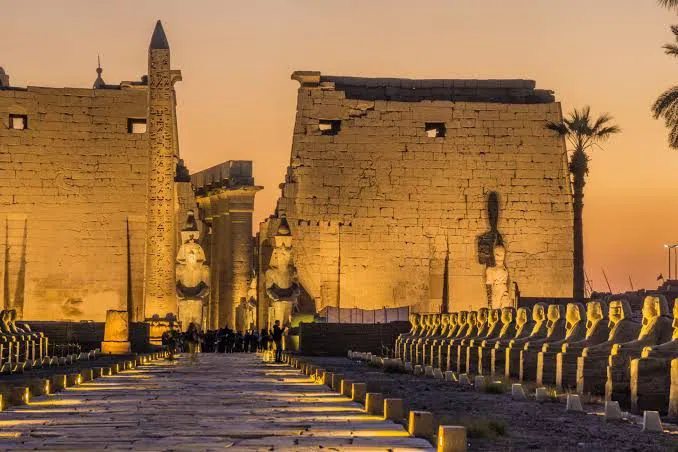
Luxor Temple (dead centre of the east bank, walkable from most town hotels) costs around 400-420 EGP and stays open until 21:00. Floodlit, half-empty and cool, it is a completely different building from the one people photograph at noon. There are no access restrictions and no coach park to negotiate: groups arrive on foot, which tells you how central it is.
It also rewards a little context. The temple was never a tomb or a museum piece; it was in continuous use for three thousand years, absorbed a Roman garrison chapel and then a mosque that still stands above the old court, and the layers are visible if you look up. An hour and a half is enough.
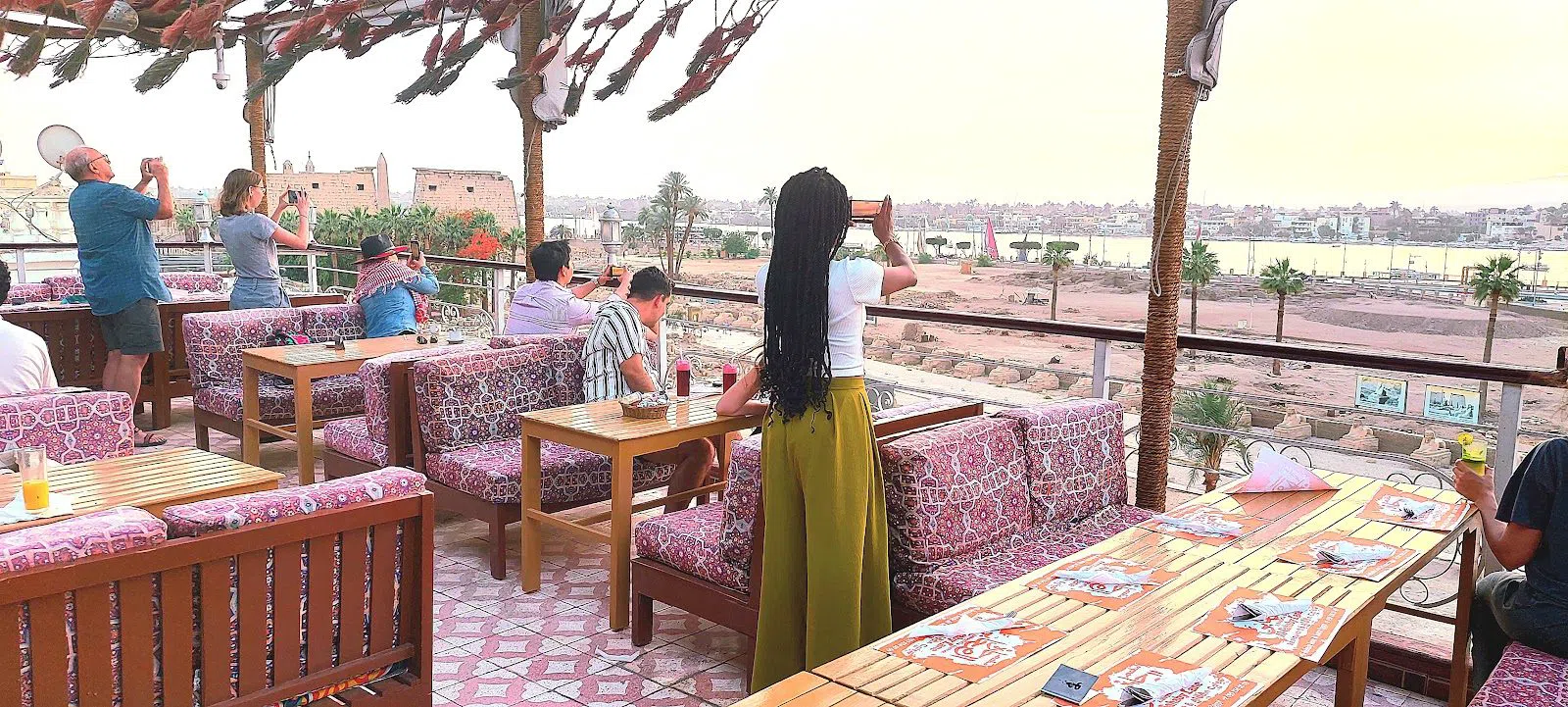
Walk out and eat at Al-Sahaby Lane Restaurant (east bank, on the lane running beside the temple precinct), two minutes away, so there is no taxi to find, no fare to argue over and no second wind required. Egyptian and Mediterranean cooking, mains roughly 120-300 EGP, with rooftop and lane-level seating that both take groups. The roof has the best free view in Luxor and you have just paid for the thing you are looking at.
Crossing to the west bank in the dark
Arrange your car the previous evening. The Valley of the Kings (west bank, about twenty-five minutes from town) opens at 06:00, and being there at 06:00 is the entire strategy. The standard ticket is roughly 600-750 EGP and covers three tombs; a tuf-tuf shuttle runs from the visitor centre up to the tomb cluster. Guides are not permitted to lecture inside the tombs, so a good one briefs you outside first and then lets you go in and look.
Three tombs done properly beats six done badly, and by nine the valley is an oven with no shade anywhere in it. The supplements are where the money goes. KV62, Tutankhamun's tomb, adds about 700 EGP and is a small room whose real draw is the mummy itself. KV9, Ramesses V and VI, adds about 220 EGP and is the best value in the valley by a distance: deep, vividly ceilinged and consistently the one people remember. KV17, Seti I, adds around 2,000 EGP and is the finest tomb ever cut in Egypt, which is a fair description and also a lot of money.
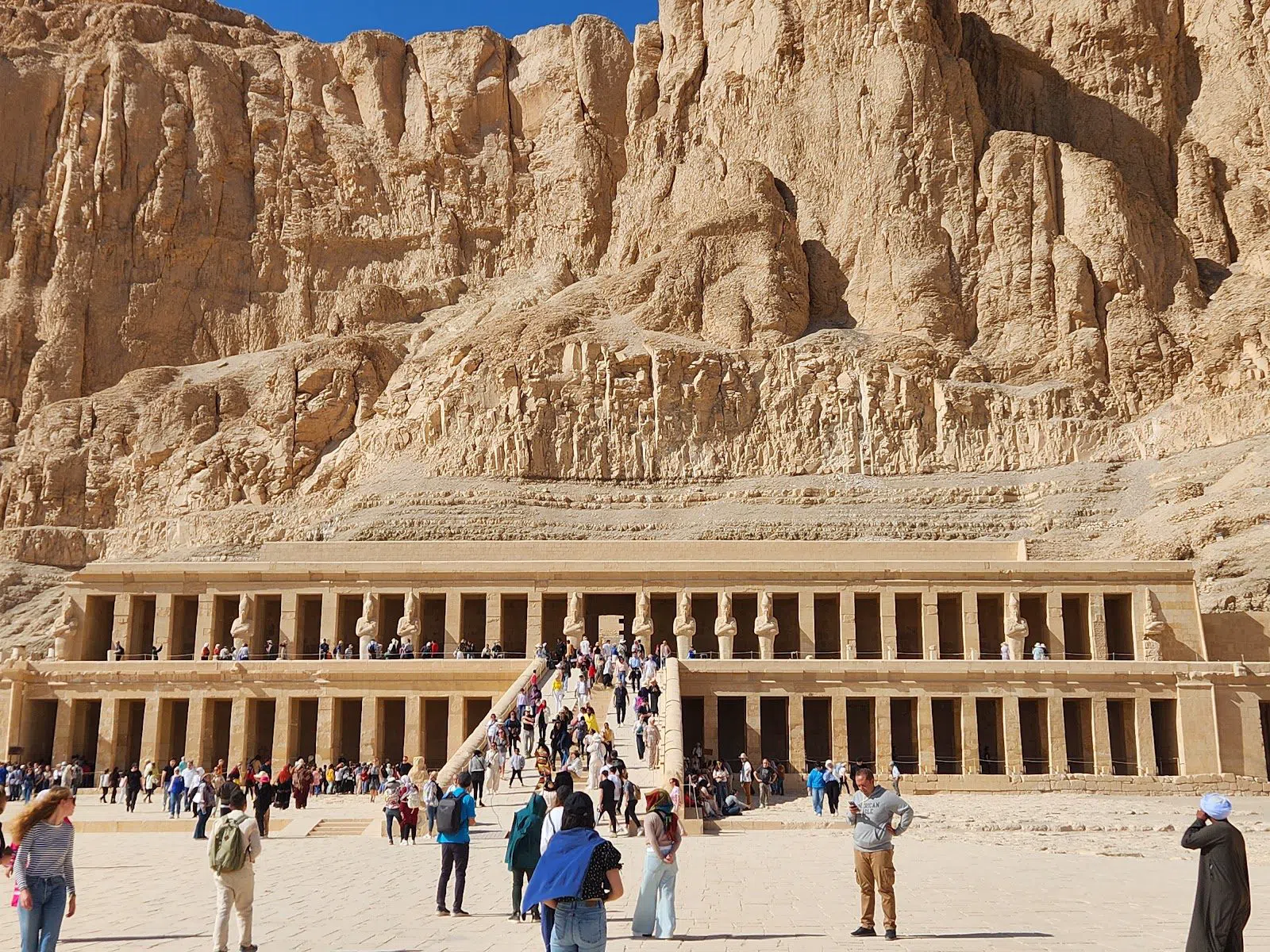
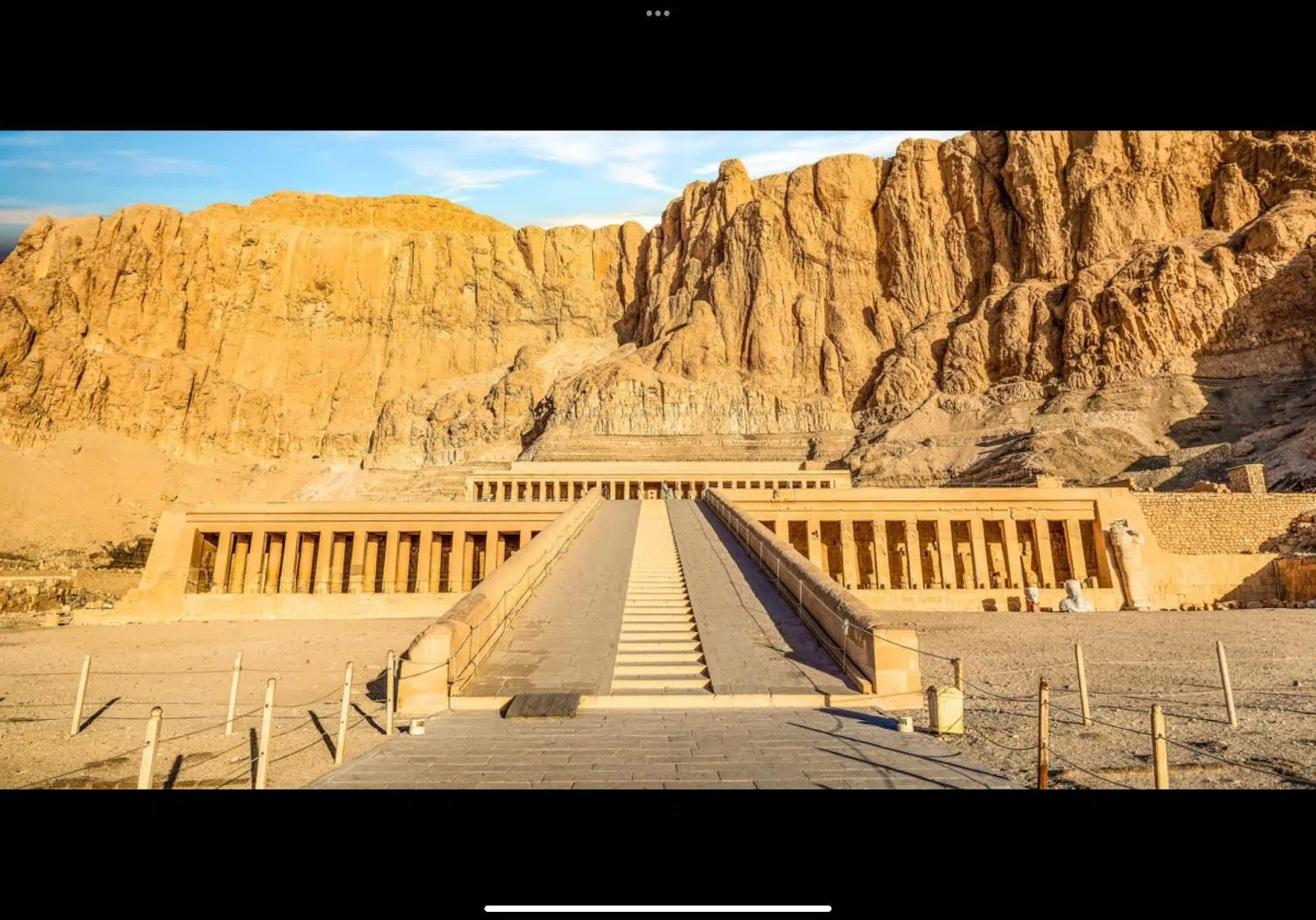
From there it is minutes to the Temple of Hatshepsut at Deir el-Bahari (west bank, in the cliff amphitheatre north of the valley road), at roughly 360-400 EGP, open 06:00-17:00 and to 18:00 in summer. A shuttle covers the four hundred metres from the ticket office to the ramp for a small fee, and in mid-morning it is worth every piastre. The terraces are a sun trap with essentially no shade, so aim to be there by nine and gone by ten. It is very easy for groups, which is why it is busy; the reliefs at the far ends of the colonnades are where the crowd thins.
The balloon, and what it costs your schedule

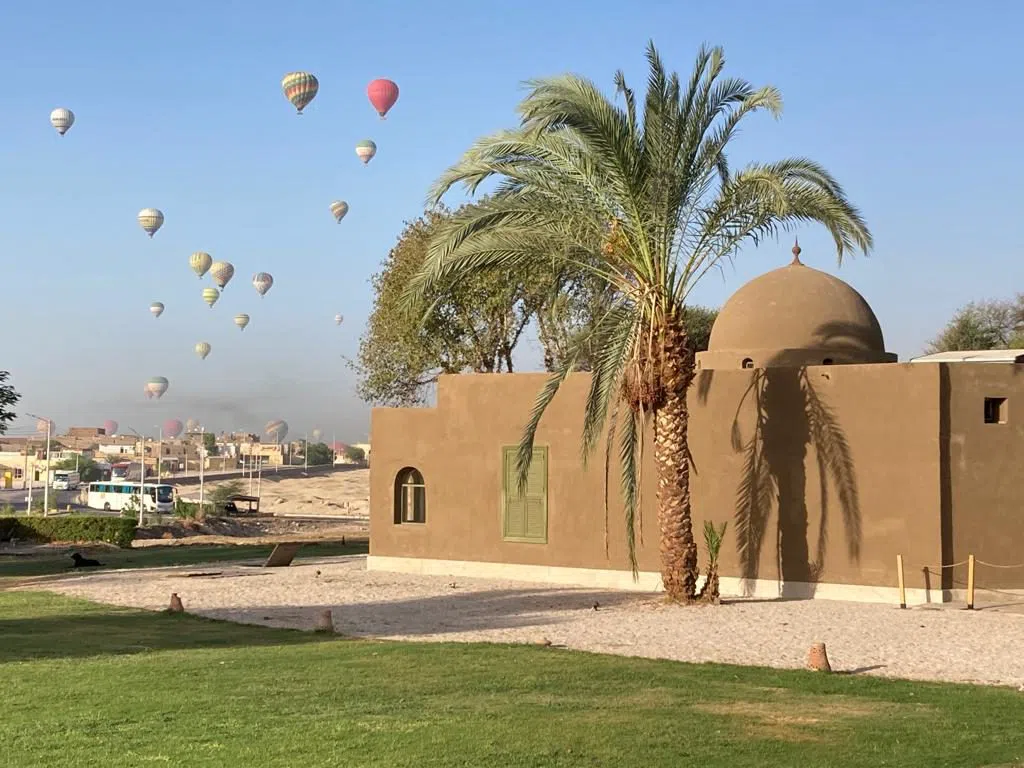
Sindbad Balloons (west bank launch fields, with hotel pickup either side of the river) has confirmed its 2026 season and has been flying since 2005, running the largest operation in the city. Pickup is around 05:30, flight around 06:30, and prices are €100 standard, €120 deluxe and €150 comfort, with private charters on request. Standard baskets carry up to 28 people and the Comfort basket is capped at 20, worth the upgrade if you dislike being shoulder to shoulder at altitude.
The trade is a real one. If you fly, you land around half past seven and reach the Valley of the Kings at eight, by which point the first coaches are in and the heat is building. Two honest ways round that: fly on day two and cut to two tombs instead of three, or move the balloon to day one's morning and start Karnak at eight after you land, since Karnak's open courts absorb a crowd far better than a tomb corridor does. What does not work is flying and then attempting a full west bank programme; that is the itinerary that produces the two o'clock collapse.
Lunch where you already are
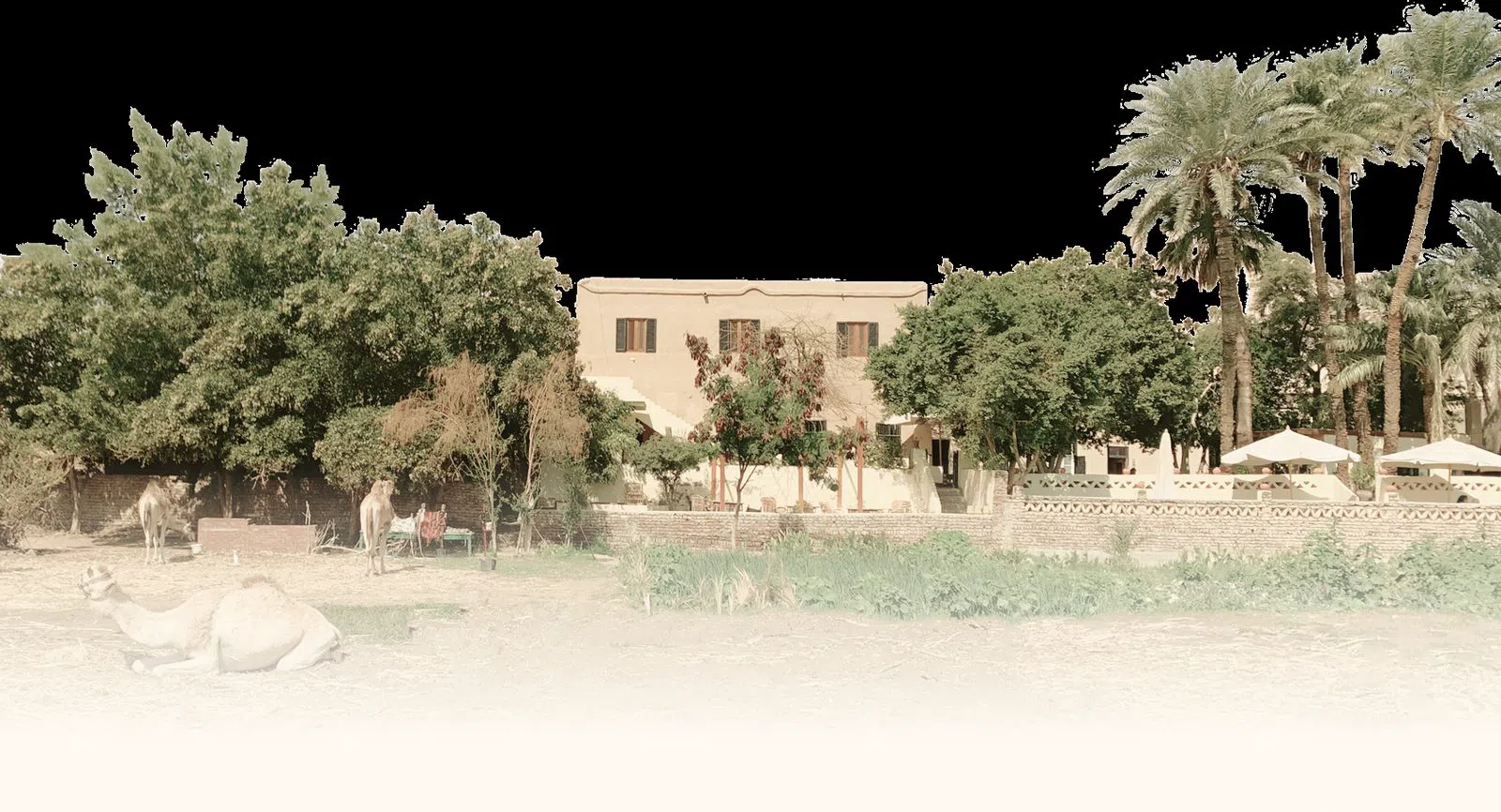
Do not drive back across the river to eat. The Marsam Hotel Garden Restaurant (west bank, at Qurna near the antiquities ticket office) is the oldest guesthouse on this side of the Nile, cooks mostly local and seasonal, and welcomes non-residents for lunch or dinner. Mains run 160-220 EGP and drinks 10-35 EGP. The garden seating handles groups, though a large table is worth a phone call in advance. An hour here in the shade is what makes the rest of the afternoon possible.
One more temple if you have it in you
After lunch, add one thing, not three.
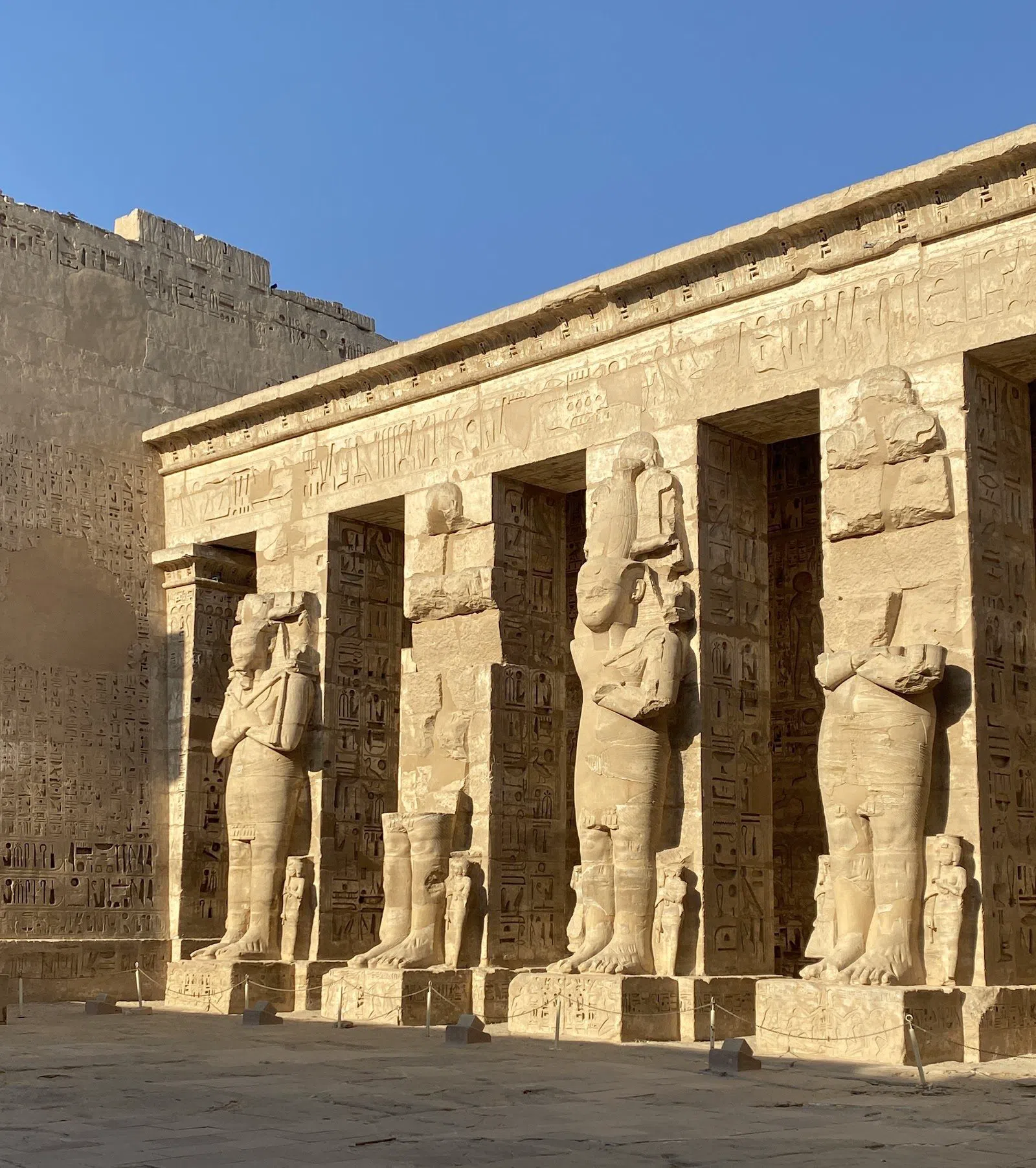
The strongest single choice is Medinet Habu (southern west bank, past the Colossi), the mortuary temple of Ramesses III, at roughly 100-200 EGP for about an hour. It has the best-preserved colour on this side of the river and is usually near-empty, which means a group can actually hear its guide, rarer than it sounds.
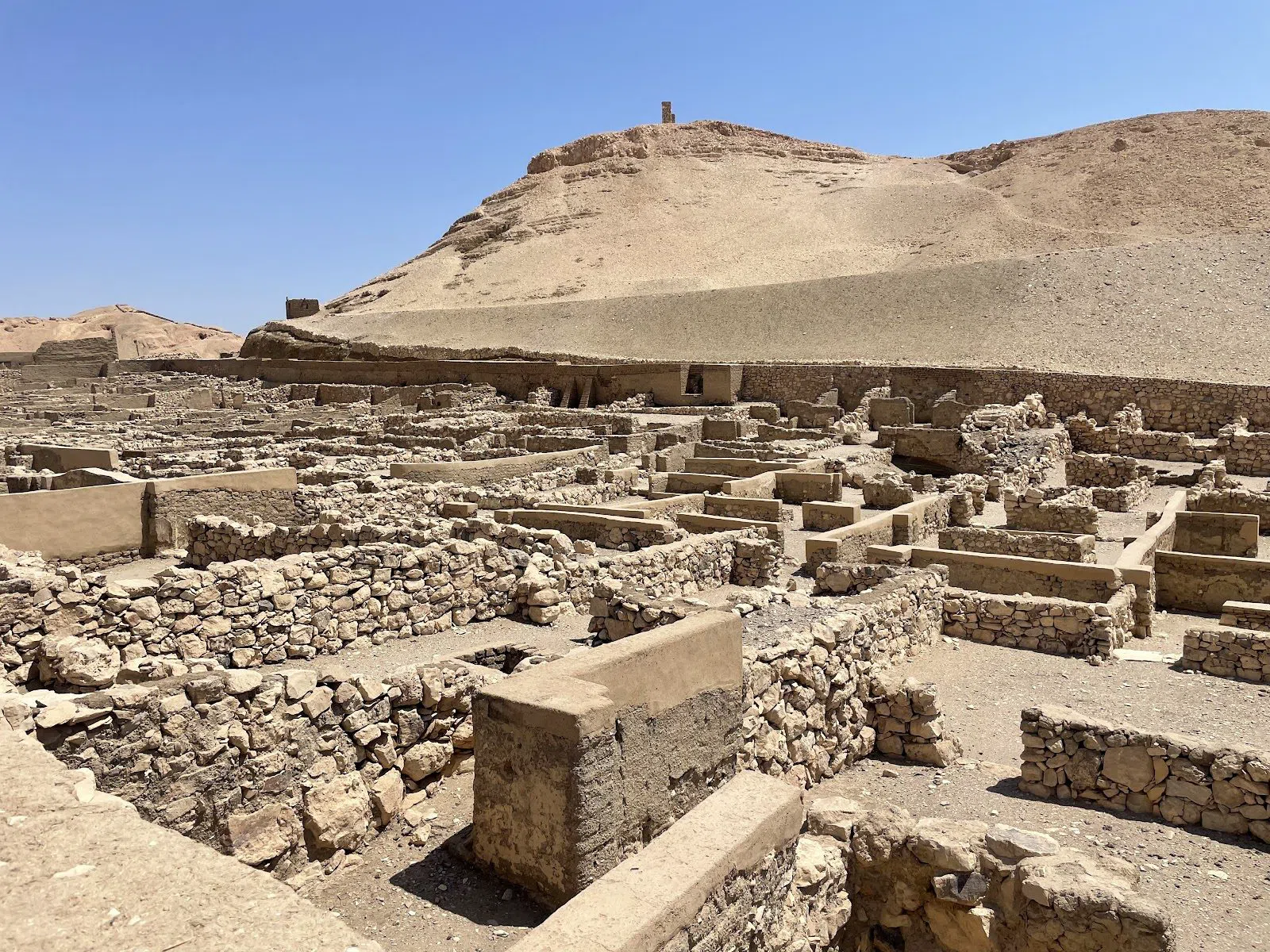
If painted tombs are what you came for, Deir el-Medina (west bank, in the valley behind the Ramesseum) costs around 100 EGP and covers three tombs of the artisans who cut the royal ones: TT1 Sennedjem, TT359 Inherkhau and the Amennakht triple tomb, with Pashedu's tomb a further 120 EGP. The painting rivals the royal valley at a fraction of the crowd. The catch is physical: the shafts are small and steep, and groups go down a few at a time.
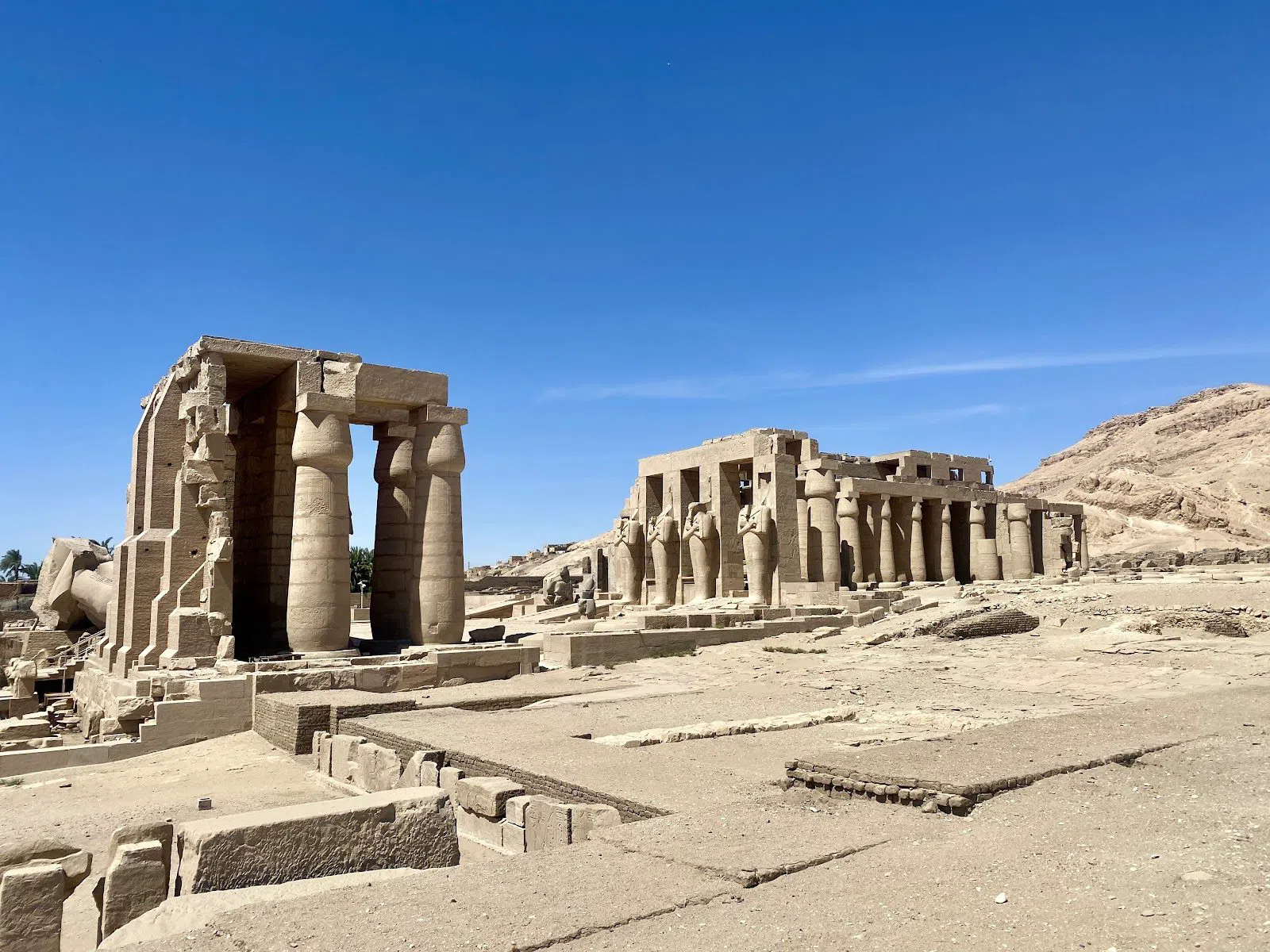
The Ramesseum (west bank, between the cultivation and the hills) is 200 EGP, open 08:00-17:00, and half an hour covers it. It is off the coach circuit and the calmest stop over here, which makes it a good low-effort afternoon rather than another crowded morning. And if the tombs have simply finished you, Howard Carter House & Replica Tomb of Tutankhamun (west bank, on the road up to the Valley of the Kings) is 200 EGP, indoors, air-conditioned and quick, with small rooms that suit modest numbers and a walk-through replica tomb attached.
Whether to pay for Nefertari
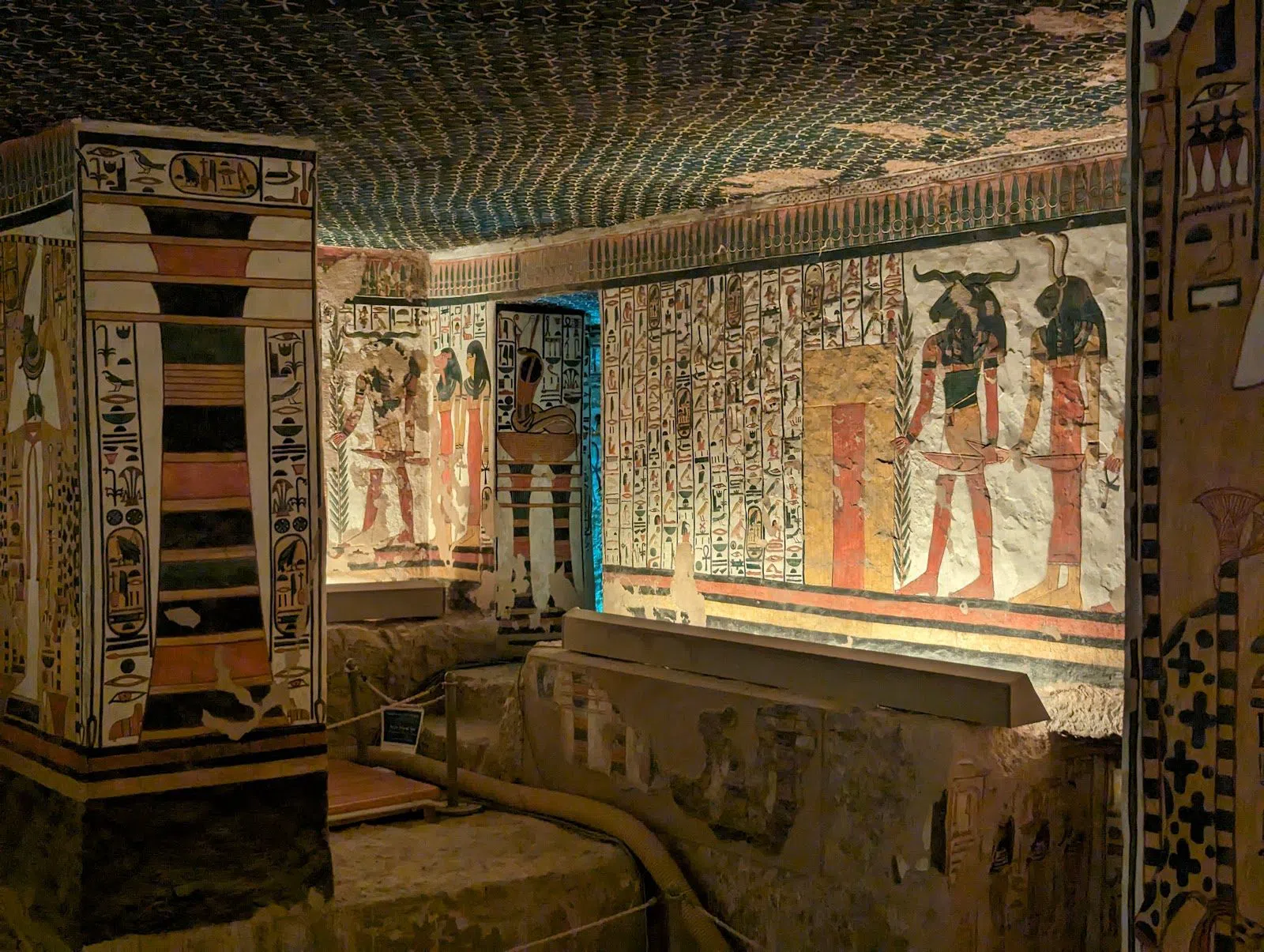
The Tomb of Nefertari, QV66 in the Valley of the Queens (west bank, south of Deir el-Medina), costs about 220 EGP for the valley plus a supplement of roughly 2,500 EGP, around $50, making it the most expensive ticket in Luxor by a wide margin. Daily numbers are strictly capped and visits are held to ten or fifteen minutes, and the limit is enforced by someone with a watch.
It is also the most beautiful painted surface surviving from the ancient world, and ten minutes in it is not a swindle. Book ahead; a large group turning up on spec will not get in. Treat it as a deliberate splurge that replaces two other tickets rather than a casual add-on, and if the budget is finite, Deir el-Medina at 100 EGP gives you painting of a comparable order for the price of a coffee.
A spare morning, and where to spend it
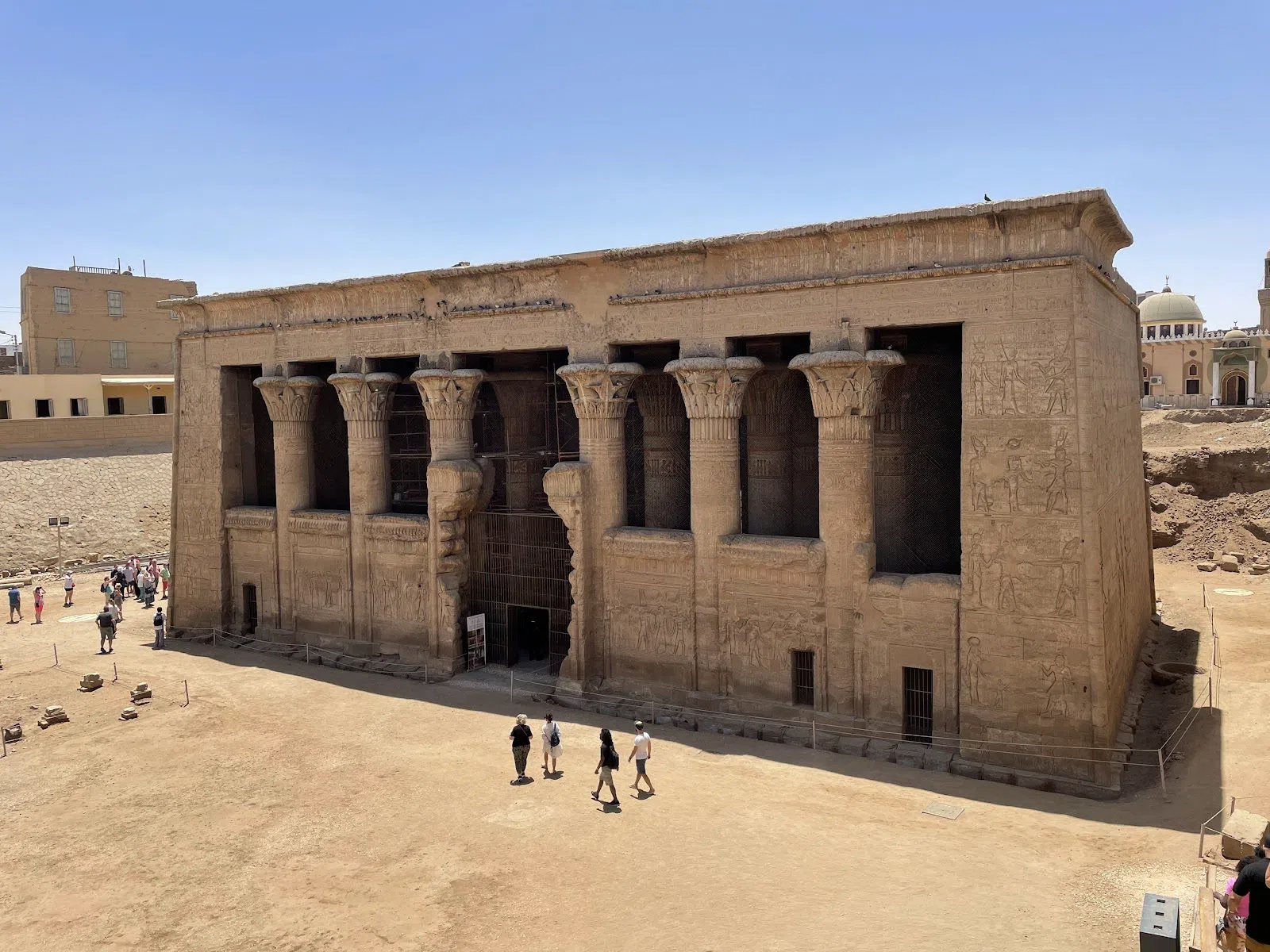
If your two days are really two and a half, the sane option is the Temple of Khnum, Esna (about an hour south, usually sold as a half-day with transfer), where entry is roughly 200-300 EGP and an organised half-day runs about €30-60 per person, typically combined with the restored Wekalet al-Geddawi caravanserai in the town. A six-year cleaning campaign has only recently brought its ceiling colour back out from under centuries of soot, and it takes groups without difficulty. It gives you the sense of having gone somewhere without surrendering a whole day to a minibus.
The dinner that makes day two worth it
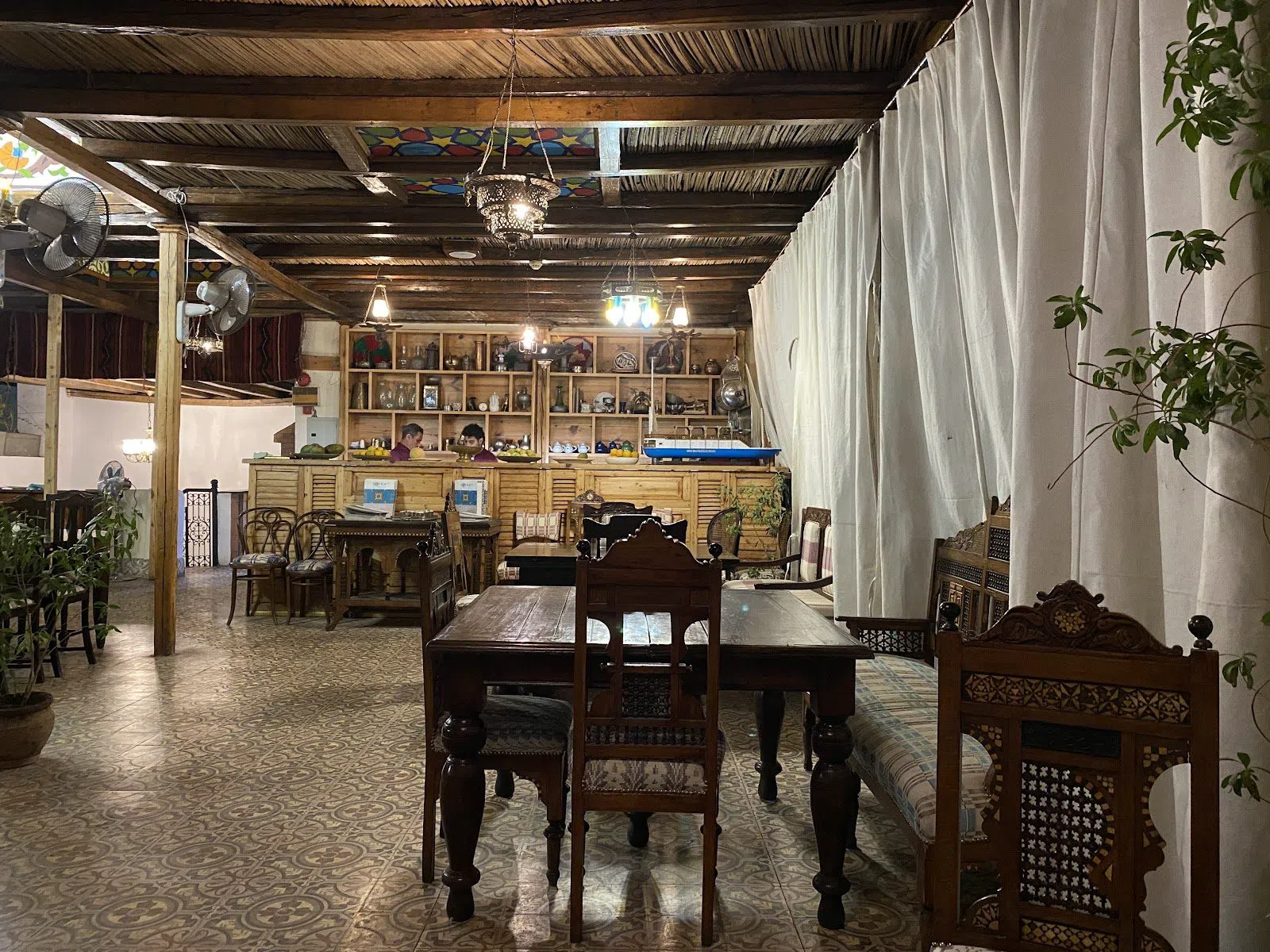
Book Sofra Restaurant & Café (east bank, in the back streets off Television Street) for your second night. It is consistently the strongest Egyptian kitchen in town, with mezze and mains typically 150-350 EGP, spread across several rooms plus a roof terrace, so it takes groups well. It also runs market-to-table cooking classes for small numbers if you have a spare morning and no interest in another temple. Reserve in season. After a west bank day, a proper sit-down dinner rather than a hotel buffet makes the whole schedule feel like a holiday instead of a route march.
Beds, cash and the rest of the small print
Base yourself on the east bank near the Corniche if you want to walk to Luxor Temple, the museums and dinner without a taxi. The west bank is quieter, greener and puts you fifteen minutes closer to the tombs, at the cost of a ferry crossing every time you want a restaurant. Compare both sides on the Luxor hotel search, and for background on the districts and the seasons, start with our Luxor guide.
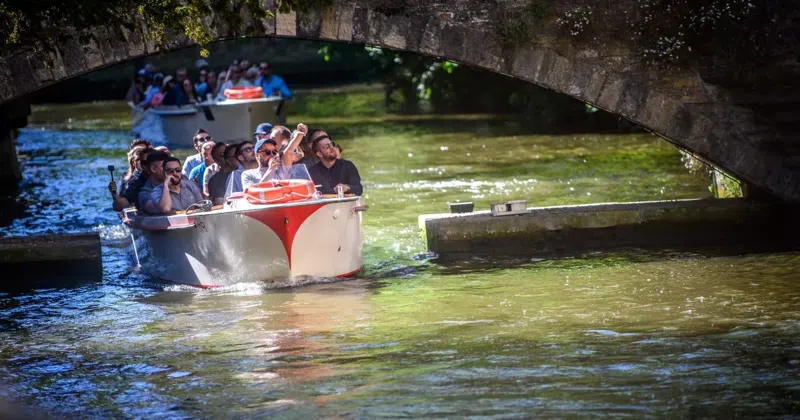
Getting around is simple enough. The public ferry between the banks runs constantly and costs almost nothing; motorboats cross on demand for a negotiated fare. In town, tuf-tuf and taxi both work and both are priced by agreement before you get in, not by meter. For day two, hire a car with a driver for the morning through your hotel, because the west bank sites are spread over several kilometres and there is no shade in between.
Carry Egyptian pounds, and more small notes than you think you need: shuttle fees, ferry fares, tips and the tuf-tuf all want them. Sort a decent float on day one so you are not looking for an ATM at half past five in the morning.
Timing decides the rest. From November to February, mornings are perfect and afternoons are workable. From May to September, the 06:00 opening is not optional and the midday shutdown is total. Both temples of the east bank plus both museums can be done in a single day only because of the evening sessions.
Tickets alone, per person, come to roughly 1,200-1,550 EGP for day one and 1,300-1,600 EGP for a west bank day with three tombs, Hatshepsut and Medinet Habu. Add 300-600 EGP a day for food at the places named here, the west bank car, and, if you fly, €100 or more for the balloon. Nefertari sits on top of all of it at around 2,720 EGP. That is a real two days in Luxor, unhurried, at a price you can see coming.
Before you go
Is two days actually enough time in Luxor?
Yes, if you accept one bank per day and stop trying to add day trips. Two days covers Karnak, Luxor Temple, both town museums, the Valley of the Kings, Hatshepsut and one extra mortuary temple at a pace that leaves you functional. A third day is what you need for Nefertari, Deir el-Medina and a half-day to Esna without cutting something else.
Should I do the East Bank or the West Bank first?
East Bank first. It is walkable, it forgives a late arrival or a delayed flight, and Luxor Temple's 21:00 closing plus the Luxor Museum's 17:00 to 21:00 evening session let you split the day around the heat. The West Bank needs a car booked the night before and a start before dawn, so it belongs on day two when you have already found your feet.
Which three tombs should I choose in the Valley of the Kings?
The standard ticket of roughly 600 to 750 EGP covers three from the open rotation, and KV9 (Ramesses V/VI) at a 220 EGP supplement is the best value in the valley: deep, intact and vividly painted. Tutankhamun's KV62 costs 700 EGP more and is a small room whose draw is the mummy; Seti I's KV17 is the finest tomb in Egypt and costs about 2,000 EGP extra. Pick by budget, not by fame.
Do I have to get up at 5am, or can I sleep in?
You need exactly one pre-dawn start: the West Bank morning, or the 05:30 balloon pickup if you fly with Sindbad Balloons. Everything else can run on a 06:00 Karnak start followed by a long midday break, or on the evening sessions at the Luxor Museum, Mummification Museum and Luxor Temple. A late start plus a full tomb programme does not work; the valley has no shade and by ten it is brutal.
Is the 2,500 EGP Nefertari ticket worth it?
Once, and only if you have booked ahead. Daily numbers are capped and the ten-to-fifteen-minute limit is enforced. The painting is the best surviving anywhere from the ancient world, so treat it as a splurge that replaces two other tickets. If the budget is tight, Deir el-Medina at about 100 EGP gives you artisan tombs of comparable quality with a fraction of the crowd.