The Luxor issue
Luxor in September Starts Before Six and Ends After Dark
A working plan for the hottest month: tombs at dawn, shade through the middle of the day, and temples that stay open until nine.

By Giulia FerranteJudging Luxor one loaf of bread at a time

September in Luxor hands you two usable days folded inside one unusable one. Between roughly ten in the morning and four in the afternoon the air sits in the low forties and the limestone gives back every degree it took in, and no hat or bottle of water makes a tomb corridor at noon anything other than a mistake. What survives is the pair of hours on either side: the cold blue before sunrise, when the West Bank is silent and the rock still holds last night's air, and the long lit evening, when the temples reopen at thirty degrees instead of forty.
Why the day splits in two
The split is written into the opening hours, and the sites that matter here are arranged for exactly this shape of day. The tombs open at six. Karnak opens at six and stops admitting people at four. Luxor Temple stays open until nine at night. Both museums close in the middle of the day and reopen at five, which tells you plainly what Luxor thinks of the hours in between.
So the rule is simple, and you should be strict about it: everything in open sun happens between 06:00 and about 09:30. From 11:00 to 16:00 you are indoors, in water, or under trees. Plan that block properly and it becomes the part of the trip you remember; ignore it and it wrecks the rest. From 17:00 the city gives you back four good hours, and they are the ones with the best light on the stone anyway.
Two practical consequences. First, you will need somewhere to be at midday that is better than a hotel corridor, and that costs money, so budget for it as a line item rather than an afterthought. Second, a three-night stay in September is really six half-days, so don't plan a nine-site itinerary. Four sites well seen, plus a river afternoon and two evenings, is a full trip.
Plan your Luxor trip
Live prices from our booking partners.
Free cancellation on many rooms. We may earn a commission when you book.
The one morning worth getting up at four for
Sindbad Balloons (pickup from East and West Bank hotels; launch fields behind the West Bank cultivation) is the only way I have found to be outdoors and genuinely comfortable in a Luxor September. The minibus comes for you at about half four, air-conditioned, and you are airborne by half five with the Nile going from grey to pink underneath and the mortuary temples laid out on the desert edge like a diagram. You land before the heat arrives. The whole thing is over by the time a normal breakfast is being served.

Expect €50 to €100 a head depending on the operator's slot and how much of the basket you want to yourself. Sunrise flights commonly run around €70, and morning slots start nearer €50. Standard baskets take up to 28 passengers, which is a lot of elbows at 400 metres, so if you are two people who want to hear each other think, pay for a smaller or private basket. Groups are the easy case here: they take coaches and school-sized parties without fuss.
One planning note matters more in September than people expect. Flights are cancelled for wind, not for heat, and the call is made at dawn. Keep a spare morning in the itinerary so a scrub doesn't cost you the flight altogether, and book the balloon early in your stay rather than on your last morning.
The West Bank between six and half past nine
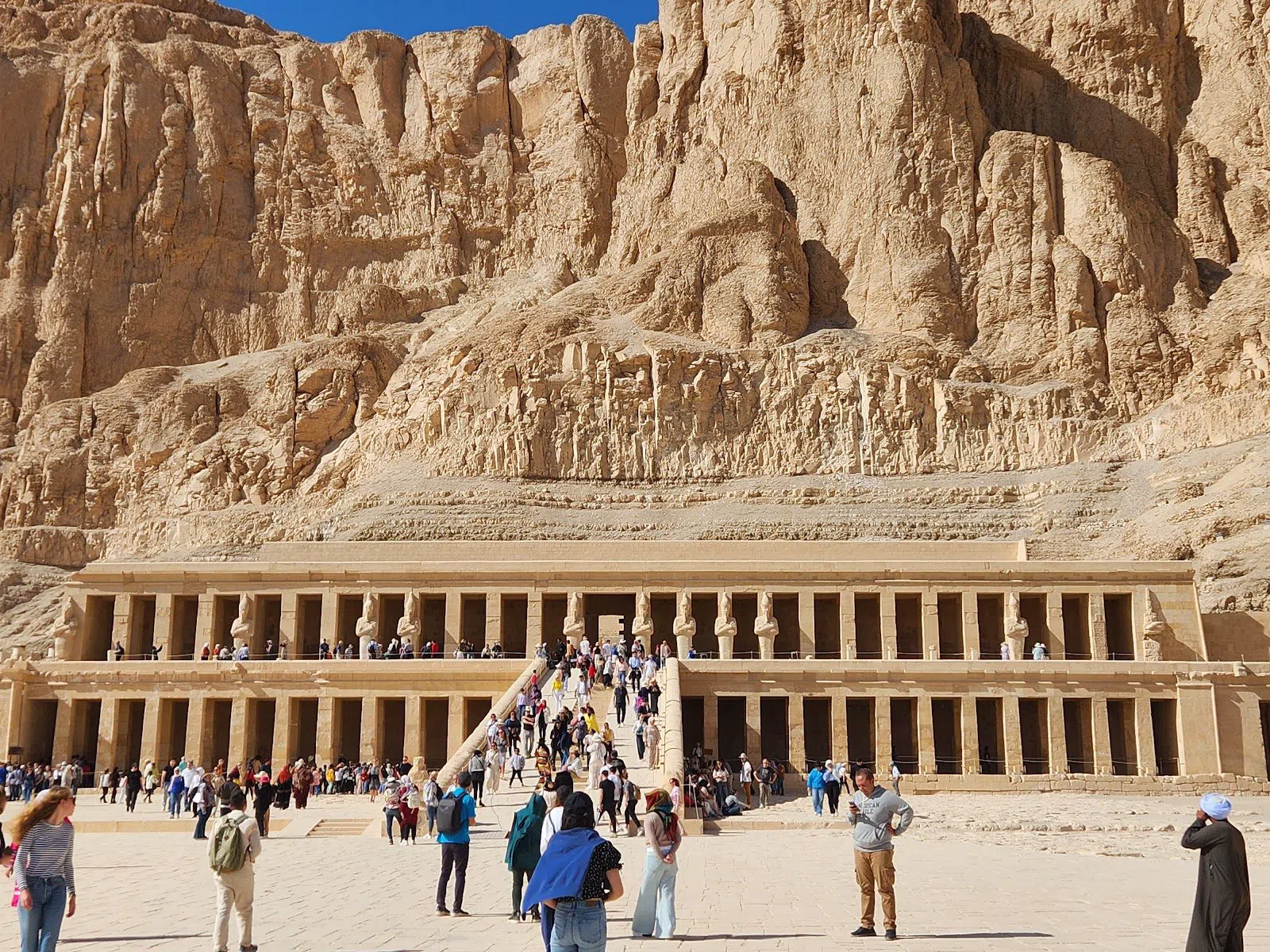
Be at the gate of the Valley of the Kings (West Bank, behind the Theban cliffs) when it opens at six. Not at seven, and certainly not at nine. The valley is a closed rock bowl and it works like a kiln: the walls trap the heat and hold it, and once the 10:00 coach crush arrives, the tomb corridors go airless in a way that will end your morning early. At six you get shadow on the path and near-empty descents.
The general ticket is EGP 750 and covers three tombs. Tutankhamun, Seti I and Ramesses V/VI are ticketed and priced separately. Seti I is the extraordinary one if you are choosing a single extra, but decide before you queue rather than at the window. A shuttle tram runs from the visitor centre to the tomb entrances; take it in both directions, and don't be proud about it. Coaches and groups are admitted without any special arrangement, so this is the site where arriving before everyone else is the entire strategy.
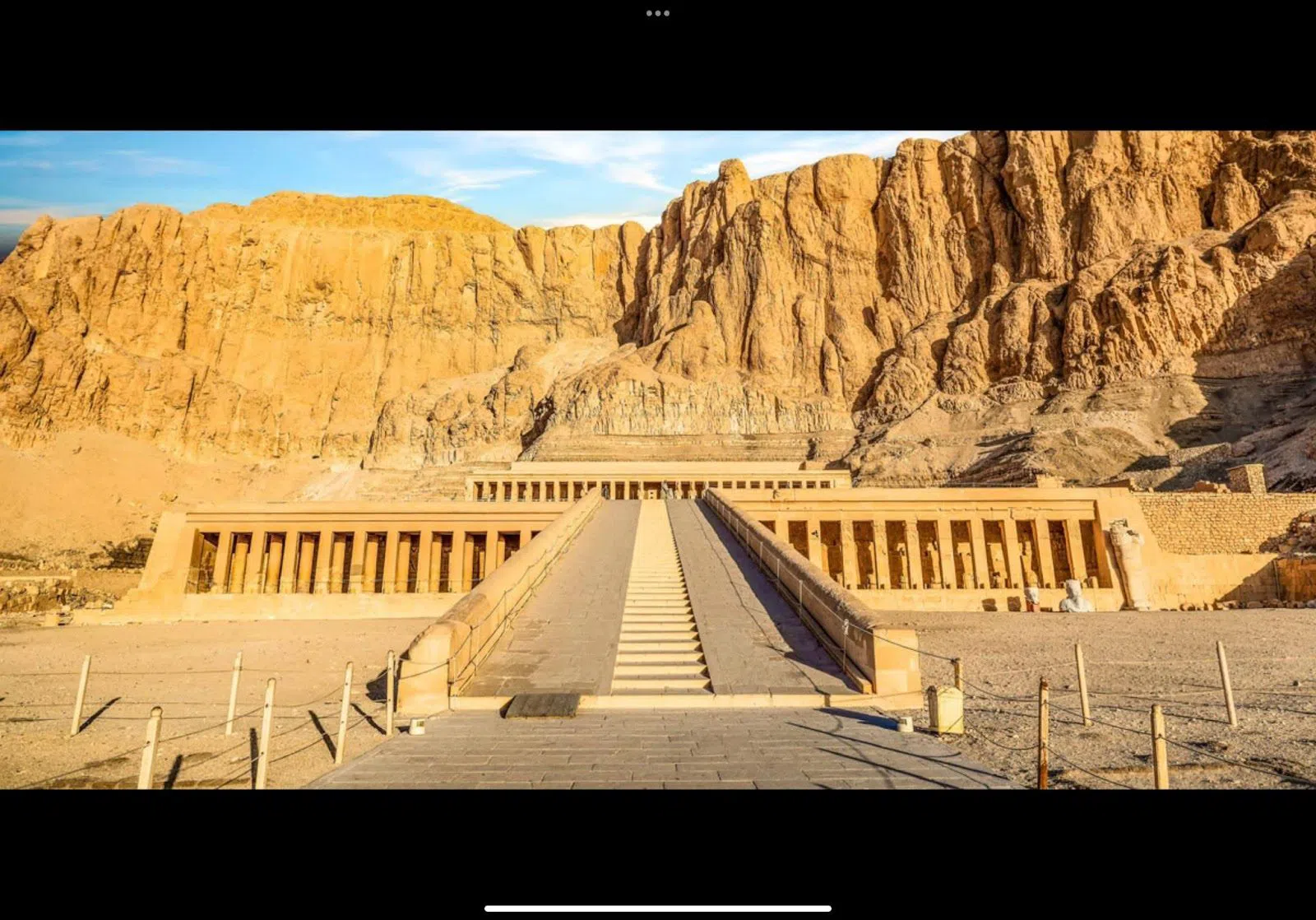
From the valley, most itineraries send you to the Temple of Hatshepsut (Deir el-Bahari, West Bank) next, and in September that is the wrong order unless you can get there at first light. The cliff behind those terraces is a curved reflector that throws the sun straight back at you, and there is no shade anywhere on the ramps. A shuttle runs from the car park and the access is broad and group-friendly, but none of that helps once the rock face lights up. Around EGP 400 to enter. For this month it is first thing or not at all: if you can only fit it after eight, swap it for the next stop and come back another morning.
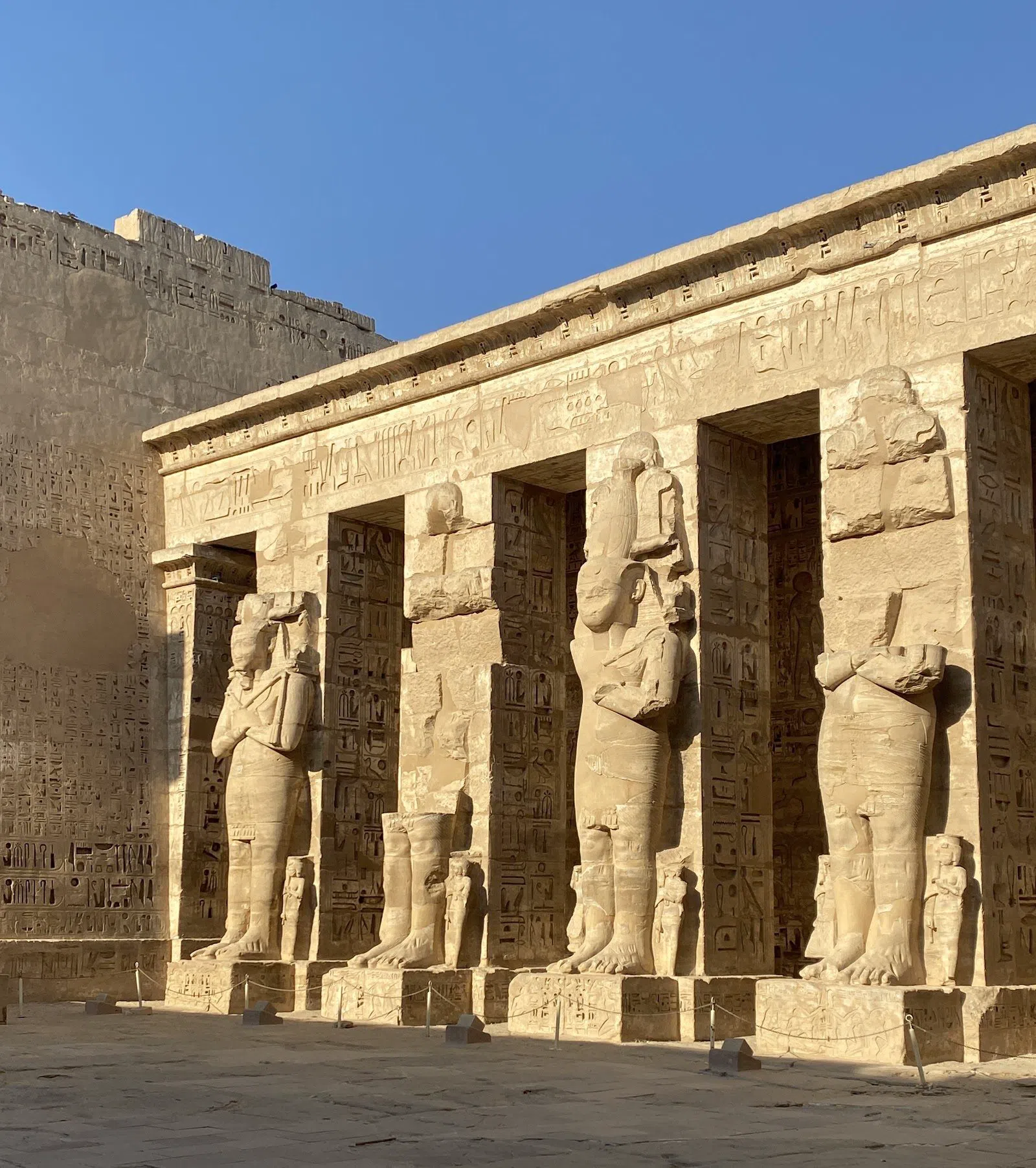
That next stop is Medinet Habu (West Bank ring road, near Kom Lolah), and it is the best value on this side of the river. About EGP 200. It has the best-preserved colour in Luxor, real pigment on the ceilings and the underside of the roof slabs, blues and ochres that survive because they have been in shadow for three thousand years. It is also far emptier than the valley, so a guide can actually talk without shouting over three other groups. Its deep courts still have their roofing in places, which means real shade at half past eight. Slot it 08:00 to 09:30 and let it be the stop where you slow down.
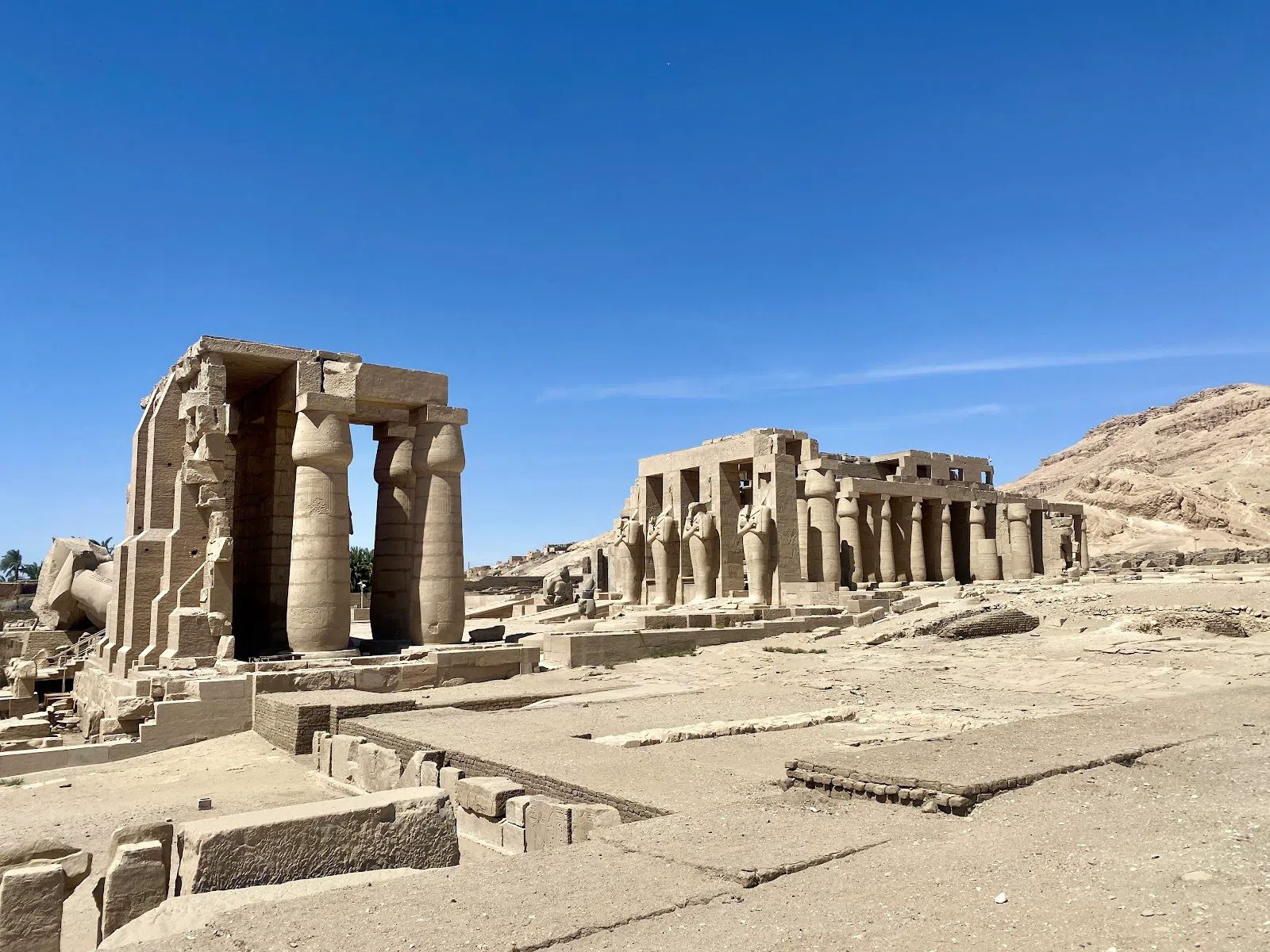
End the morning at The Ramesseum (West Bank, on the road back towards the cultivation), which opens at eight, later than everything else, so it can only be last. Roughly EGP 200 or less. It is a ruin rather than a building, but the collapsed hall keeps pockets of shade that the open temples don't, the fallen colossus is worth ten minutes on its own, and it is rarely busy enough to queue. By half past nine you should be walking away from it towards lunch.
Where to disappear at midday
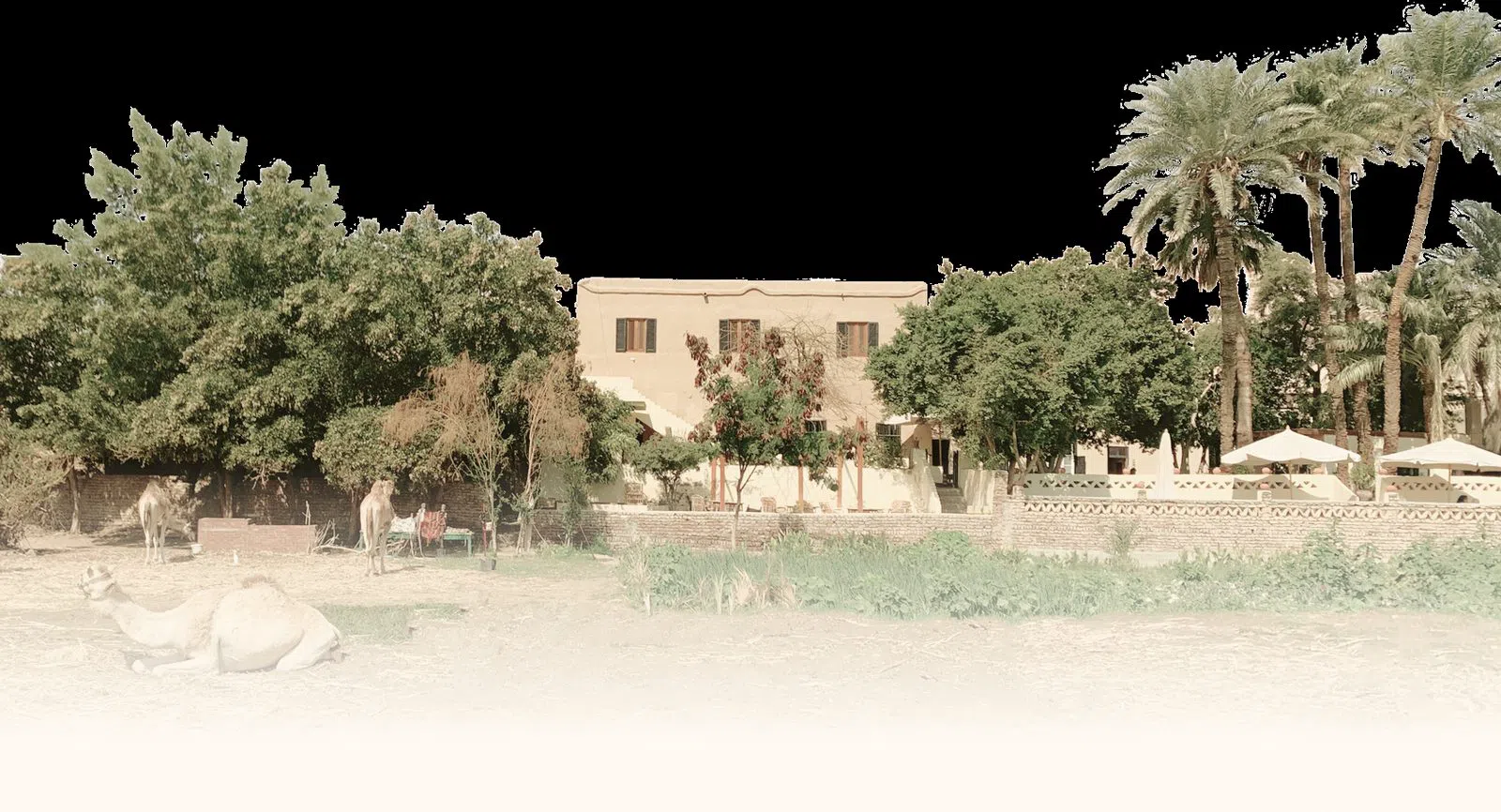
If you are staying over the river, lunch is Marsam Hotel Luxor (Old Gurna, West Bank, five minutes from the Ramesseum), the oldest guesthouse on this bank and a genuinely shaded garden of mature trees. The food is mostly home-grown: I ate stuffed vine leaves and a vegetable tagine with baladi bread and a plate of tomato-and-cucumber salad that had clearly been picked that morning, and mains sit in the low hundreds of EGP. It is informal and welcoming to groups, but call ahead for anything over eight, because the kitchen is small and cooks to order rather than to volume.
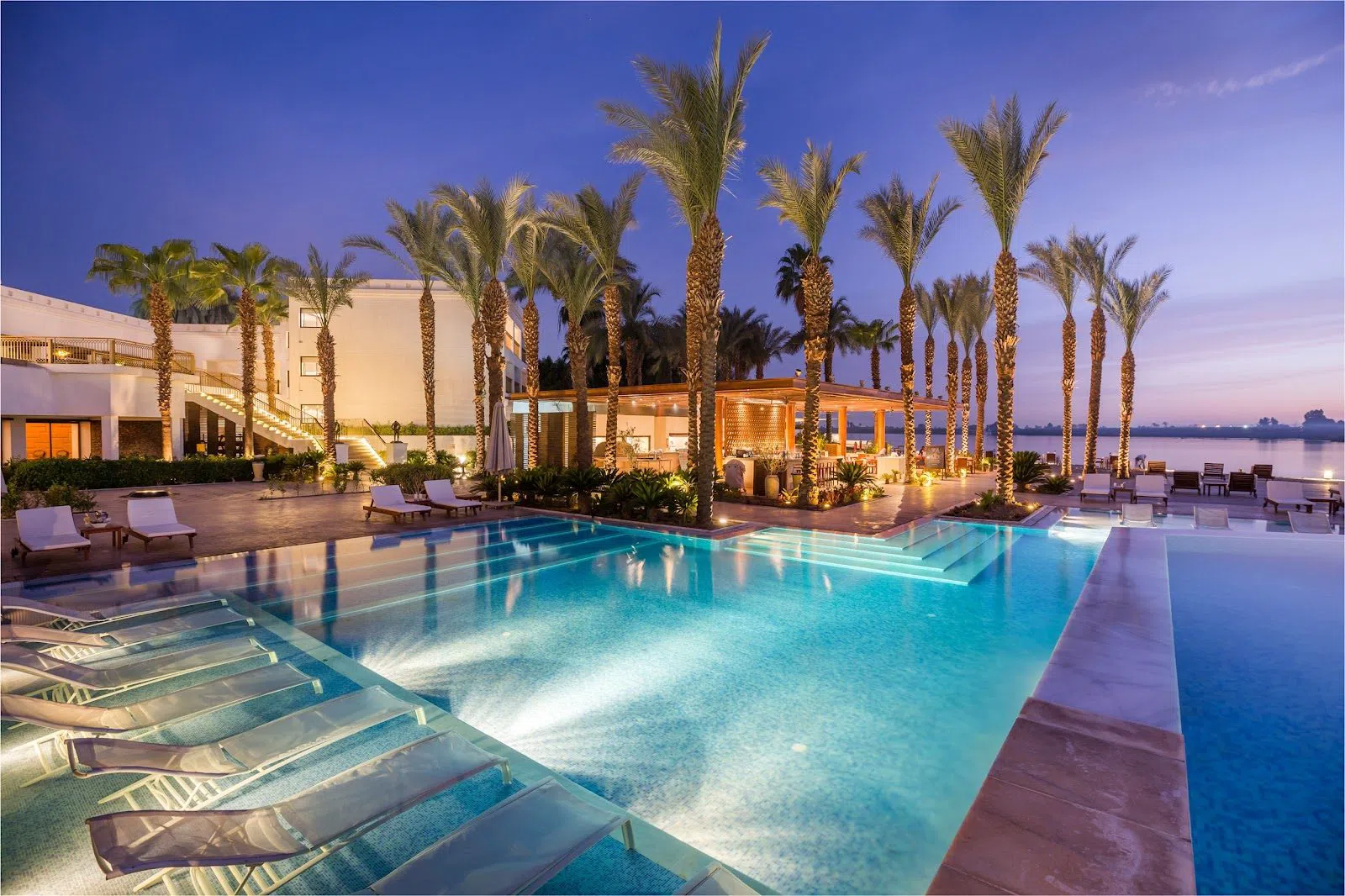
For the 12:00 to 16:00 block itself, you want a pool or a very good room. Hilton Luxor Resort & Spa (East Bank, north of the centre towards Karnak) is the most reliable bolt-hole on this side: pools run 09:00 to 22:00, and day-use rooms go from roughly $50 to $90. Read the booking terms carefully, because pool and gym access are not automatically included in every day-use rate. Confirm it in writing when you book rather than at the desk. A booked day room plus a shower turns the worst four hours of a Luxor day into a nap and a swim, and it is the best money you will spend here after the balloon.
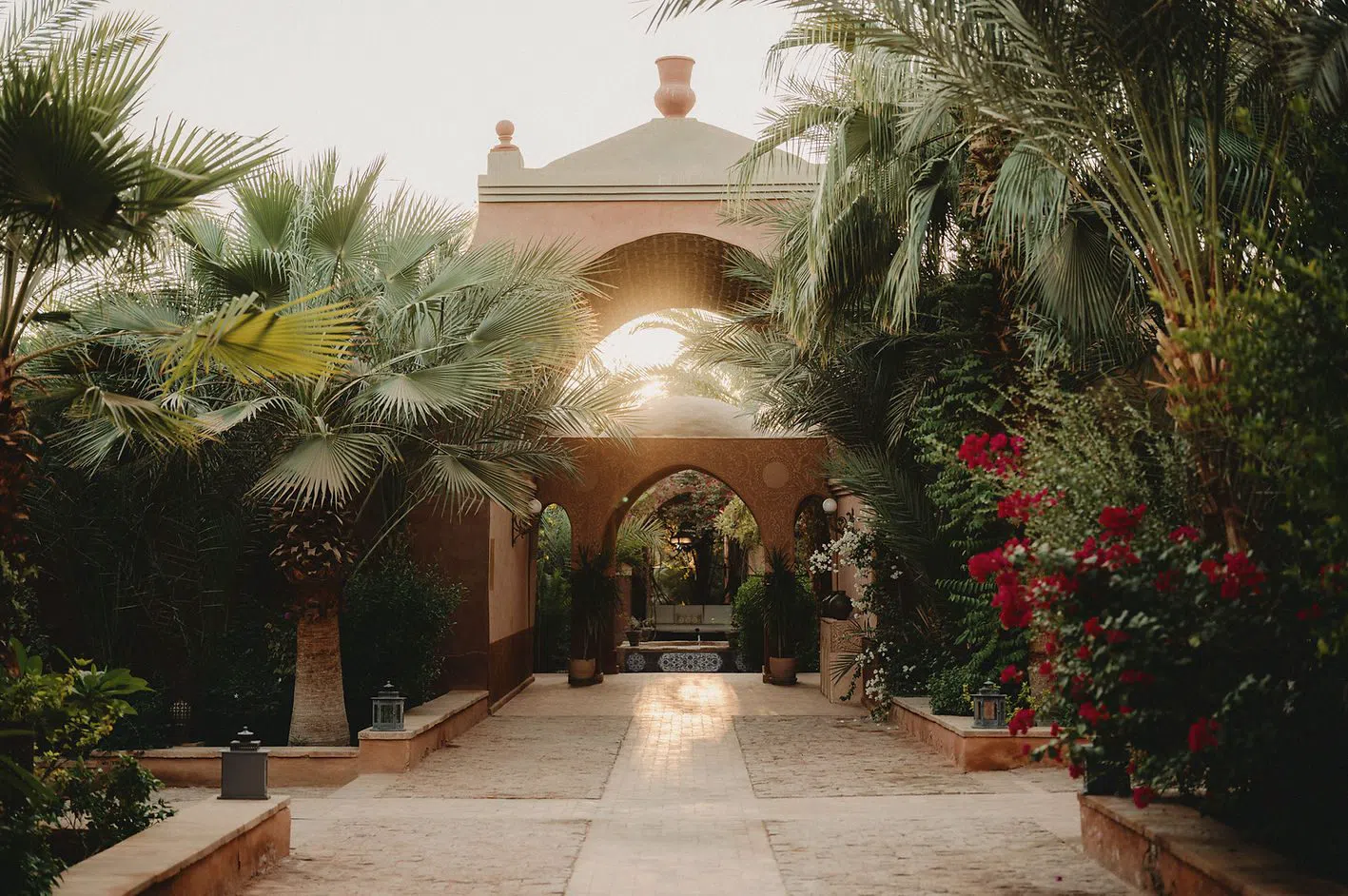
On the West Bank, the equivalent is Al Moudira Hotel (West Bank, ten minutes from the Valley of the Kings), a Relais & Châteaux property of 54 suites and villas built around domed courtyards and a garden that is doing serious work against the climate. Suites run roughly $360 to $800 a night, so this is the high end, and small groups are fine but day or lunch visits must be arranged in advance rather than assumed. September is high summer on the West Bank and operating patterns vary, so confirm directly with the hotel before you build an afternoon around it.
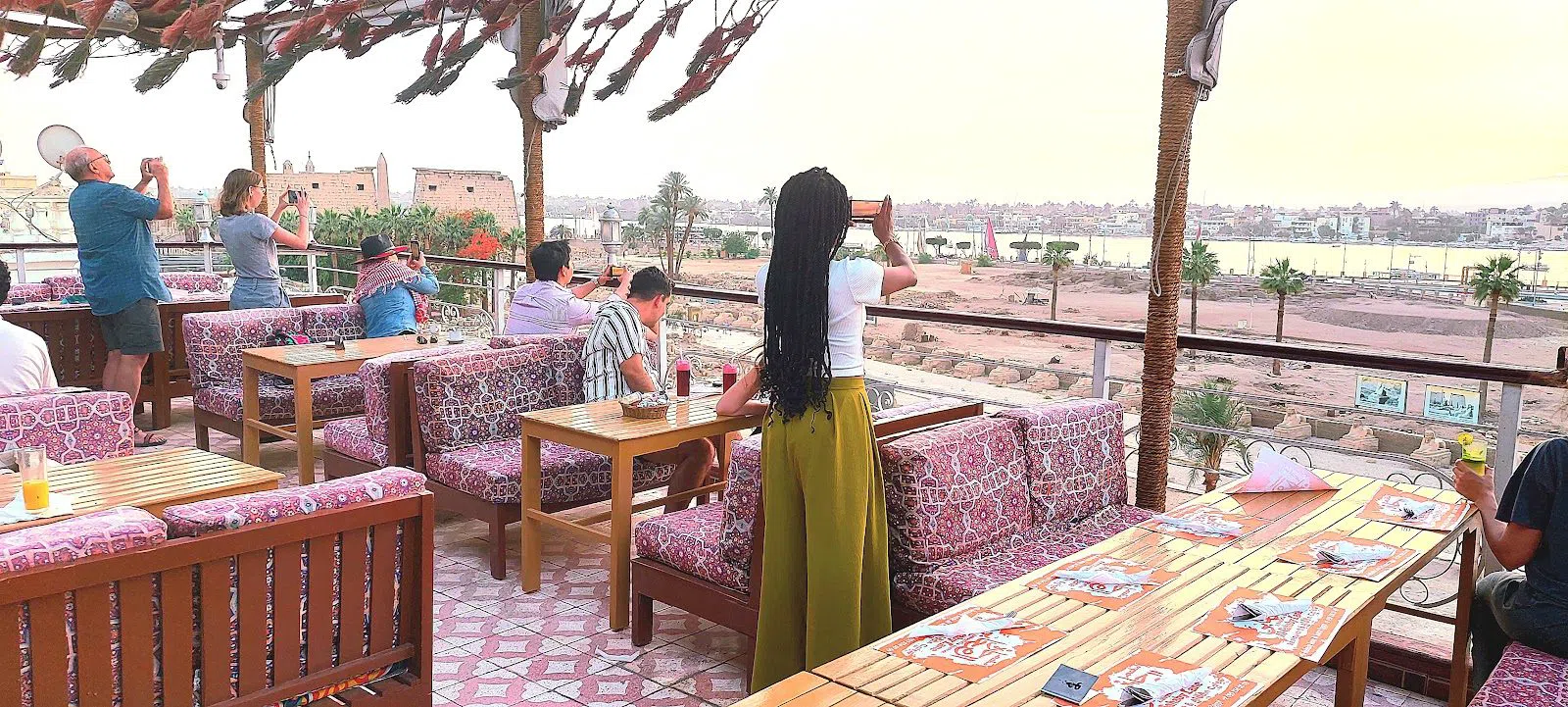
The cheap version of the same idea is a table at Al-Sahaby Lane Restaurant (East Bank, on the lane beside Luxor Temple). It opens at ten and runs to eleven at night, which makes its shaded lower floors a legitimate mid-afternoon perch when you have already checked out and have hours to burn. Dishes run about $1 to $11. I had grilled chicken with rice and a bowl of lentil soup for well under 200 EGP. No reservation is needed until sunset, when the roof fills.
Wherever you base yourself, book somewhere with a real pool for September rather than a pretty courtyard; the Luxor hotel search is the fastest way to filter for it.
On the water at four
The afternoon that isn't another temple is Banana Island (Gezirat al-Mawz, reached by boat from the East Bank corniche). Feluccas and motorboats leave from the corniche, take groups happily, and private charters are easy to arrange on the spot. Around €10 to €25 a head on a shared felucca, more for a private motorboat, and the price is negotiable in a way the temple tickets are not.
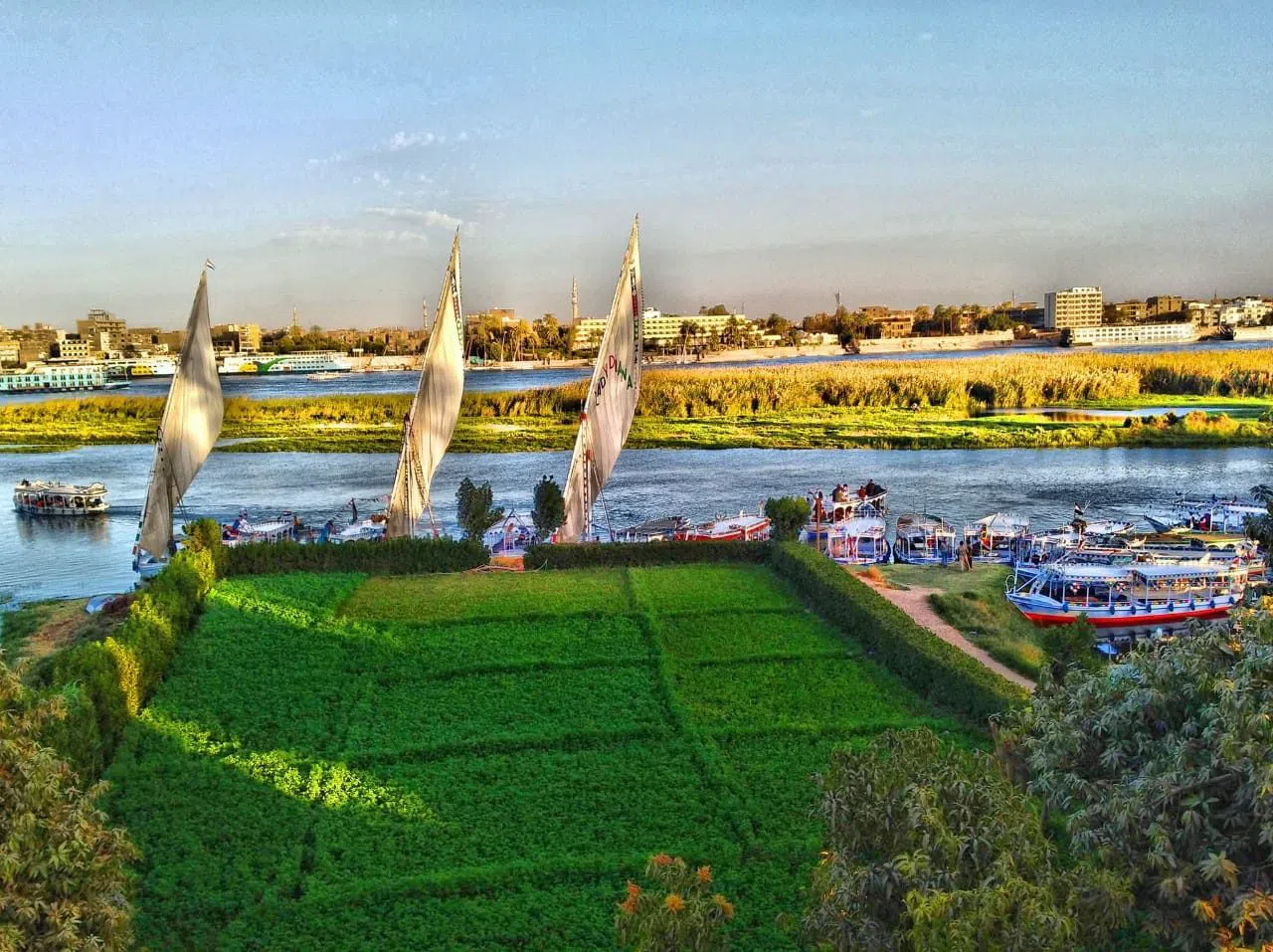
The point is the air. On the river there is actual moving air, the first you will have felt all day, and the plantation paths on the island are shaded by the banana stands themselves. Sail out around four and you are back on the corniche by six, salted, cooled off and pointed straight at the evening temples. Agree the price and the return time before you step aboard, and be clear whether you are paying per person or for the boat.
The temples after dark
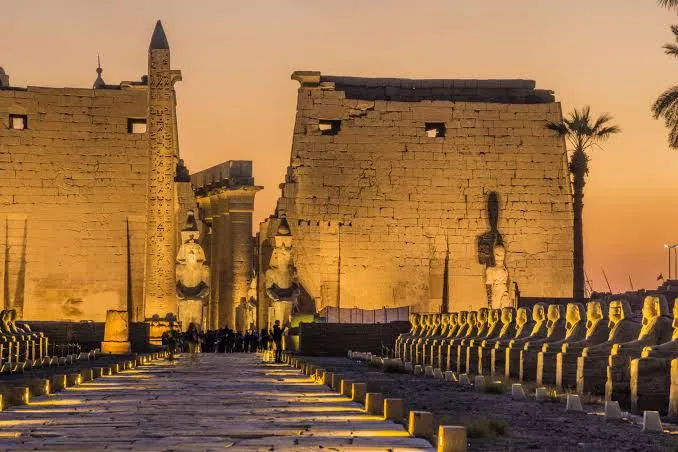
Luxor Temple (East Bank, on the corniche in the centre of town) is the reason a September day works at all. It stays open until nine, with last entry around seven, so you see it at thirty degrees rather than forty, lit from below, the columns throwing shadows up their own drums. About EGP 400, and the ticket allows re-entry the same evening, which is worth knowing: the honest way to do this is to walk in at dusk, leave for an hour when the light changes, then come back. It is central enough to reach on foot from most East Bank hotels, and it takes groups all evening.
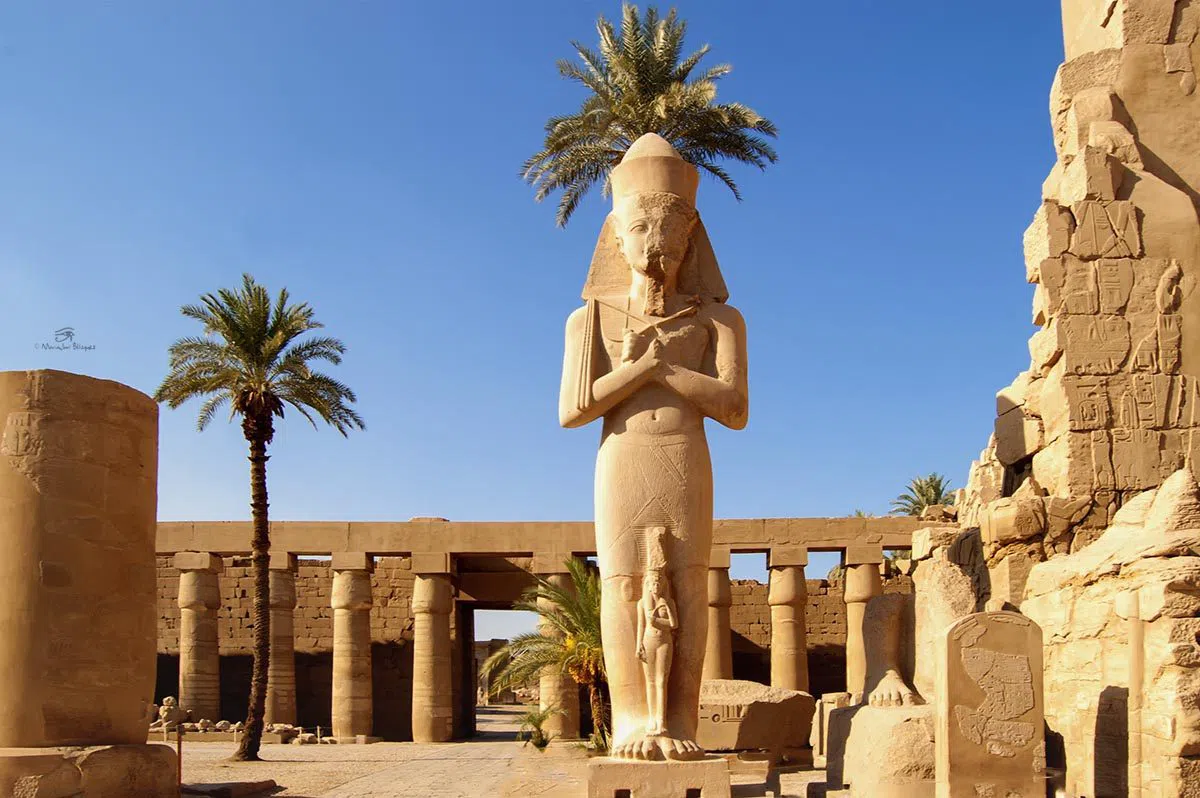
Karnak Temple Complex (East Bank, three kilometres north of Luxor Temple) is the other half of the pairing, and in September it is a morning site rather than an afternoon one, open from six in summer with last entry at four. The hypostyle hall is the one large space in the city that stays genuinely shaded whatever the hour, so if you have a spare early morning and no balloon, spend it here. General admission is EGP 450. The sound-and-light show is a separate ticket and the 19:15 slot is the cool-hours way to see the same stone again; treat it as a second visit rather than a substitute for daylight. Karnak was built for volume and absorbs coach groups without anyone noticing.
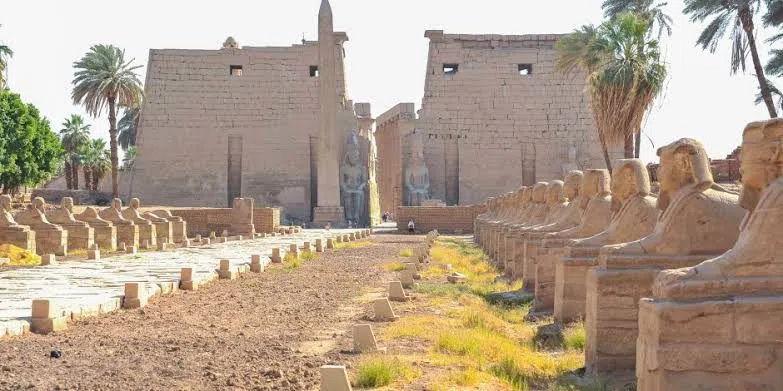
Between the two runs the Avenue of Sphinxes (El-Kebbash Road, East Bank, linking the two temples), free and unticketed, with no door policy at all. The last hour of light is the time to walk it. Be sensible about which stretch: the sections near Luxor Temple and near Karnak are lit and populated, while the middle is quiet and poorly lit after dark. Walk the lit ends and take a taxi for the gap rather than committing to the full three kilometres at ten at night.
Two museums that earn their air conditioning
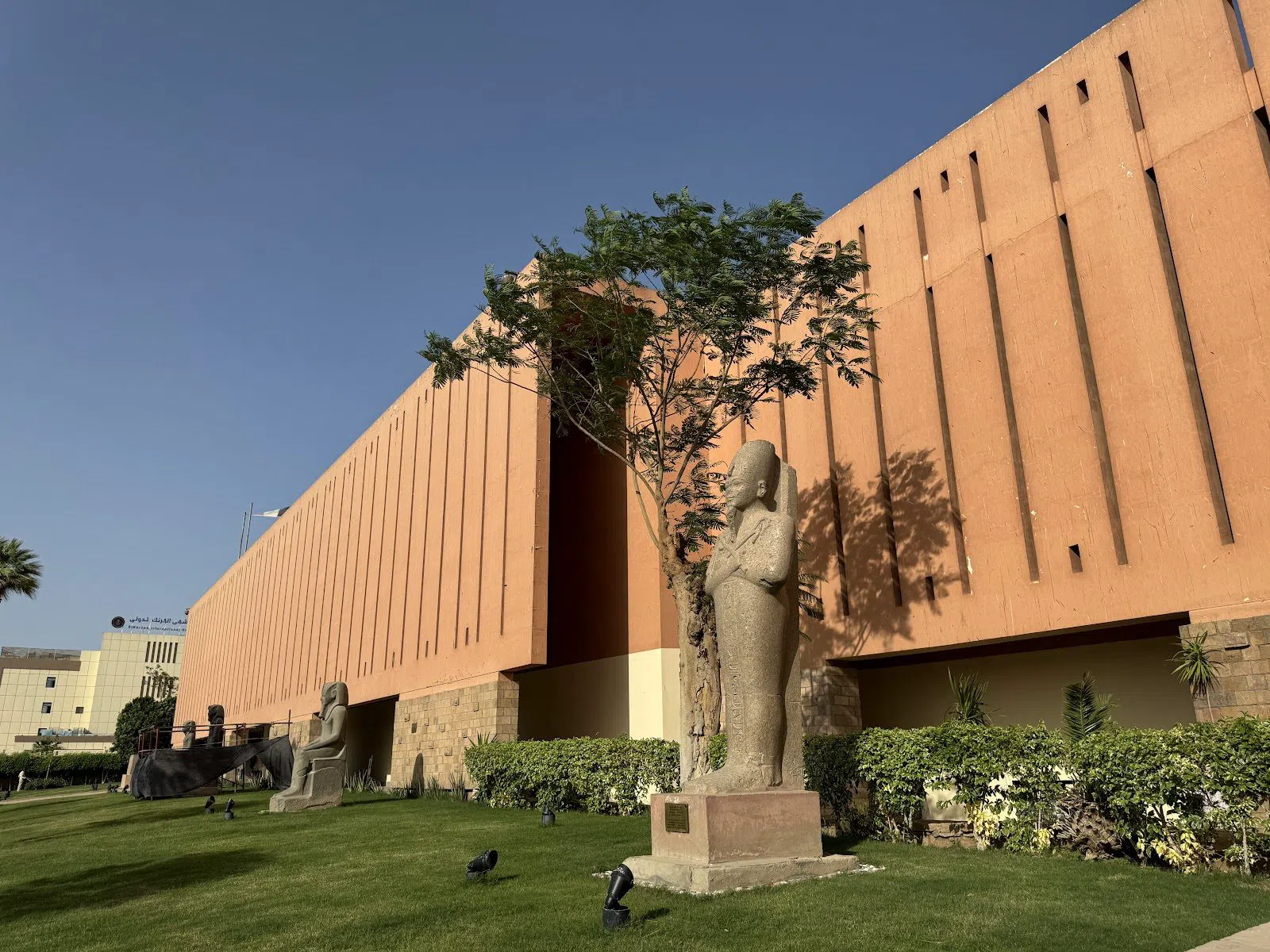
Luxor Museum (East Bank corniche, between the two temples) keeps split hours, roughly 09:00 to 14:00 and 17:00 to 21:00, which is exactly the shape of a sensible September day, and the evening session is the best air-conditioned hour in the city. Around EGP 400. It is compact, beautifully lit and mercifully un-exhaustive after a morning of tombs; it takes groups, but large parties should split at the door or nobody sees the Amenhotep III statuary.
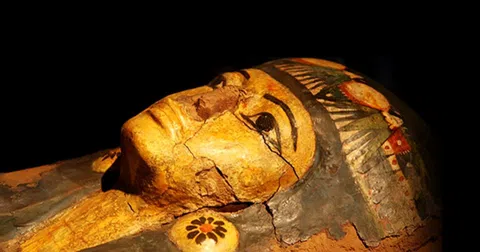
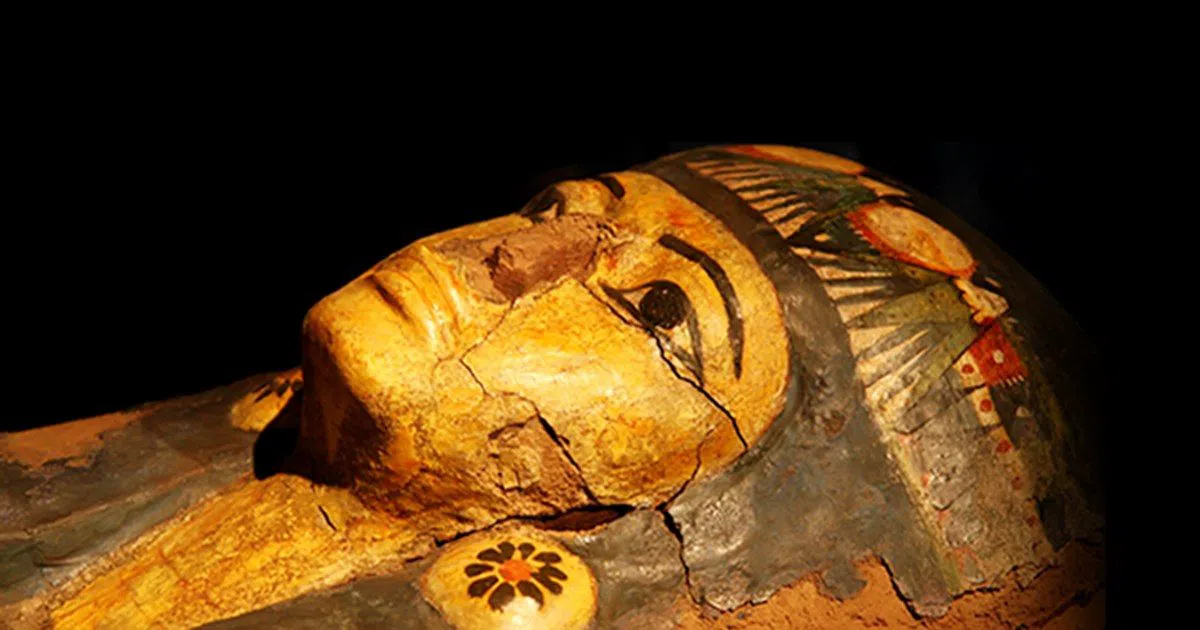
Mummification Museum (East Bank corniche, a short walk south) keeps the same split, 09:00 to 14:00 and 17:00 to 21:00, and costs around EGP 200. It is a 45-minute stop and a small one. Under a dozen people is right, and anything larger will bottleneck at the cases. Do it at five, then walk to Luxor Temple for seven. That is an entire evening's sightseeing with zero minutes of sun exposure.
Dinner when the stone has cooled
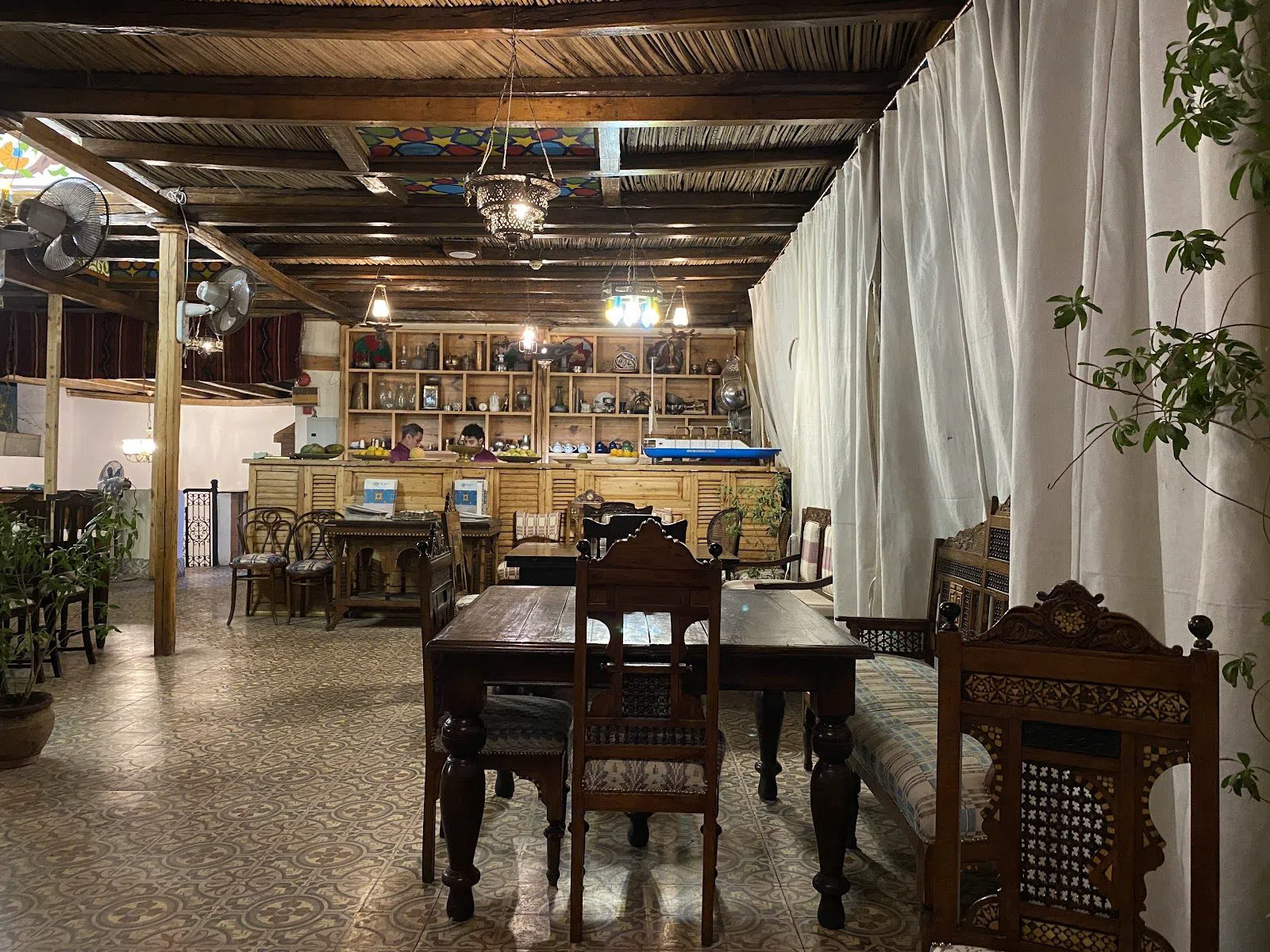
Sofra Restaurant & Café (East Bank, in the back streets a few minutes inland from the corniche) is the dependable evening table. Two floors of tiled rooms plus a roof, and it is the roof you want. Ask for it when you reserve, because it catches whatever breeze exists once the sun is down. Most mains run EGP 150 to 350. I ate a lamb tagine with okra at around EGP 250, a plate of mezze (baba ghanoush, tahina, stuffed vine leaves) at roughly EGP 60 each, and the rice pudding after, which was worth the extra twenty minutes at the table. It takes groups on the lower floors easily; the terrace is where reservations matter. Open 11:00 to midnight.
The cheaper, louder alternative is the roof at Al-Sahaby Lane at sunset, where the view is Luxor Temple lighting up and the bill is a third of the size. No reservations, but if you are more than six, phone ahead, because the roof fills fast and there is no queueing system to speak of.
Practicalities for a September trip
On timing, build the day as 05:00 to 09:30 out, 11:00 to 16:00 hidden, 17:00 to 22:00 out again. Nothing between half nine and eleven except the drive and a shower. Two full days done this way cover the West Bank, both East Bank temples, both museums and the river.
Taxis are everywhere and unmetered, so agree the fare before you get in. Crossing to the West Bank is by bridge (a longer road loop) or the public ferry from the corniche, which is cheap and frequent. For a West Bank morning, hire a car and driver for the half-day rather than taxi-hopping between sites; it costs little and it means an air-conditioned car waiting at every gate, which is the whole point. Hotel pickups for the balloon are included in the fare.
Carry Egyptian pounds in small notes. Ticket offices at the sites are increasingly card-capable but not reliably so, and the tram, the ferry, the felucca and every tip you will want to give are cash. Site tickets add up faster than you expect: Valley of the Kings EGP 750 plus extras, Karnak EGP 450, Luxor Temple and Luxor Museum around EGP 400 each, Medinet Habu and the Ramesseum around EGP 200 each.
A realistic per-person day in September, excluding your room: EGP 1,200 to 2,000 in tickets and transport, €50 to €100 once for the balloon, $50 to $90 for a day-use room if you are checking out, and EGP 300 to 500 for dinner if you eat well. In this month the midday room is what makes the rest of the itinerary possible.
Drink two litres per person before ten in the morning, wear long loose sleeves rather than bare shoulders, and take a hat with a brim all the way round. The tombs are dusty and the air inside them is still; if you are prone to breathlessness, take the shorter tombs and skip the deepest descents.
For everything beyond the September problem, including where to stay by area, what the shoulder months look like, and how the two banks fit together, start with the Luxor guide.
Before you go
How hot does Luxor actually get in September, and is it too hot to visit?
Afternoon temperatures commonly sit in the low forties Celsius, and the stone goes on radiating heat long after the sun has moved. Come anyway, but write off the hours between about 10:00 and 16:00. Plan open-air stone before 09:30 and after 17:00, and book somewhere with a pool or a day-use room for the middle of the day.
What time should I arrive at the Valley of the Kings in September?
Be at the gate for the 06:00 opening. The valley is an enclosed rock bowl that traps heat, and the tomb corridors turn airless once the crowds arrive between 10:00 and 14:00. The general ticket is EGP 750 for three tombs; Tutankhamun, Seti I and Ramesses V/VI are ticketed separately, so decide on any extras before you reach the window.
Is a hot-air balloon flight worth it in September?
It is the only way to be outdoors and genuinely comfortable in this month. Pickup is around 04:30, you are airborne by 05:30 and back on the ground before the heat builds. Expect €50 to €100 per person; standard baskets carry up to 28 people, so book a smaller or private basket if you want quiet. Flights are cancelled for wind rather than heat, so keep a spare morning.
Which temples can I visit after dark?
Luxor Temple stays open until 21:00 with last entry around 19:00, and its ticket lets you re-enter the same evening. The Karnak sound-and-light show at 19:15 needs a separate ticket, and it is the way to see that complex again in the cool hours. Luxor Museum and the Mummification Museum both reopen from about 17:00 until 21:00, so you can fill a whole evening without standing in the sun once.
Do I need to book restaurants and midday hotel rooms in advance?
For the roof terrace at Sofra, yes: call ahead, especially for a group. Al-Sahaby Lane takes walk-ins except at sunset, when parties over six should phone. Book day-use rooms at the Hilton ahead, and confirm in writing whether pool access is included, because it is not automatic on every rate. Al Moudira needs arranging in advance for any day or lunch visit.