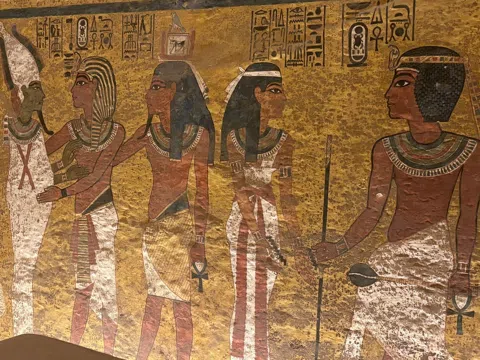
The Luxor issue
Esna's Cleaned Ceiling Makes an Easy Half-Day from Luxor
An hour south of Luxor, a six-year clean left one surviving temple hall with its painted ceiling intact. How to see it, what to add to the day and what to book first.

By Hanne VermeerReading Luxor the way it was built
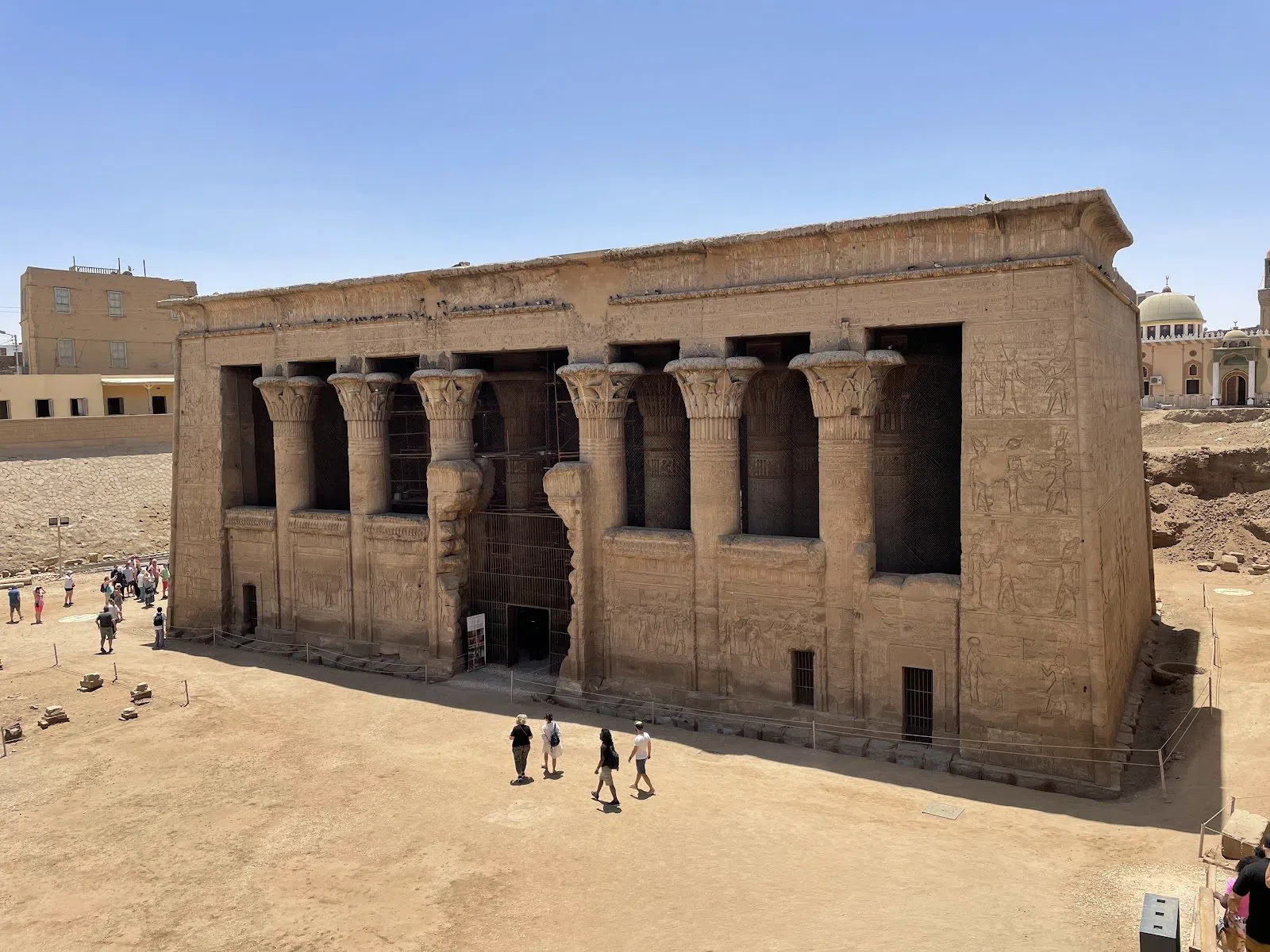
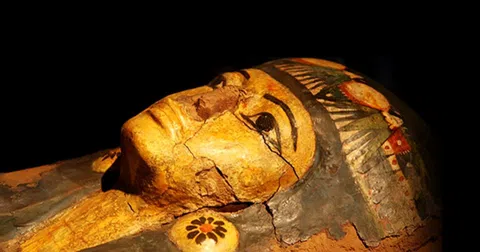
Esna's temple sits roughly nine metres below the modern street, in a pit the town grew up around while two thousand years of rubble piled over it. Only the entrance hall survives, and for most of the last century that hall was black, its ceiling caked in soot from the fires of the families who once sheltered inside it. A six-year cleaning took that off, and what emerged is colour: ochre, red and Egyptian blue across an astronomical ceiling you can read from the floor without a lens.
The ceiling is the whole reason to come
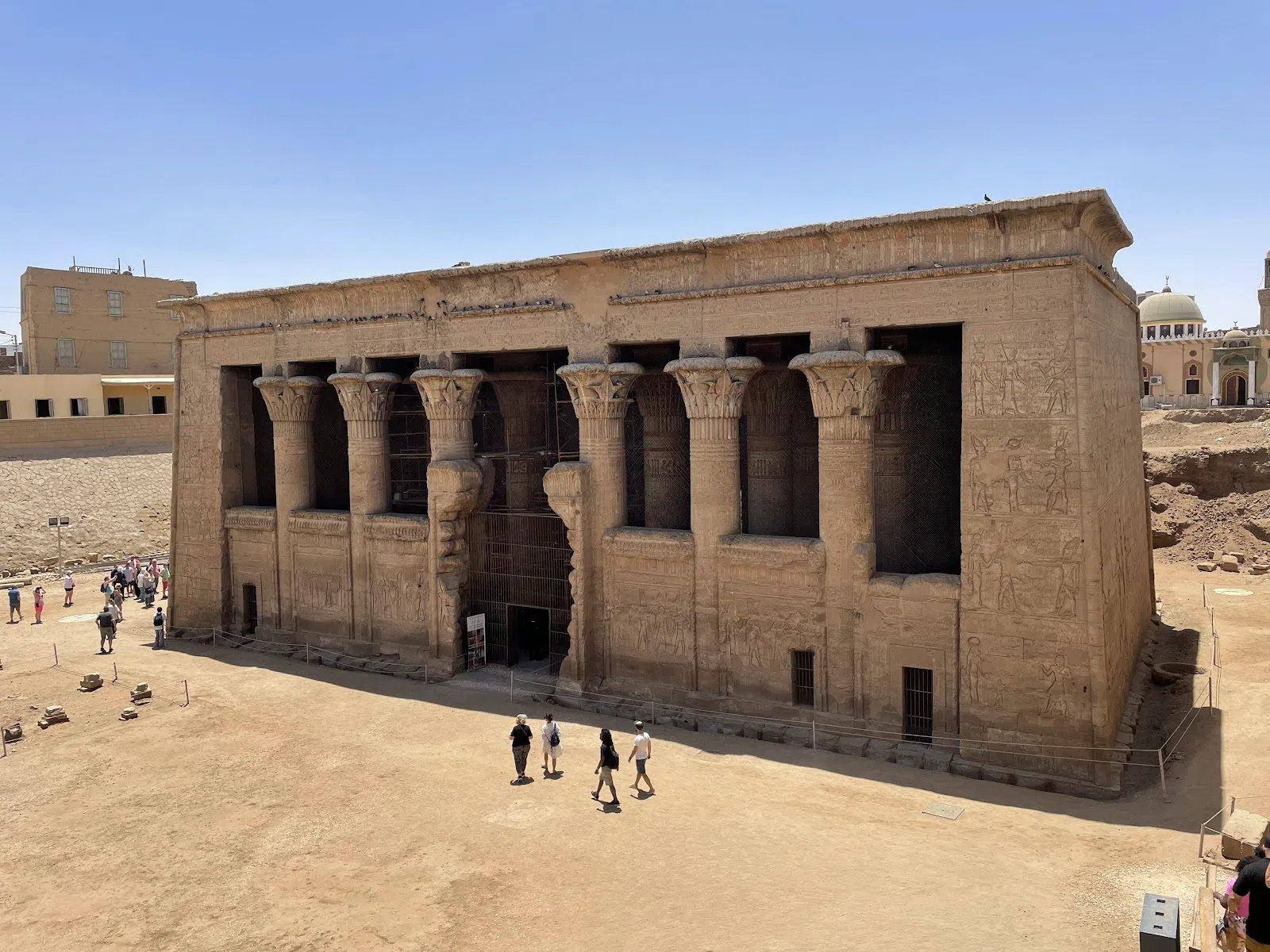
Temple of Khnum (Esna Temple) sits in the excavation pit at the centre of old Esna, about an hour by road south of Luxor on the east bank. What survives is a fragment. The temple proper (sanctuary, courts, the rest of the plan) is gone, built over or quarried away, and what remains is the pronaos, the pillared entrance hall that the Roman-era emperors kept decorating long after the pharaohs had stopped. That single hall is why coaches and cruise passengers stop here, and it is enough.
The restoration was a joint Egyptian-German project, run through the Ministry of Tourism and Antiquities Documentation Centre with Professor Christian Leitz of the University of Tübingen, with around thirty Egyptian restorers working under Ahmed Emam. Over six years they lifted some 1,800 years of soot and bird dirt off the ceiling and the inner columns, and along the way recorded close to two hundred ink inscriptions nobody had ever transcribed: working notes, dedications and graffiti left by the people who built and used the place. For a visitor the effect is straightforward. The astronomical ceiling now reads as a decorated surface rather than a dark one, and the zodiac figures, the sky goddess, the rows of decans and the vulture-and-star bands over the aisles all sit in recovered paint.
Entry is EGP 200 for a foreign adult and EGP 100 with a student card. Bring the card rather than cash: Egyptian sites are now largely card-only and Esna is no exception. Opening hours are quoted variously as 07:00 to 16:00 and 08:00 to 17:00, which is a local reality rather than a misprint, so if your day is tight, plan around the earlier close and the later open. Go early anyway. The light coming into the pit is cooler and flatter in the first hour, and you will have floor space, which matters more than it sounds.
Be realistic about how long you need. Thirty to sixty minutes covers it properly, including time to stand still and look up rather than shuffle through. The site takes groups freely, being the standard stop between Luxor and Aswan for coaches and Nile cruises, but because the pronaos is one hall with one doorway, large parties bunch at the entrance and then clear all at once. If you arrive into that, walk to the back wall and wait five minutes; it thins. There is no step-free route: you descend stairs into the pit, so it is not wheelchair accessible.
Plan your Luxor trip
Live prices from our booking partners.
Free cancellation on many rooms. We may earn a commission when you book.
Old Esna sits directly around the pit
The temple alone is a forty-minute stop. What turns it into a genuine half-day is the town immediately around it, most of which has been through a serious restoration programme of its own, one that took the 16th Aga Khan Award for Architecture in September 2025.
Al-Qisariyya Heritage Market (the covered souk, immediately south of the temple) costs nothing to add and is the most natural next fifteen minutes. Takween Integrated Community Development, working with the Aga Khan Trust for Culture, restored the canopy, the facades and the infrastructure beneath the lanes. What they did not do is turn it into a bazaar for visitors: it remains a working local market selling to people who live in Esna, which is exactly why it is worth walking. Groups pass through freely and there is no booking, but it narrows to single file in places and guides usually split parties rather than fight it. Purchases start from a few pounds upward.
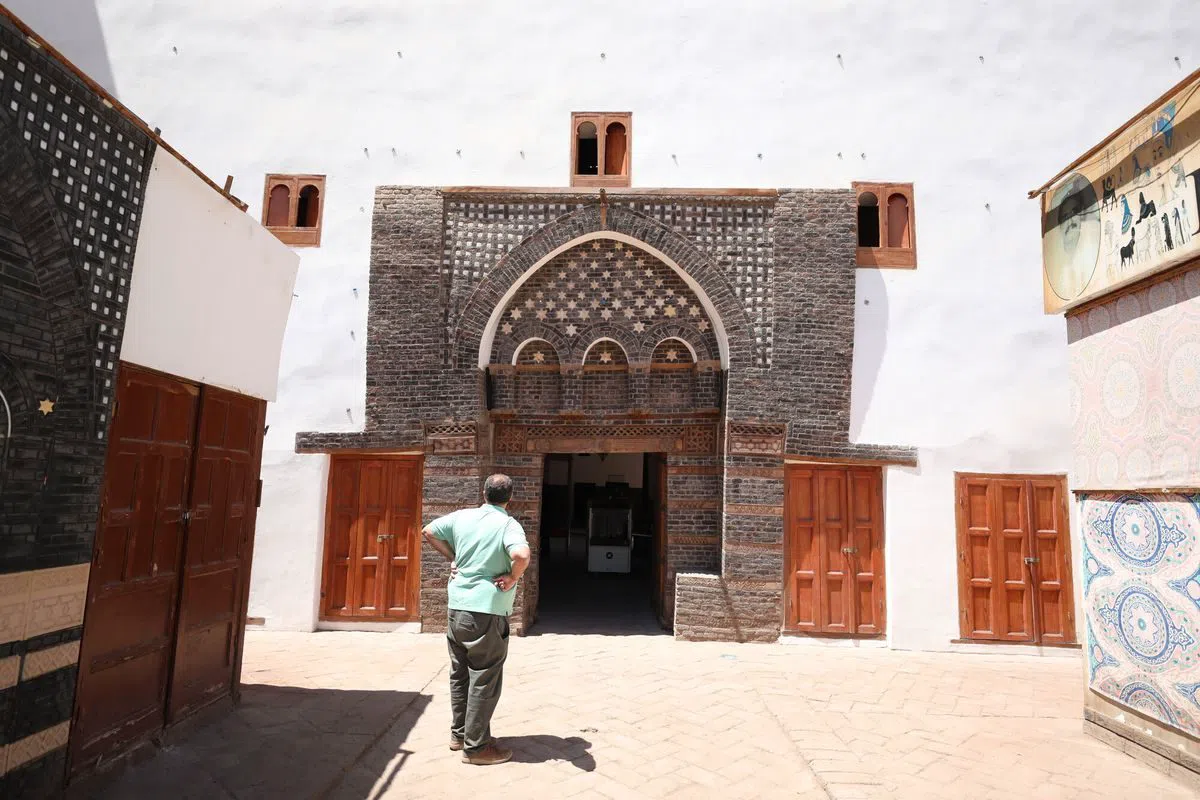
Wekalet al-Geddawi (the caravanserai, a short walk through the old town) is the one building here that will surprise people who came only for the temple. It was shut to the public from 1951 until a USAID-funded, Takween-led restoration reopened it in 2021 as a crafts and cultural centre. It is one of only three surviving caravanserais in southern Egypt and the only one that has kept its original layout, so you can still read the logic of the thing: storage below, lodging above, everything facing a courtyard. That courtyard is the largest covered public space in old Esna, it handles a full coach comfortably, and it is used for craft demonstrations. Entry is nominal and free on some days, so confirm on arrival rather than assuming.
Minaret of the al-Amri Mosque (a five-minute detour on the street side of the old quarter) adds a thousand years of non-pharaonic Esna for nothing. It was raised under Badr al-Jamali, the Fatimid vizier who built five such minarets across Upper Egypt, and it is the only surviving fabric of the original Jami' al-Amri. The tower is not climbable and the point is the exterior. The mosque itself is a working prayer space, so dress modestly and ask before stepping inside.
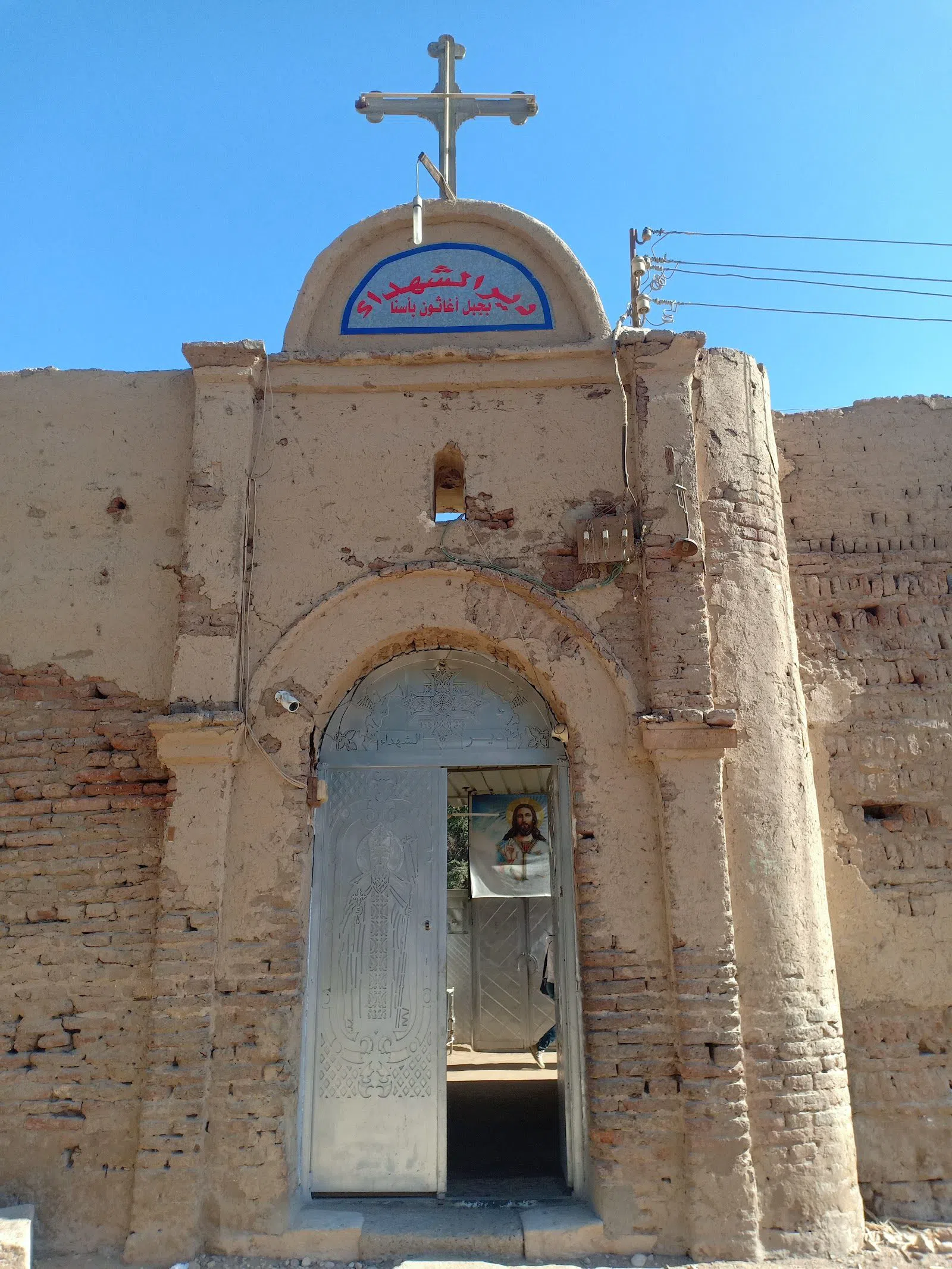
Deir al-Shuhada (Monastery of the Martyrs) (in the desert fringe outside town) is the strongest of Esna's other stops and a real change of register after Ptolemaic and Roman temple decoration. The churches here, and at nearby Dayr al-Fakhuri, are known for their wall paintings: a different tradition, different pigments, different intent. Public access is permitted and there is no ticket, though a donation is expected and modest dress is required. Hours are informal, which is the catch, so have a driver or guide confirm on the day and steer around liturgy times rather than turning up cold. Groups should arrange it through a guide.
Lunch here has to be booked before you leave
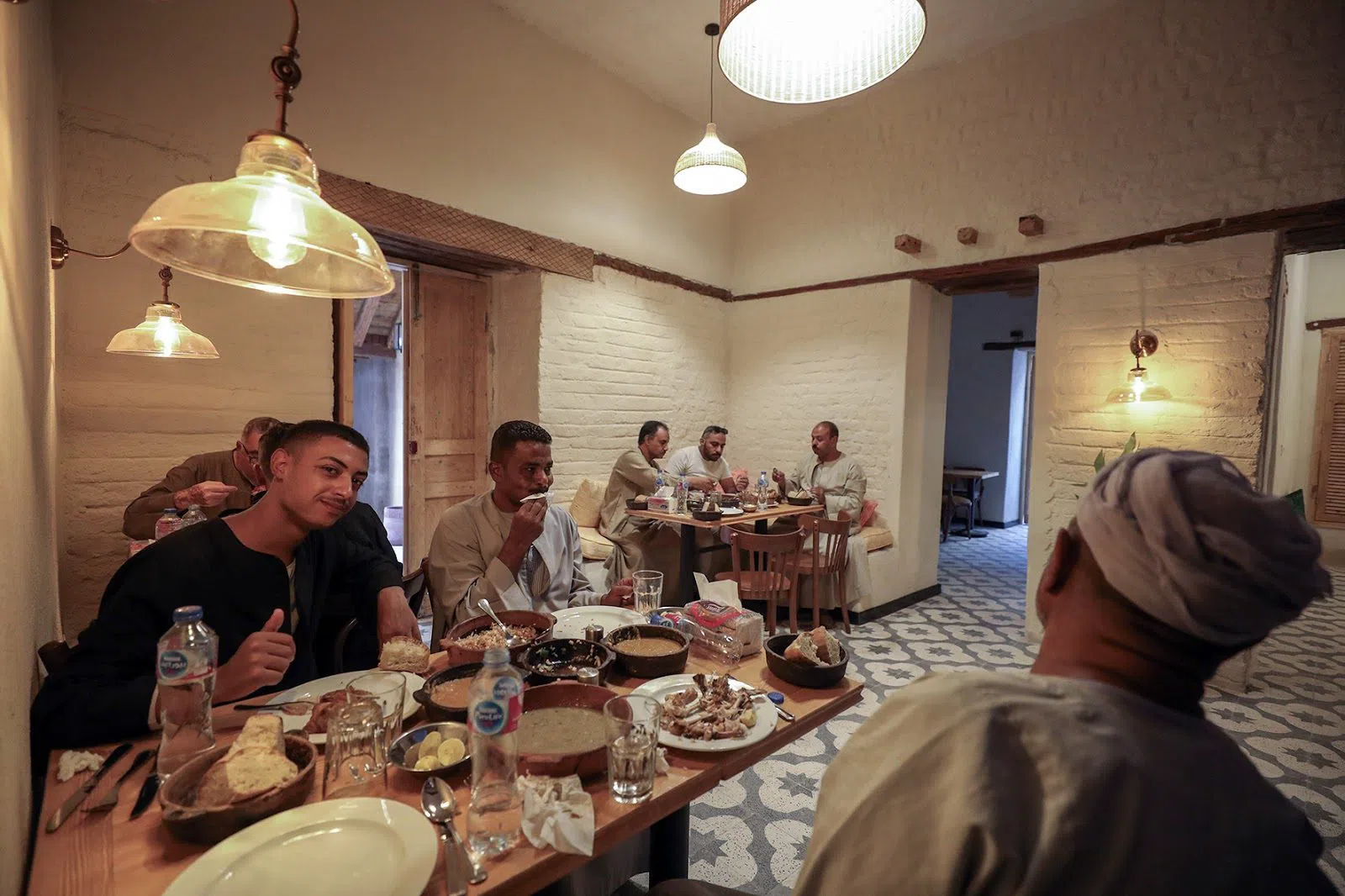
Okra — Esna Women's Kitchen (in a restored house in the old town) is the single best reason not to eat back on the boat. It opened in 2023 out of Takween's Esna Kitchen competition, in a building restored under the same award-winning programme, and it is the town's first women-led restaurant. The food is a set lunch, mid-range, quoted per head when you book.
The door policy is the part people get wrong. It works as a group kitchen: advance booking is required, there are no walk-ins, and the whole operation is built around parties moving between Luxor and Aswan. Everything is cooked on the day for the number of people who said they were coming, so it genuinely cannot absorb a couple who wander in at one o'clock. Book it when you book the car, or plan to eat elsewhere.
The lock explains why your stop may run long
Esna Lock and Barrage (on the river at the north edge of town) is not an attraction and I would not sell it as one. It is the reason a Nile cruise timetable through Esna is a suggestion. Every boat sailing between Luxor and Aswan passes through the lock, the transit itself takes 30 to 60 minutes, and in peak season the queue for it can run two to four hours. If you are on a boat, that is your afternoon, and it is worth knowing before you book a same-day activity at the other end.
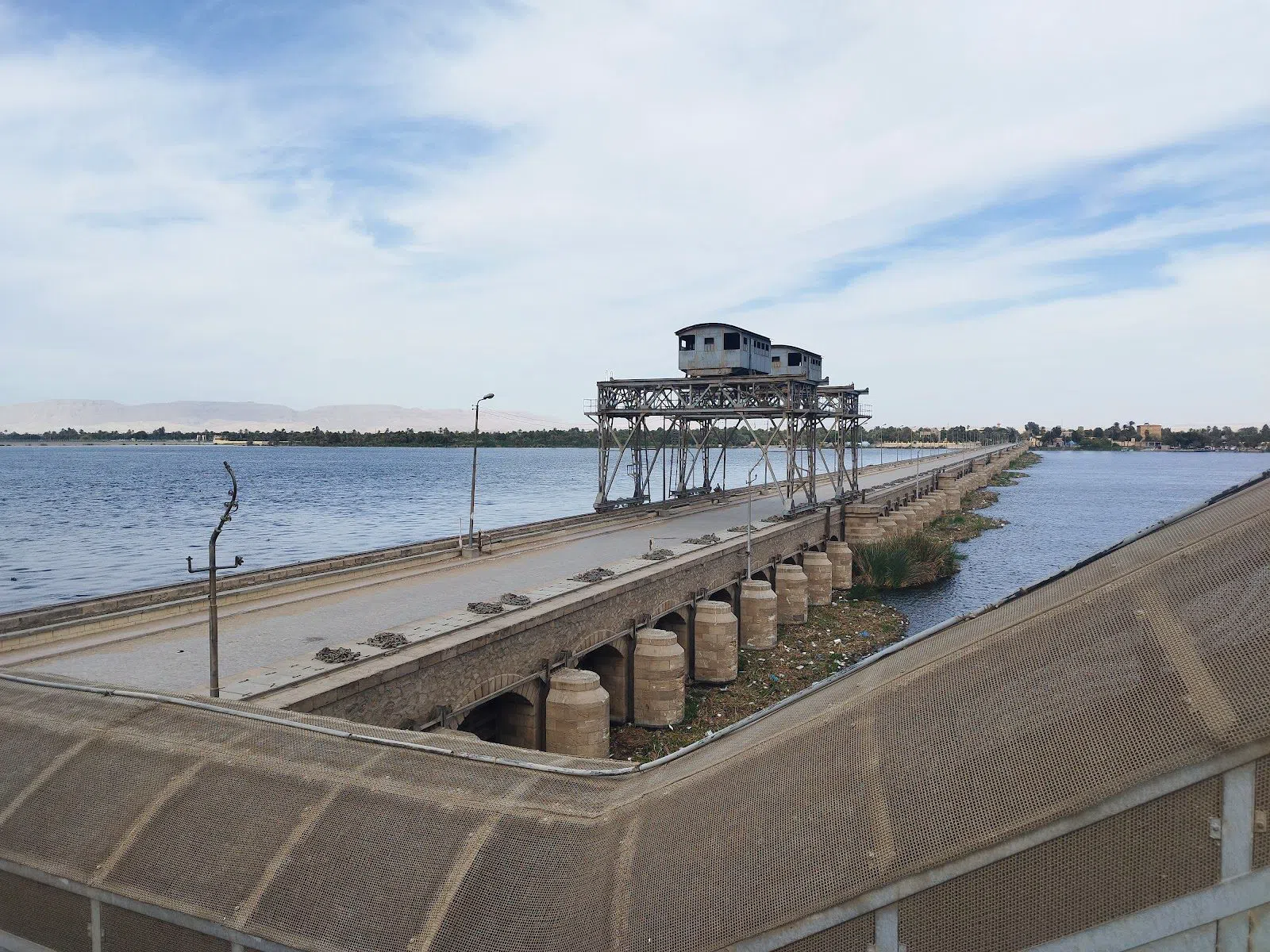
If you are travelling by road you can watch the whole business from the bank for ten minutes, free, no ticket and no limit on numbers, and then drive on, which is one of several small arguments for doing Esna by car.
What to add on the road south
The east-bank road to Esna passes two sites that most people drive straight past, and both cost EGP 100.
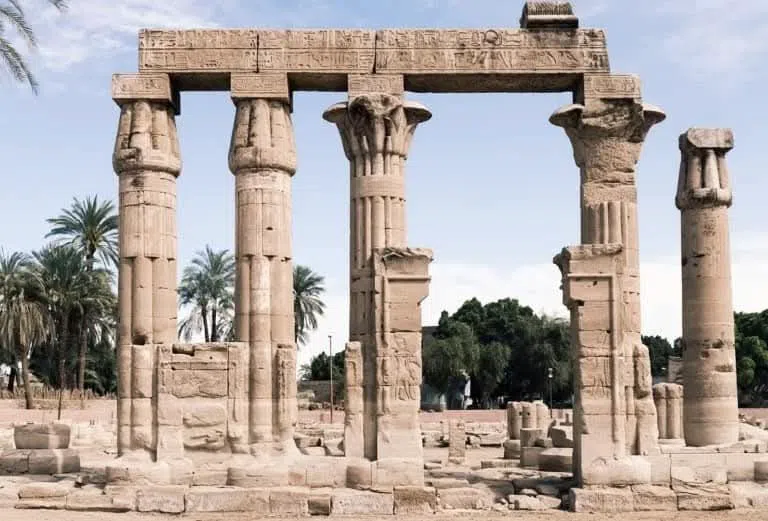
El-Tod Temple of Montu (20km south of Luxor, about 30 minutes by taxi) is the cheapest possible add-on because it is already on your route. There is one administrative trap: buy the ticket at the Luxor Temple ticket office before you set off. People are caught out by this regularly.
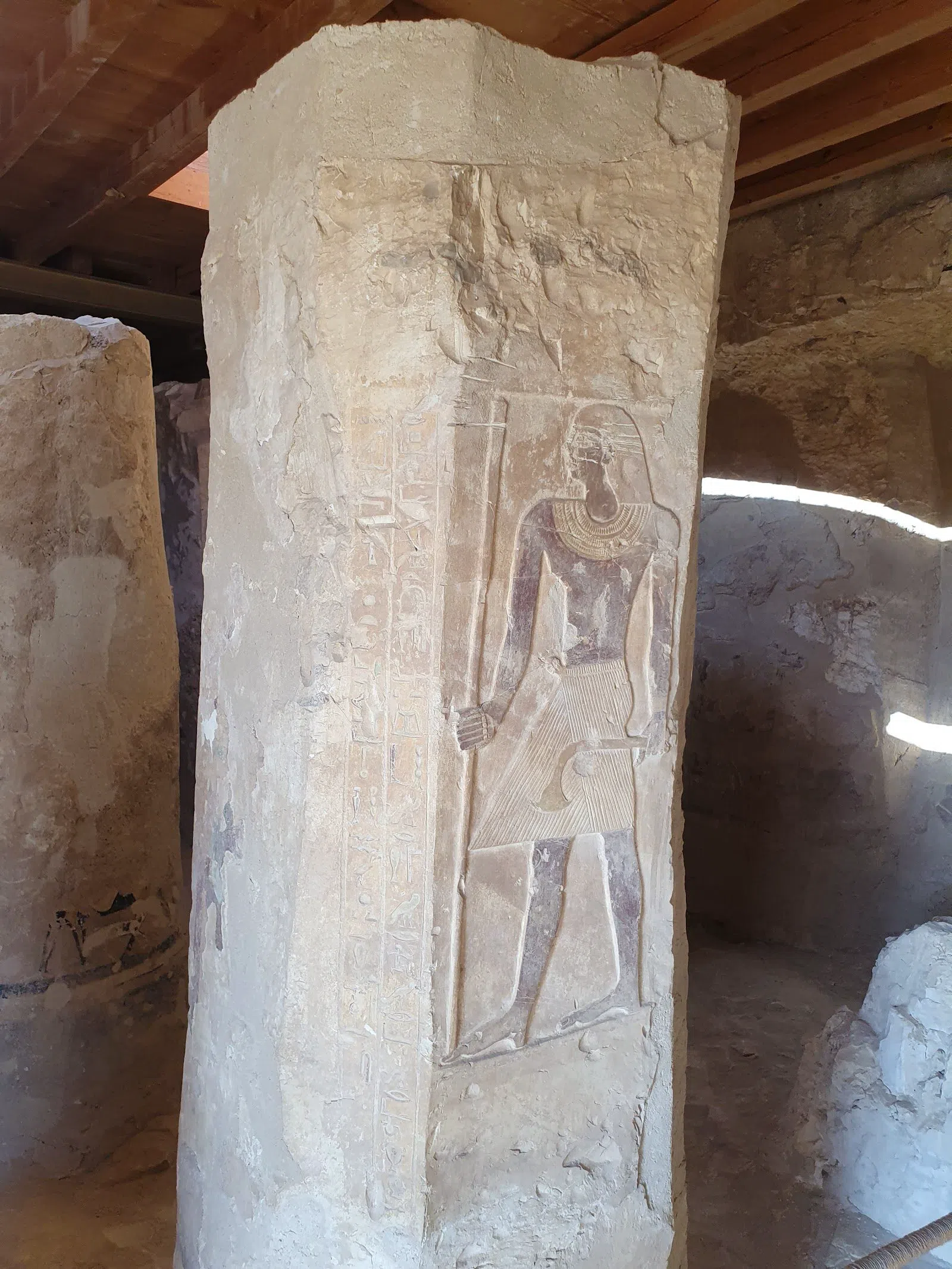
Tombs of Ankhtifi and Sobekhotep, El-Moalla (32km south, 40 to 50 minutes by road) needs the same advance ticket from Luxor. These are First Intermediate Period tombs, and the style is nothing like the New Kingdom work everyone has just spent two days looking at on the West Bank: flatter, stranger, more provincial in a way that is the entire reason to stop. The chambers are cramped, so this is a two- or three-person site rather than a coach one. Photography is banned and the rule is enforced harder here than almost anywhere in Egypt, so do not test it.
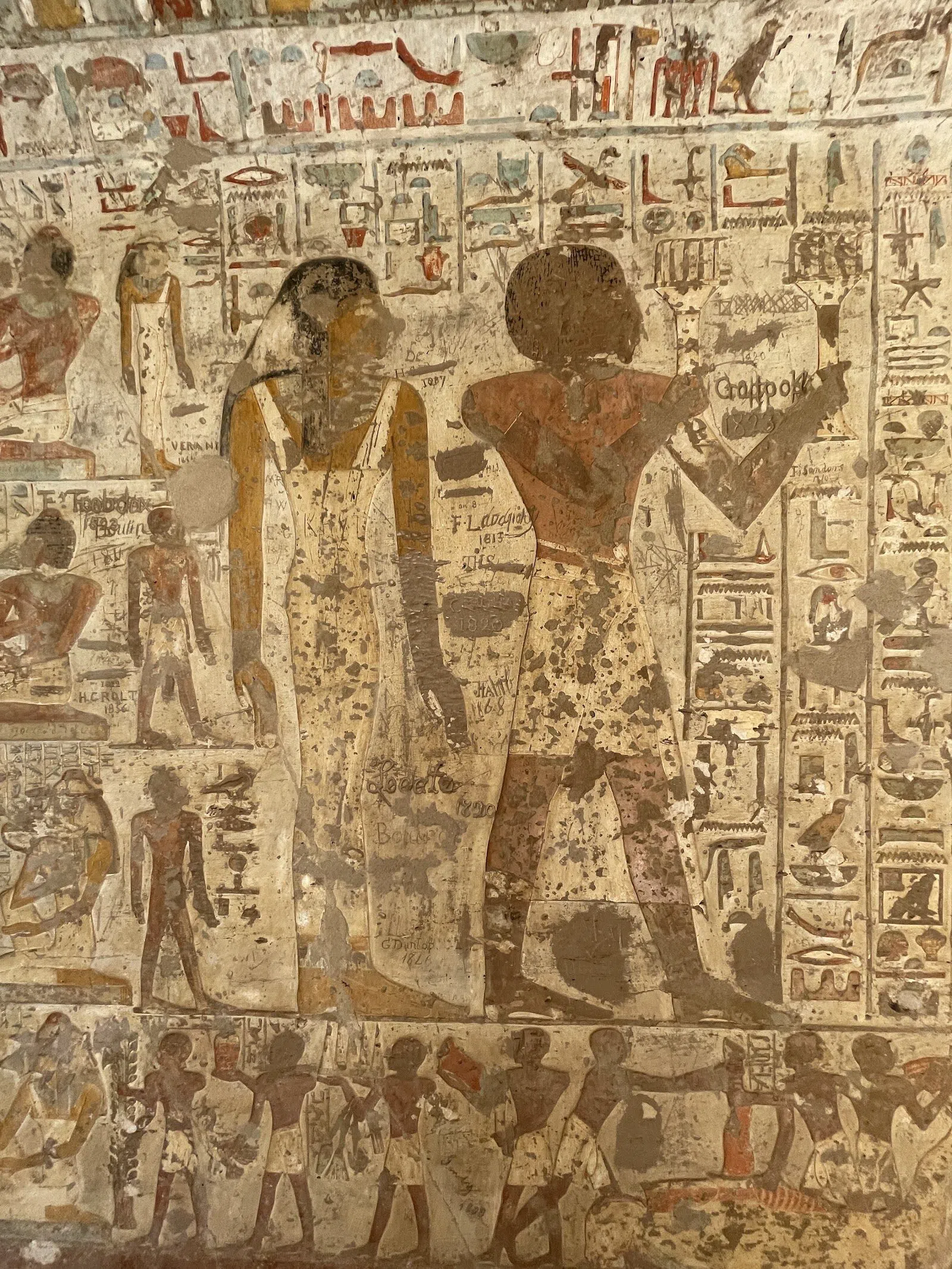
El-Kab (ancient Nekheb) rock tombs (east bank, 80km south of Luxor) are the best pairing with Esna if you are continuing toward the south. The tomb of Ahmose son of Ibana carries an eyewitness account of the expulsion of the Hyksos, written by a man who was there, and Paheri's tomb is among the finest painted tombs outside Luxor. The ticket is small, roughly EGP 100, so verify at the site and expect card. Guards admit a handful of people at a time because each tomb is a single chamber. It is a staple dahabiya mooring and large cruise ships cannot stop, which is precisely why it stays quiet.
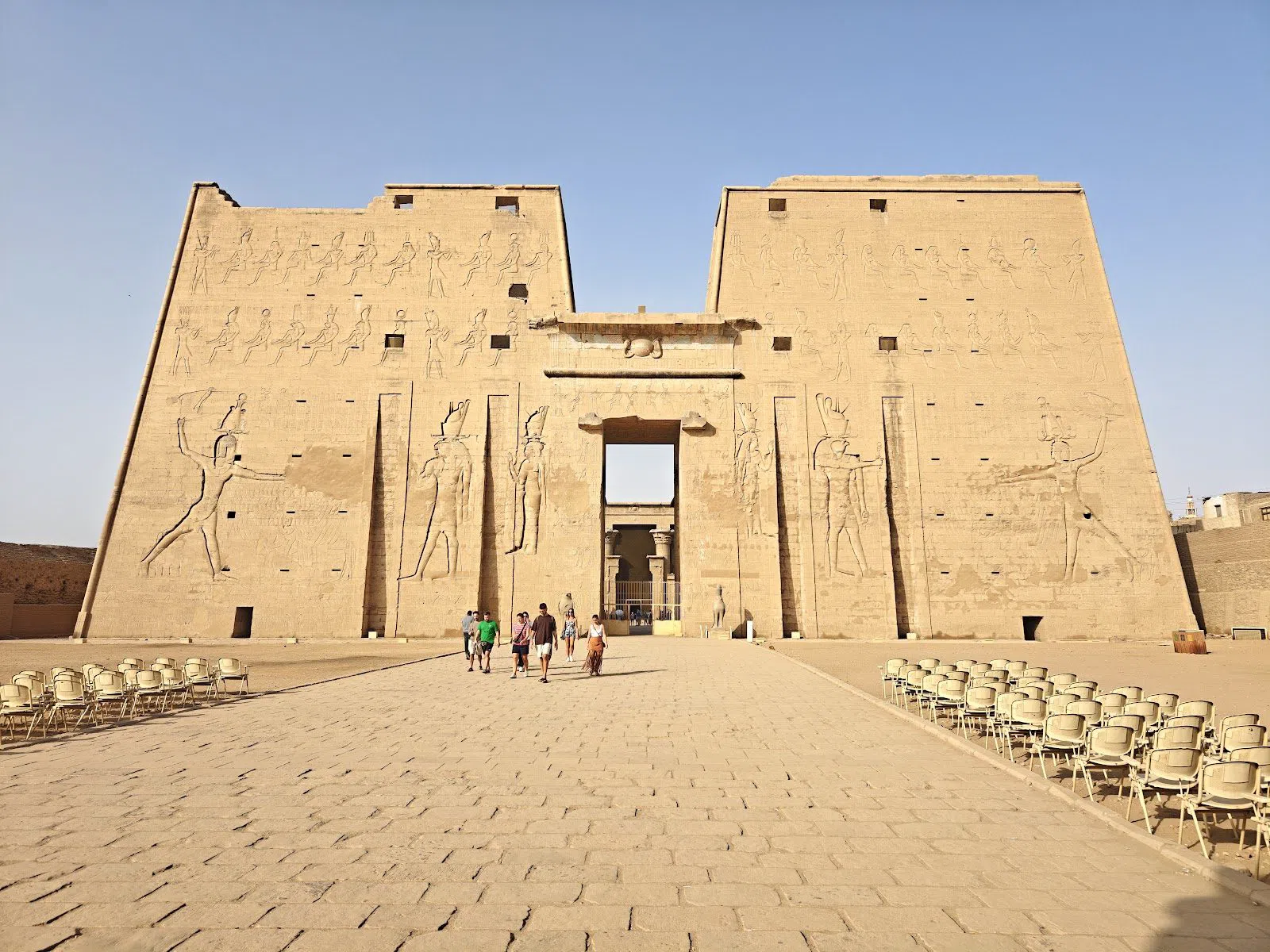
Temple of Horus, Edfu (about 115km south, at the end of the same road) is the natural second half of a full Esna day if you keep driving. It is the most complete temple in Egypt, with its roof intact, and the contrast is clean: Esna gives you colour in one hall, Edfu gives you scale and a whole building. Admission is approximately EGP 450, hours run 07:00 to 17:00 from October to April and to 18:00 from May to September, and a guided visit takes about 90 minutes. It takes large groups all day, with horse-carriage shuttles from the cruise dock, and it is busy in a way nothing else on this list is, which you should factor in before you commit the afternoon.
If it is painted ceilings you are chasing
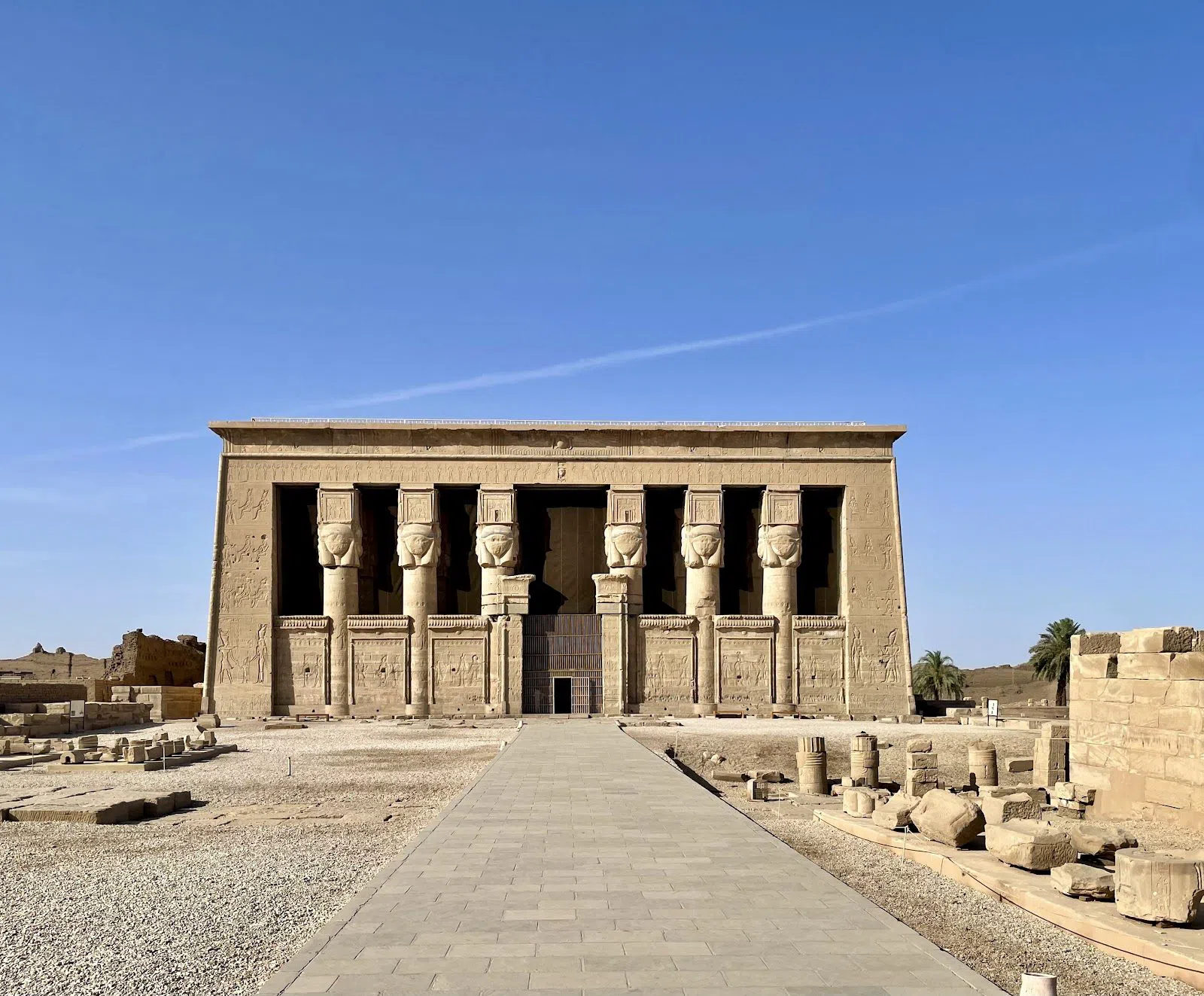
Dendera Temple of Hathor (60km north of Luxor, roughly 3.5 to 4 hours door to door) is the obvious comparison piece, and it makes the Esna story legible. Dendera's colour survived because its roof survived; Esna's did not have that protection, which is why Esna needed six years of cleaning to get its ceiling back. General admission is EGP 240 to 250, with the roof and the crypt ticketed separately at EGP 100 each, card only on site. Coaches are fine here, but the roof and crypt congest quickly, so groups should stagger.
Temple of Seti I, Abydos (2.5 to 3 hours' drive north) holds the finest carved relief in Egypt and is the right answer for a reader who wants one big day rather than one easy one. It is commonly combined with Dendera as a round trip of 10 to 11 hours, much of it in the car, with about two hours on site. Tickets run roughly EGP 200 to 260 for a foreign adult; buy through egymonuments.com or by card on the day. It is the opposite of the Esna proposition, and worth choosing deliberately.
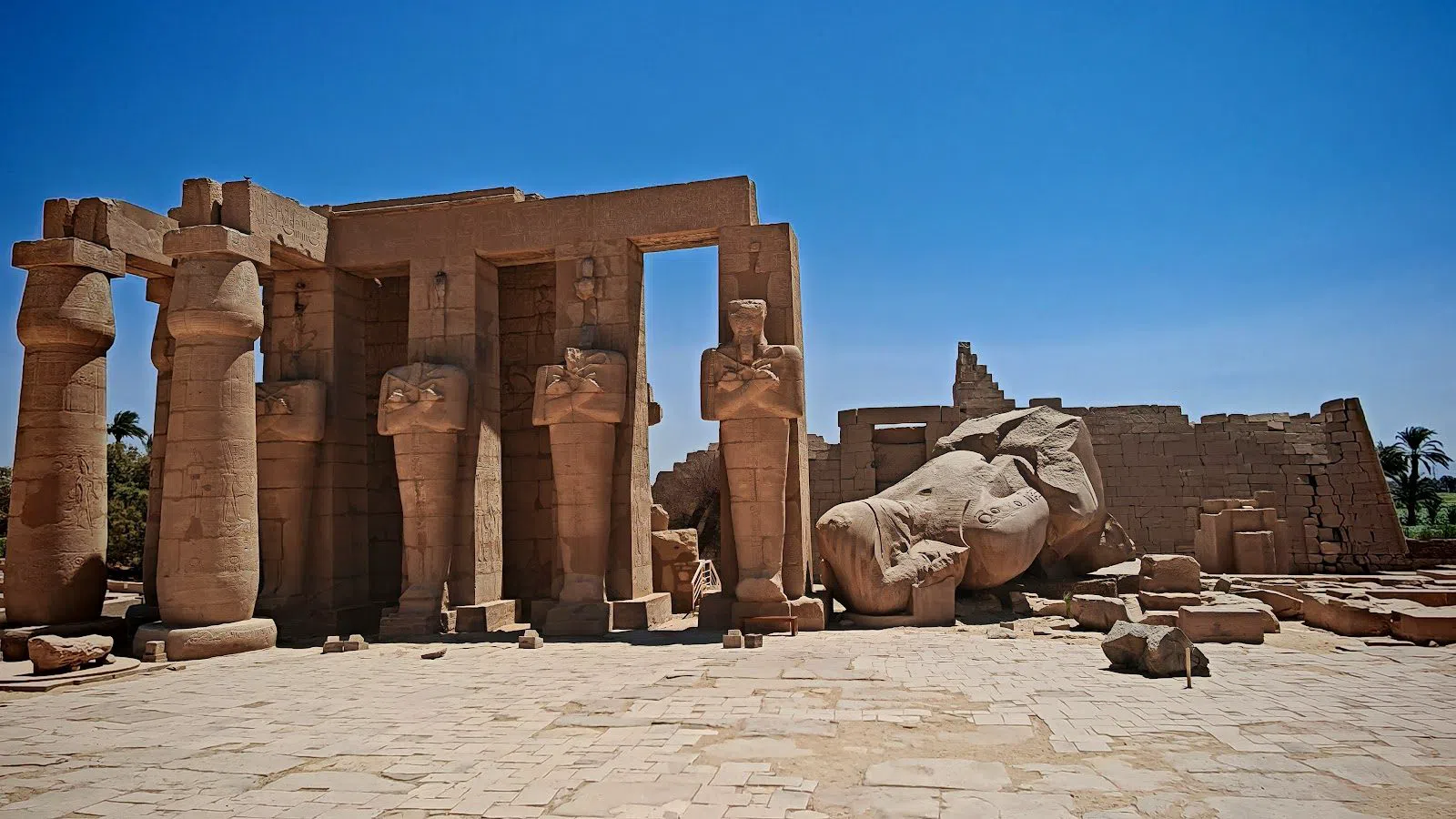
Arriving by water instead of by road
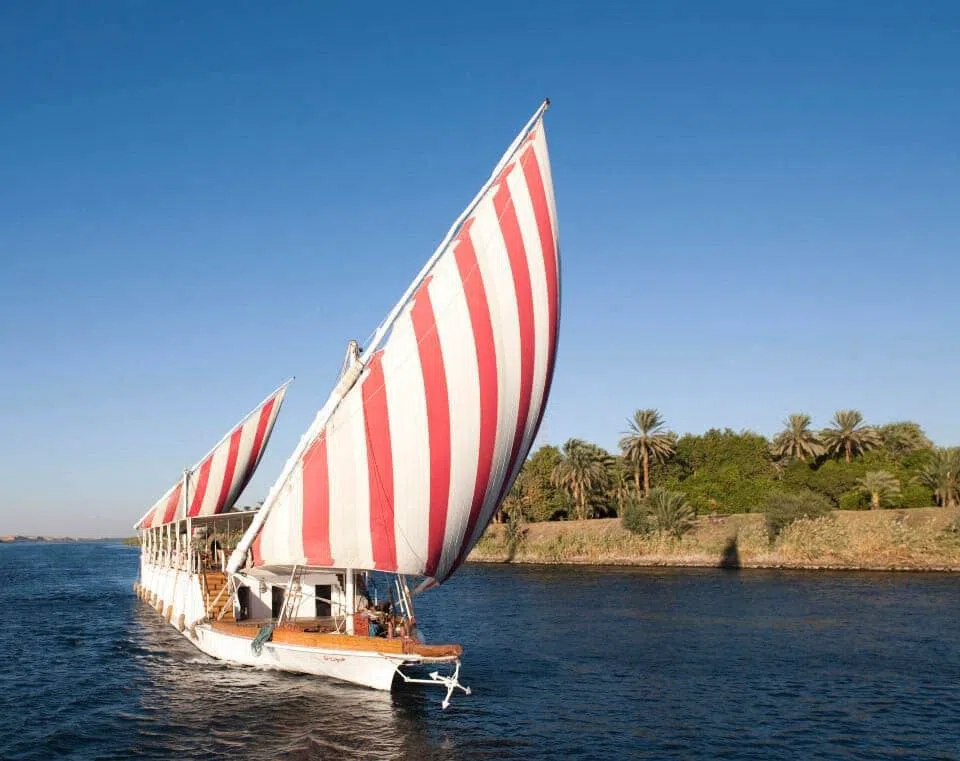
Nour El Nil (dahabiya operator, sailing from the Esna dock) is the reason Esna became a departure point rather than a place people drive past. Its sailings start at Esna and run south, calling at moorings the big ships cannot use, including El-Kab and Gebel el-Silsila. The flagship has seven cabins plus two panoramic suites, which makes it right for a private party of fifteen to twenty and wrong for a coach group. Book around four months ahead with a 25% deposit; the itineraries and rates live on the booking portal rather than the homepage. It sails September to May only, with no operation from June to August because of the heat.
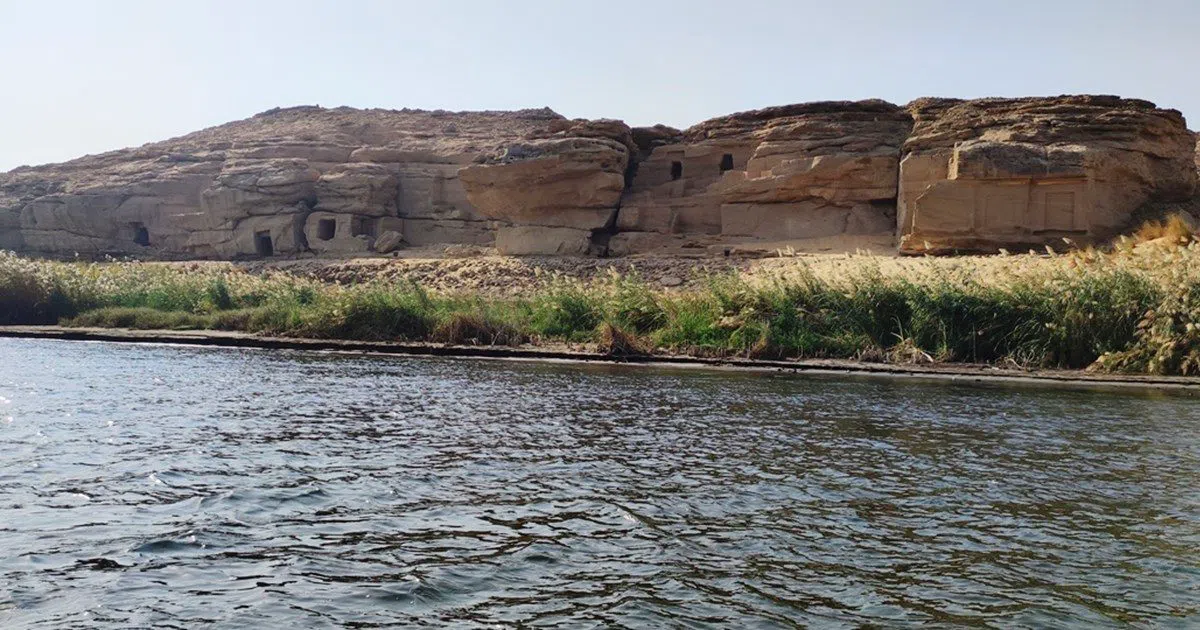
Gebel el-Silsila (west bank, south of Esna) is where the sandstone for Karnak, for Edfu and for much of the Nile Valley was cut, which makes it the single best site for explaining how any of these temples came to exist. Open 07:00 to 16:00 daily, EGP 100 for a foreign adult and EGP 50 for students. The east bank is off limits and access is effectively by boat, which caps numbers and also makes it awkward as a road day trip from Luxor. It belongs to a dahabiya itinerary, and I would not build a car day around it.
Practical notes before you go
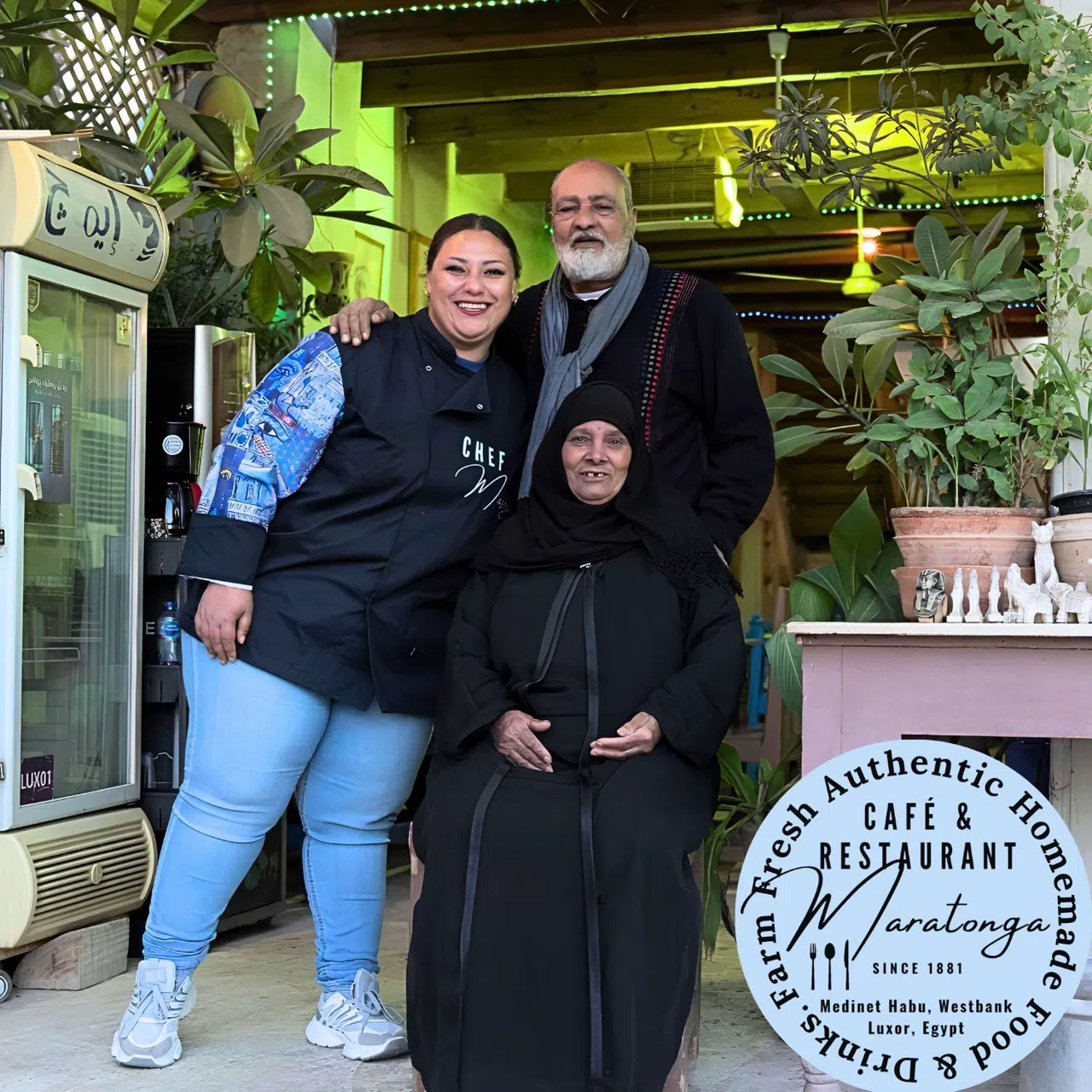
A private car with a driver is the sensible unit. Esna alone is a half-day: leave at 07:00, temple by 08:00, souk and caravanserai after, back in Luxor for early afternoon. Esna plus Edfu is a full day of 10 to 11 hours and you will want the earlier start. Mara House Luxor (a long-established east-bank operator and guesthouse) will build either version to order, quoting private trips per car and party size with transport and guide included, and it also runs the long northern day. It matters here because the El-Tod and El-Moalla tickets must be bought in Luxor first and Okra must be pre-booked, and someone has to do both before you leave. There is no instant online checkout; email with your dates and party size for a quote. Fixed-date group journeys are published for 2026.

Site tickets are card, and increasingly card-only, so carry a working card and a backup. Carry small EGP notes separately for the souk, monastery donations, guardians who open a tomb gate, and tips. Do not plan to buy a temple ticket with a fifty-dollar note.
Early is better at every site on this list, for light and for crowds. In summer the middle of the day on the east bank is punishing and there is no shade at El-Tod at all. If you are on a cruise, assume the lock will cost you time and do not book anything tight for the same evening.
For two people doing Esna as a half-day by car, reckon on EGP 400 in temple tickets, nothing for the souk, minaret and monastery beyond a donation, a nominal fee at the caravanserai, a set lunch at Okra quoted per head, and the car itself, which is the largest line by some distance. Adding Edfu adds roughly EGP 900 for two and several hours of road.
Everything here runs out of Luxor, so stay there rather than trying to overnight in Esna. Compare rooms on Luxor hotel search, and see the Luxor guide for how the east and west banks divide a week. Esna is the day you do when you have had two days of monumental scale and want one hall, one ceiling, and a market to walk through afterwards.
Before you go
How long does the trip from Luxor to Esna actually take?
About an hour each way by road on the east bank. The Temple of Khnum needs only 30 to 60 minutes, since just the pronaos survives, so a temple-only run is a half-day. Add the souk, the caravanserai and a booked lunch and you fill a comfortable half-day to early afternoon; continue to the Temple of Horus at Edfu and it becomes a day of 10 to 11 hours.
How much is entry to Esna Temple, and can I pay cash?
EGP 200 for a foreign adult and EGP 100 with a student card. Bring a payment card, because Egyptian sites are now largely card-only. Keep small EGP notes for the market, monastery donations and tips.
Is Esna worth it after Karnak and the Valley of the Kings?
Yes, but for a different reason. Esna is one hall, so you go for the surfaces rather than the scale. Six years of cleaning took 1,800 years of soot off the astronomical ceiling and inner columns, so you see painted decoration instead of blackened stone. If you want scale as well, pair it with Edfu on the same road south.
Do I need to book anything before leaving Luxor?
Three things. Okra, the Esna Women's Kitchen, takes no walk-ins and cooks to the day's booked numbers. Tickets for El-Tod and El-Moalla you buy at the Luxor Temple ticket office before you set off. And a dahabiya with Nour El Nil wants roughly four months' notice and a 25% deposit.
What are the opening hours at Esna Temple?
They are quoted both as 07:00 to 16:00 and 08:00 to 17:00, and the answer varies. Plan around the earlier close if your schedule is tight, and go first thing regardless: the light in the excavation pit is better early and the floor is empty before the coaches arrive.