The Luxor issue
The Temple at Night — Exploring Karnak and Luxor Temples After Dark, When the Crowds Thin and the Floodlights Transform the Stone
When the day-trip coaches pull out and the floodlights come up, Luxor's two great temples become a different, quieter kind of monument — here's how to see them properly after dark in 2026.

By Hanne VermeerReading Luxor the way it was built
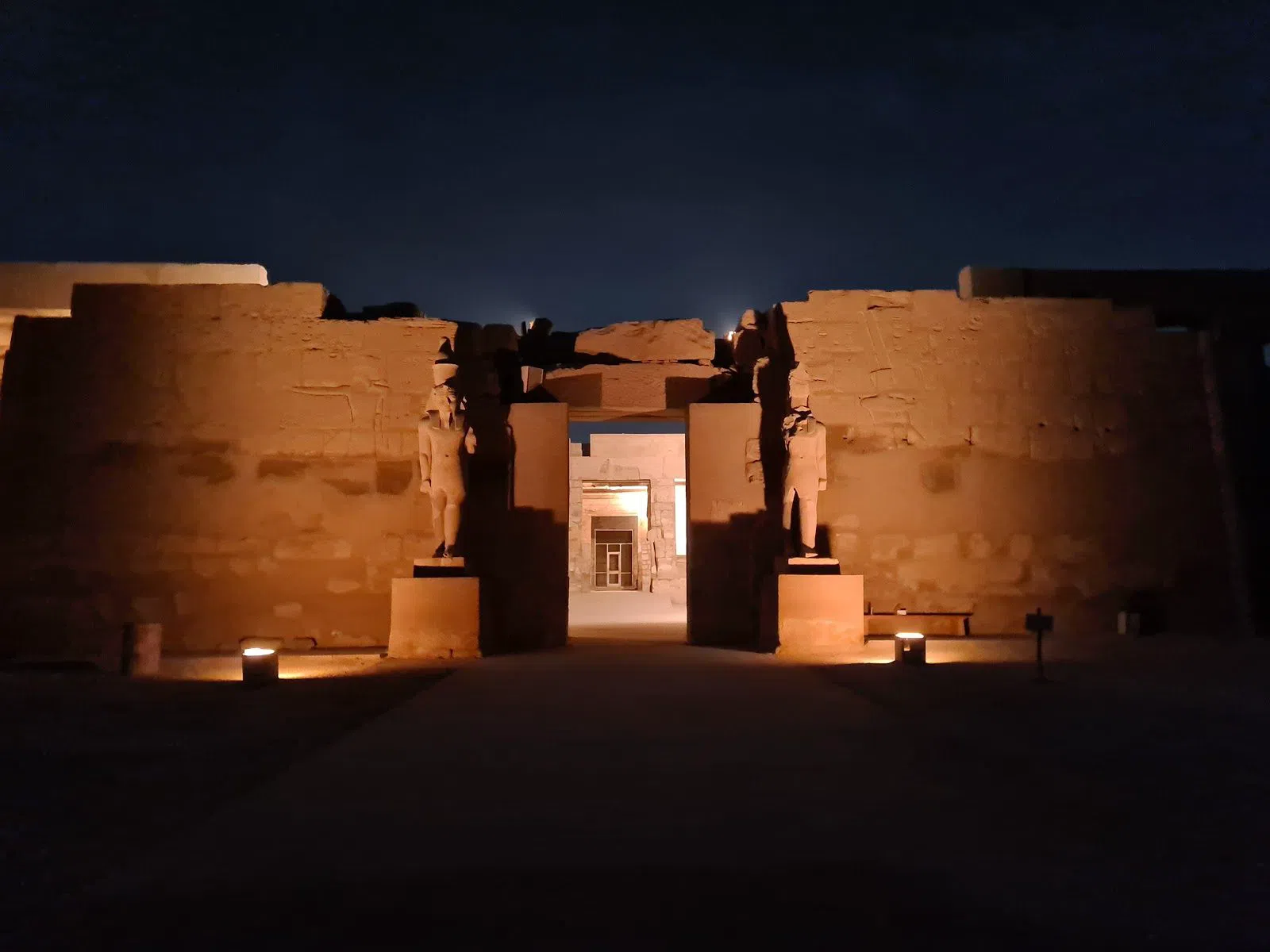
By day, Karnak's hypostyle hall is a queue and a sunhat and a hundred phone cameras angled at the same column. After dark, the crowds thin, the heat drops, and floodlights carve the ram-headed sphinxes and painted architraves into something closer to how a New Kingdom priest might have seen them by torchlight. Luxor at night is not a lesser version of the day trip — for the two great temples, it may be the better one.
Karnak by torchlight — the Sound & Light Show
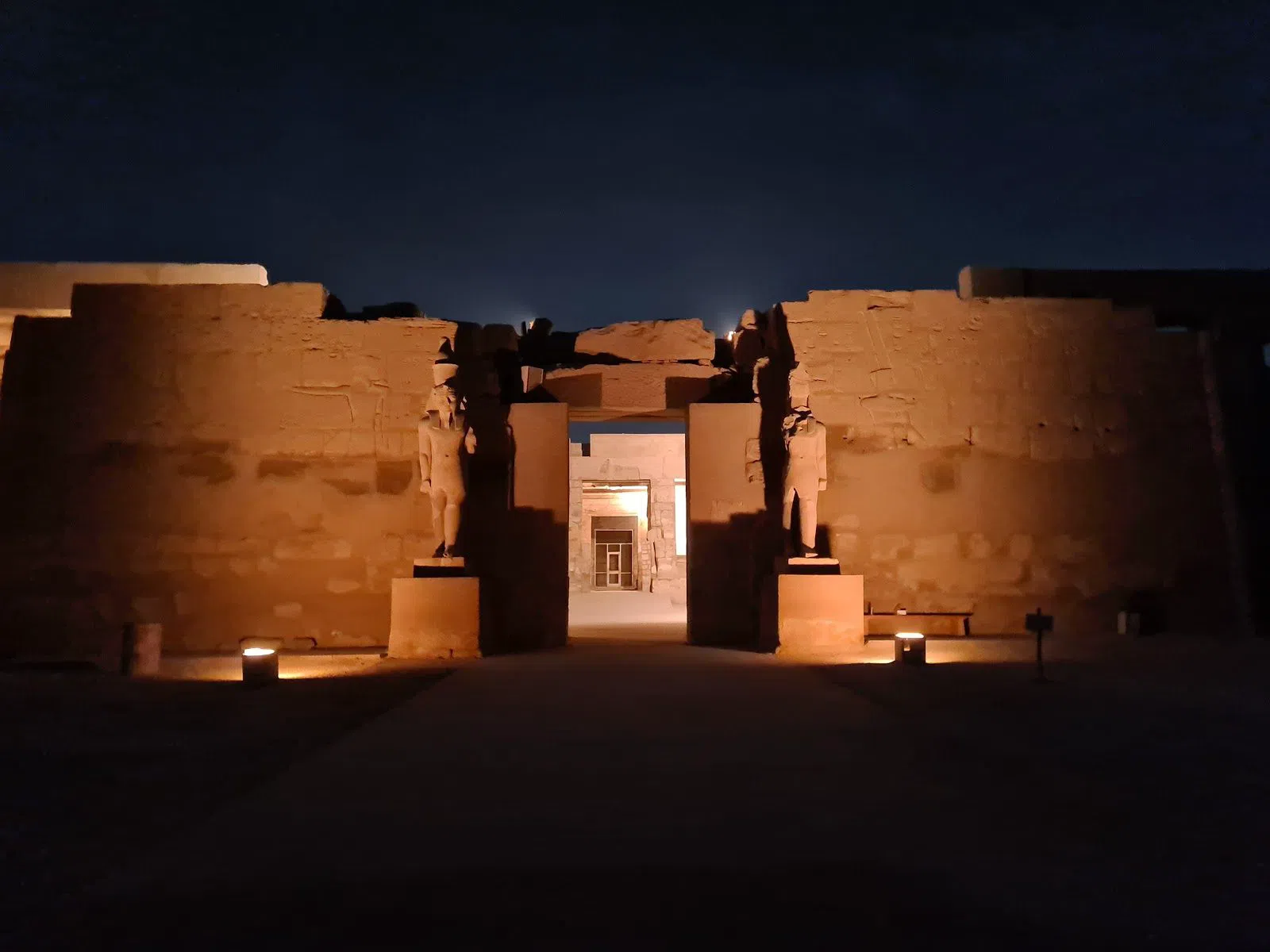
The only way to get inside the colonnades of Karnak Temple (Karnak, roughly 3km north of central Luxor) once the sun is down is the official Sound & Light Show, and it's worth being honest about what that means before booking. This is not a solitary wander — it's a scheduled, multilingual session with bulk seating, and most visitors arrive on a coach as part of a transfer package. Walk-in entry alone runs about 400 EGP (~$8); packaged tours bundling transfer and entry land in the $25-45 range. The narration, piped through speakers as you move from courtyard to courtyard before settling into seats by the sacred lake for the finale, has the slightly dated cadence of a script that hasn't been rewritten in a while — expect stentorian voiceover rather than nuance. But none of that matters much once the lights come up on the Great Hypostyle Hall's columns, each shaft picked out in amber against black sky, throwing shadows that day visitors never see. Go for the stone, tolerate the script, and accept that this is a group experience by design — couples wanting something quieter should look to Luxor Temple instead.
Show times and language slots shift with the season, so confirm on the day; as of 2026, sessions run several times an evening in different languages, and it's worth checking which one lines up with yours rather than guessing at the gate. The route itself is worth knowing before you buy a ticket: the walking portion moves through the first and second pylons and the open courts built up over successive New Kingdom reigns, before the seated finale looks out across the sacred lake where priests once performed ritual purification. None of that context comes through the narration in much depth — it's a broad-strokes history for a broad audience — so a guidebook or a few minutes of reading beforehand pays off more here than at Luxor Temple, where the layout is simpler and more self-explanatory.
Plan your Luxor trip
Live prices from our booking partners.
Free cancellation on many rooms. We may earn a commission when you book.
Luxor Temple at night — the easiest, and best, of the two
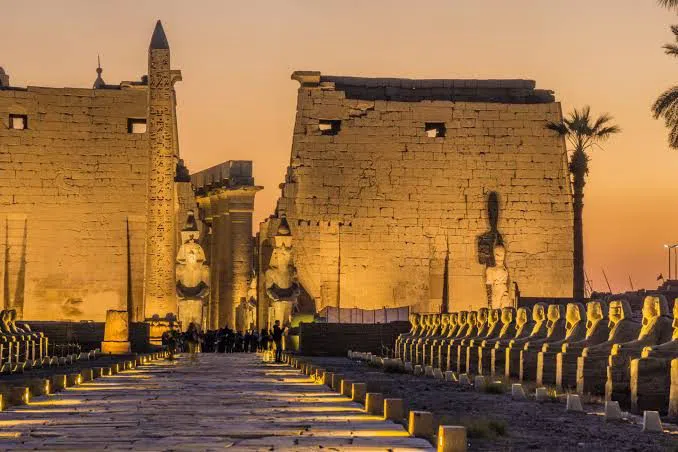
Where Karnak locks you into a show, Luxor Temple (central Luxor, on the Corniche) simply stays open — no group cap, no scheduled narration, a single ticket that gets you in any time before closing. That openness is what makes it Luxor's most reliable "temple at night" experience: roughly 400-500 EGP (~$8-10) for adults, 200 EGP for students, with hours stretching to 9 or 10pm depending on the season. The practical trick is timing — go after 7pm, once the day-trip coaches have pulled out and before the gates shut, and the pylon and colonnade of Amenhotep III are lit against the dark with barely a queue. It suits everyone: a couple wanting an unhurried hour, a family with a stroller, a coach party decanting for forty minutes on the way to dinner. There's no door policy to navigate and nothing to book ahead — buy your ticket at the gate and walk in.
The Avenue of Sphinxes — one frame, both temples
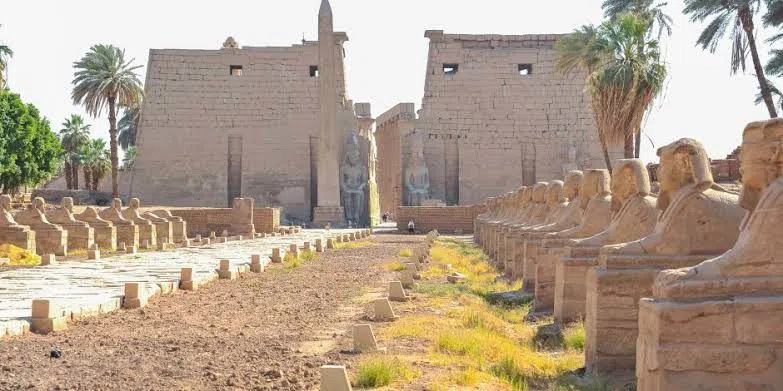
Between the two sits the newly restored Avenue of Sphinxes (the processional route linking Luxor Temple to Karnak), a wide paved corridor lined with ram- and human-headed statues that priests once walked in festival procession. It's included in either temple's admission — no separate ticket — and its width makes it comfortable for large groups, though a guide is genuinely useful here: sections remain fenced off for ongoing restoration work, and without someone to explain what you're looking at, the avenue can read as just a long walk between two more interesting stops. The single best reason to make time for it after dark: once Luxor Temple's floodlights are on, walking a stretch of the avenue back toward it lets you frame both monuments — the lit pylon ahead, the sphinxes receding into shadow behind — in a way the daytime crowds make almost impossible.
Museums that keep evening hours
Two museums on the Corniche run genuine evening sessions, and both are worth folding into a temple-night itinerary precisely because almost nobody does.
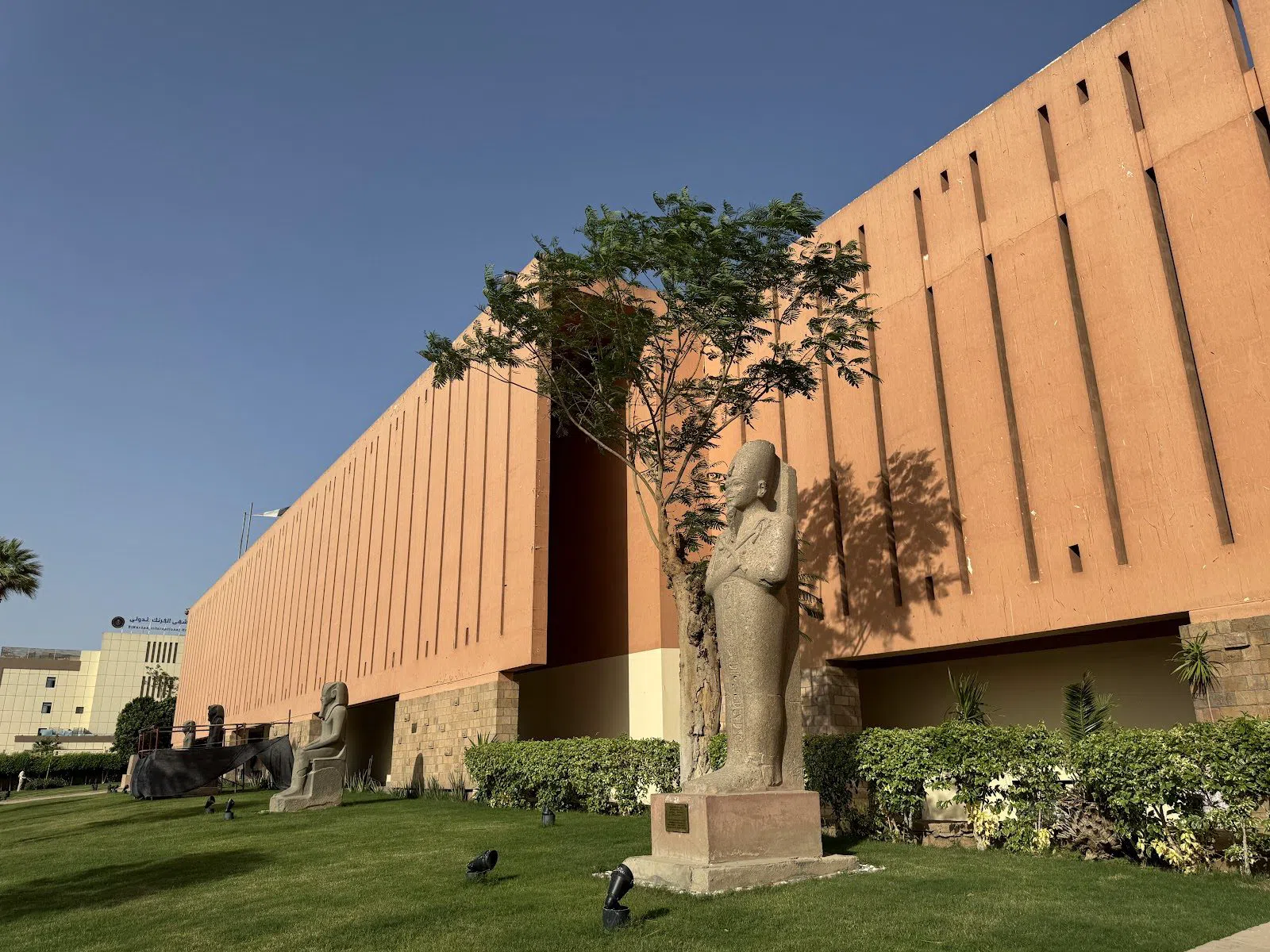
Luxor Museum (Corniche, between the two temples) opens 5-10pm and is, without exaggeration, the best-lit ancient sculpture collection in the city — the granite and diorite statuary here, much of it pulled from Karnak's cachette, is lit for display in a way the open-air temples can't match, and the galleries stay calm even when the temples outside are busy. Entry runs around 400 EGP for adults; pre-booking is advised for large groups, though individuals and couples can generally just turn up. It's the natural pairing for anyone doing Luxor Temple after 7pm — the museum is a five-minute walk north along the Corniche.
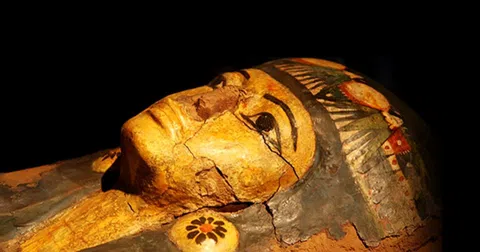
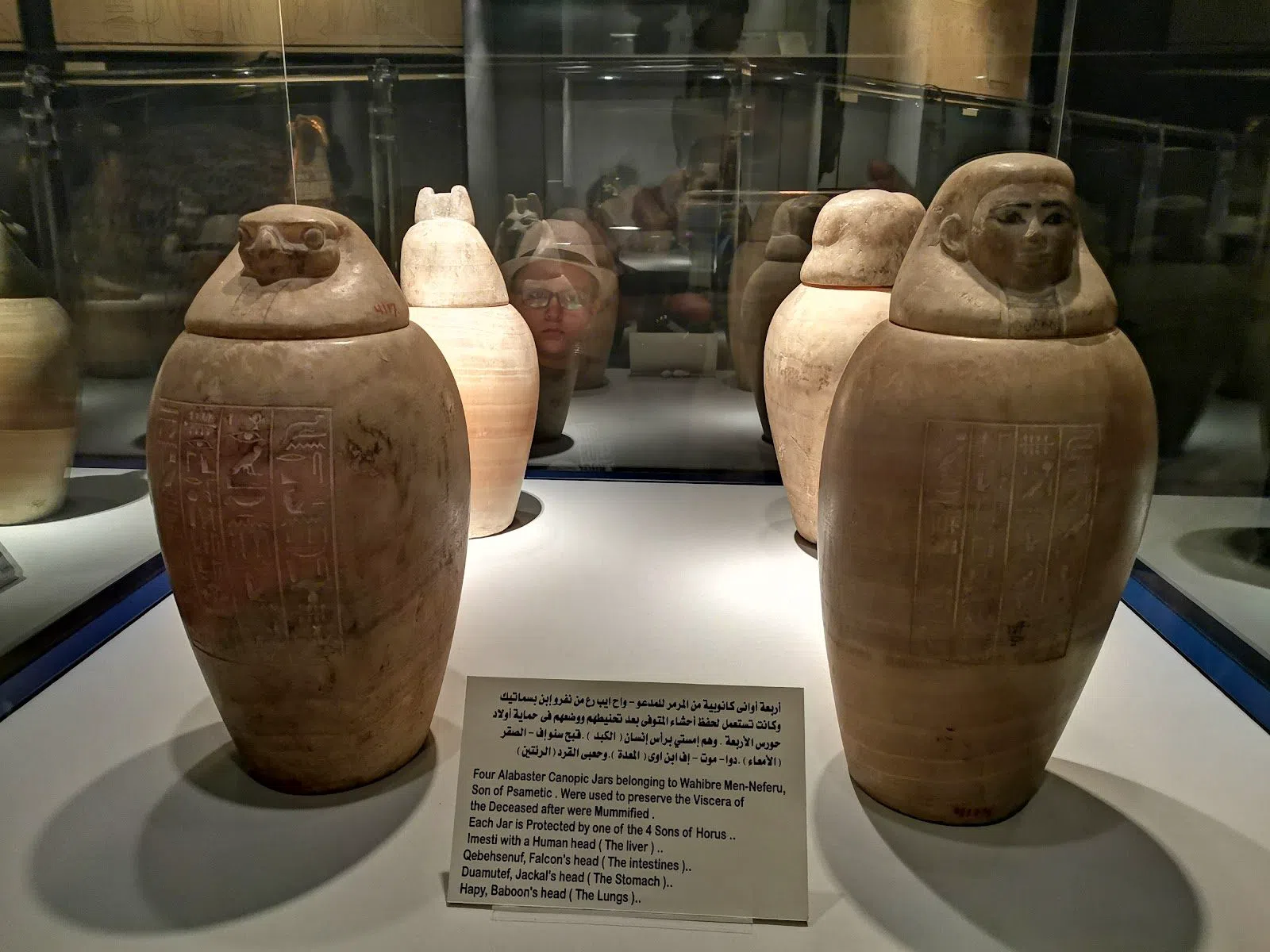
Smaller and more specialist is the Mummification Museum (Corniche, south of Luxor Temple), open 5-9pm, at around 220 EGP for adults. This is a thirty-minute stop, not an evening's plan — the galleries covering the process and tools of mummification are modest in size and suit couples or small groups far better than a full coach party, which will feel cramped moving through them. Treat it as a niche add-on between temple visits rather than a destination in its own right.
On the water — felucca and dinner cruise
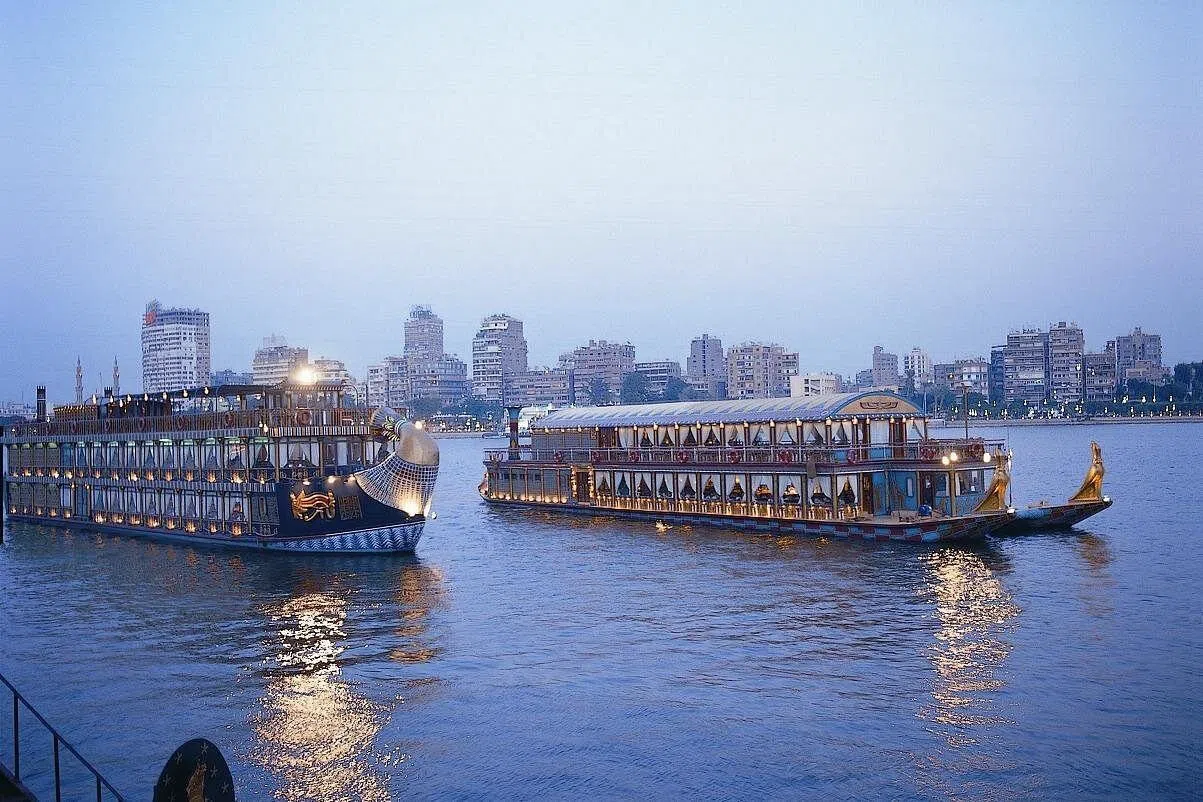
For a view of the temple skyline that neither temple itself can give you, get onto the Nile. A sunset felucca sail (departing from riverside jetties along the Corniche and West Bank crossing points) is the classic version — a traditional lateen-sailed boat, shared or privately chartered, for anything from four to ten people. Shared sails run $10-25 per person; a private charter costs more but buys you control of timing, which matters here: book a sail that straddles sunset into blue hour, so you catch the gold light on the water first and then watch the temple floodlights switch on along the bank as the sky goes dark. It's unhurried, low-key, and works equally well as a couple's evening or a small group booking.
The Nile dinner cruise (departing from Corniche moorings, usually with hotel transfer included) is the louder, bigger-group alternative — set menu, onboard entertainment, a slow circuit of the river with the lit riverbank passing outside the windows. Expect $35-60 per person including dinner and show. It's more spectacle than solemnity, and nobody should mistake it for a contemplative evening, but as a counterpoint to the quieter temple visits — particularly for a group split between people who want history and people who want a night out — it does its job well, and the illuminated temple frontage is part of the view whether or not that's the point of the booking.
The free view — Corniche promenade and a rooftop table
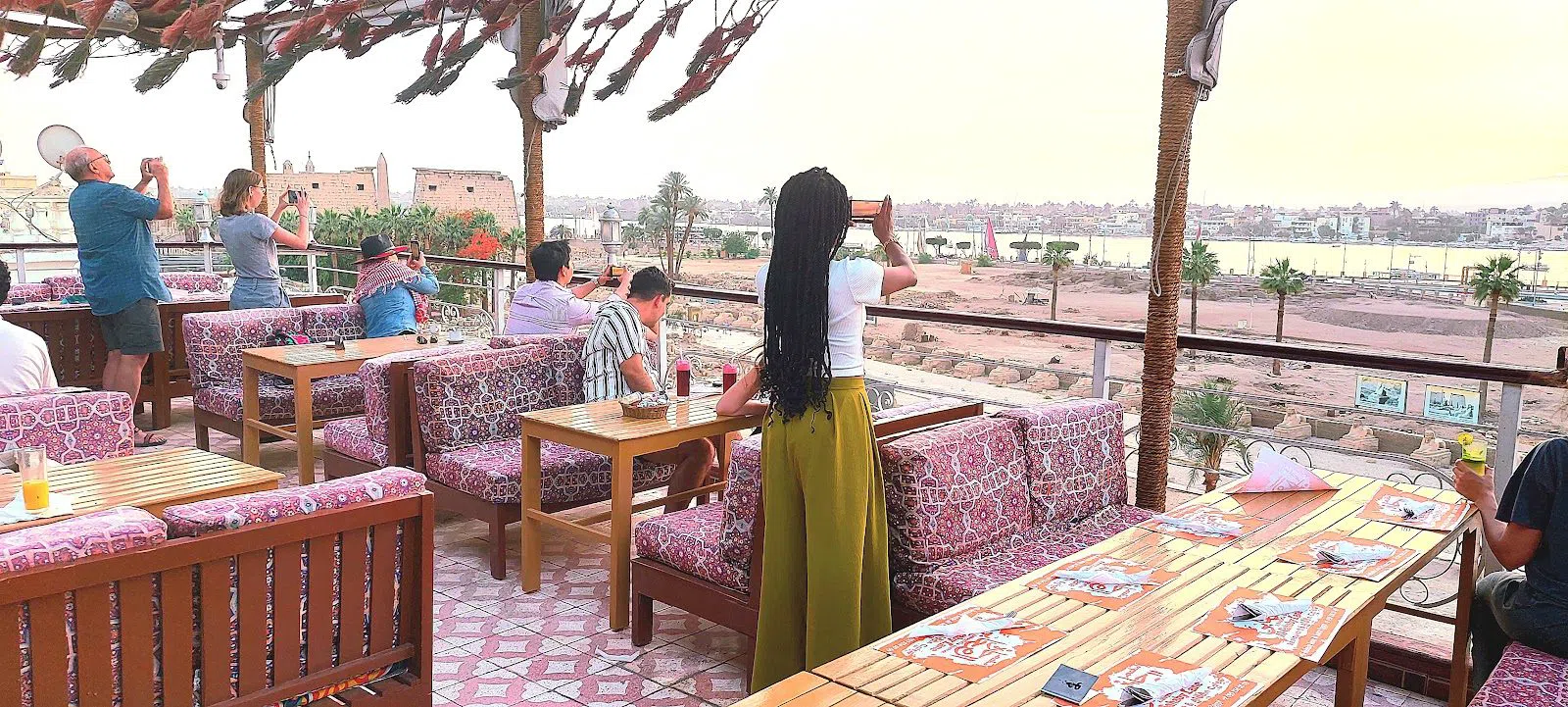
Not every part of a temple night needs a ticket. The Luxor Corniche evening promenade (the riverside walkway running past both temples) is unticketed, holds unlimited numbers, and gives the best free look at Luxor Temple's illuminated facade from outside the walls — the pylon and colonnade lit up across the water or from the street side, with none of the queueing or gate logistics of going in. It's not really a standalone stop; treat it as connective tissue, the walk you do between a felucca sail and dinner, or between the temple and the museum, rather than a destination to plan an evening around.
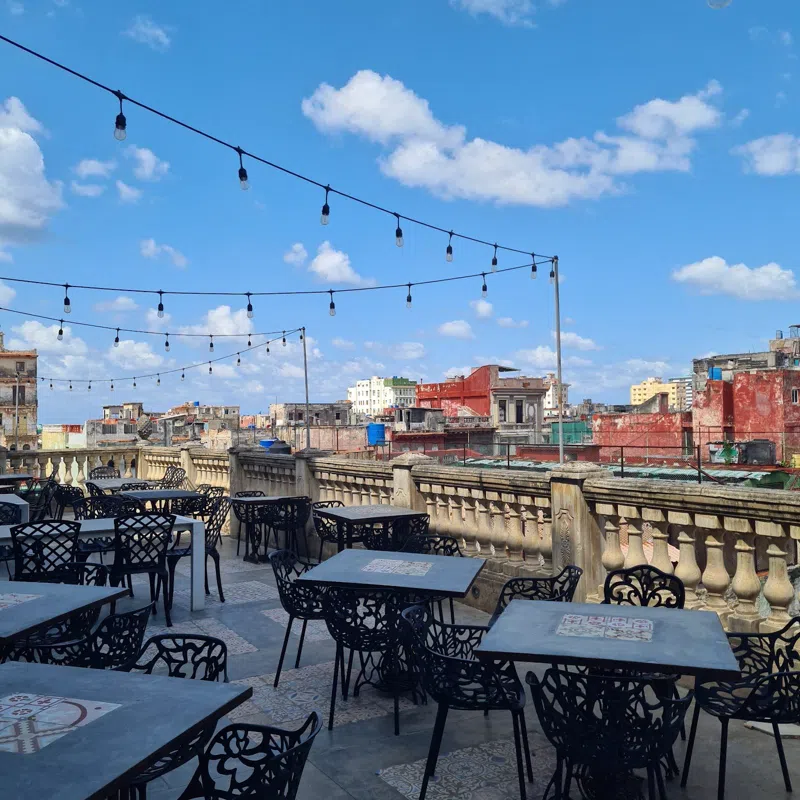
For dinner with that view built in, Al-Sahaby Lane Restaurant (just off the Corniche, close to Luxor Temple) is the closest a restaurant gets to eating inside the temple's glow. It's a long-running local institution well used to tour groups and set menus, with mains in the $8-15 range — Egyptian staples done properly rather than a tourist-menu compromise. The detail that matters: ask specifically for a terrace table, not the ground-floor dining room. The terrace is where the view of the lit temple actually happens; inside, you're just eating dinner.
Putting an evening together
None of this needs to be forced into a single circuit. A workable pattern for a couple or small group: arrive at Luxor Temple around 7pm once the coaches have thinned, walk a stretch of the Avenue of Sphinxes toward Karnak while the light is still turning, then double back for dinner at Al-Sahaby Lane's terrace with the temple lit below. Swap the walk for a felucca sail if you'd rather be on the water at sunset. Larger groups, or anyone with only one evening to spare, should default to Karnak's Sound & Light Show, which is built for exactly that booking, paired with a Nile dinner cruise if the group wants spectacle over solemnity.
A solo traveler or a couple with two evenings has the easiest job of all: one night for Luxor Museum's 5-10pm session followed by Luxor Temple after 7pm, the two an easy stroll apart along the Corniche; a second night for Karnak's Sound & Light Show, since a coach transfer solves the awkward after-dark distance and there's no reason to fight that logistics problem alone when the package handles it. Either way, resist the urge to cram all of it into one night — the point of doing Luxor after dark is the absence of rushing, and a schedule with four bookings back to back defeats that before it starts.
Practical notes
Getting there: Luxor Temple and the Corniche sights are walkable from most central hotels; Karnak is a short taxi ride or included coach transfer, not a comfortable walk after dark. Agree taxi fares before getting in, or book through your hotel.
Cash: Egyptian pounds are essential for entry tickets, tips, and small vendors; larger tours and restaurants often take cards, but carry EGP for anything ticketed at the gate. ATMs are common along the Corniche.
Timing: the evening temperature drop makes 7pm onward genuinely pleasant for walking, a real contrast to the midday heat that governs daytime sightseeing. Confirm Karnak's Sound & Light Show session times and language slots for the day you're visiting, since they shift seasonally.
Budget: a no-frills evening — Luxor Temple entry plus a Corniche walk — costs under $15 per person. Add a felucca sail and you're at $25-40. A full evening with Karnak's show, transfer, and a sit-down dinner at Al-Sahaby Lane comfortably runs $60-90 per person.
Booking ahead: individual entry to Luxor Temple, the museums, and the Corniche needs no advance booking — buy at the gate. Karnak's Sound & Light Show, felucca charters, and dinner cruises are worth reserving a day ahead in high season (November-February), when coach groups fill the popular evening slots first.
Photography: tripods and professional camera rigs sometimes need a separate permit at Karnak and Luxor Temple, checked inconsistently at the gate; a phone or a compact camera handheld draws no attention. Flash adds nothing against floodlit stone from more than a few metres away, so leave it off.
Planning where to stay for easy access to both temples after dark is worth doing before the flights are booked — start with a Luxor hotel search, and for the daytime side of the city, the full Luxor guide covers what to do between temple visits.
Before you go
Is Karnak Temple open at night without the Sound & Light Show?
No. Outside the official Sound & Light Show sessions, Karnak closes at the same time as the general day ticket. The show is the only way to be inside its colonnades after dark, and it runs as a scheduled, narrated session rather than free wandering.
Do I need to book Luxor Temple's evening visit in advance?
No. Luxor Temple has no group cap and no scheduled sessions — buy a ticket at the gate any time before closing, which runs to around 9-10pm depending on the season. Arriving after 7pm avoids most of the day-trip crowds.
Which is better for a couple, Karnak's Sound & Light Show or Luxor Temple at night?
Luxor Temple suits couples better — no scheduled narration, no bulk group seating, and the freedom to linger or leave whenever you like. Karnak's show is built around coach transfers and fixed seating, which works well for larger groups but feels less intimate.
Can I walk between Karnak and Luxor Temple at night along the Avenue of Sphinxes?
The Avenue of Sphinxes connects the two and is included in either temple's admission, but sections remain fenced for ongoing restoration work, so a full end-to-end night walk isn't currently practical. Walking a shorter stretch near Luxor Temple once its floodlights are on is worthwhile for the view back toward the pylon.
What's the cheapest way to see the temples lit up at night?
The free Luxor Corniche evening promenade gives an unticketed view of Luxor Temple's illuminated facade from outside the walls. For paid entry, Luxor Temple itself is the best value at roughly 400-500 EGP (~$8-10), open until 9-10pm with no extra transfer costs.