Especial Luxor
Two hours inside Medinet Habu, Luxor's painted temple
A fortress gate, the Sea Peoples reliefs and hypostyle columns that still hold their original pigment, plus where to eat at the gate and at the ferry.
Por Hanne VermeerReading Luxor the way it was built
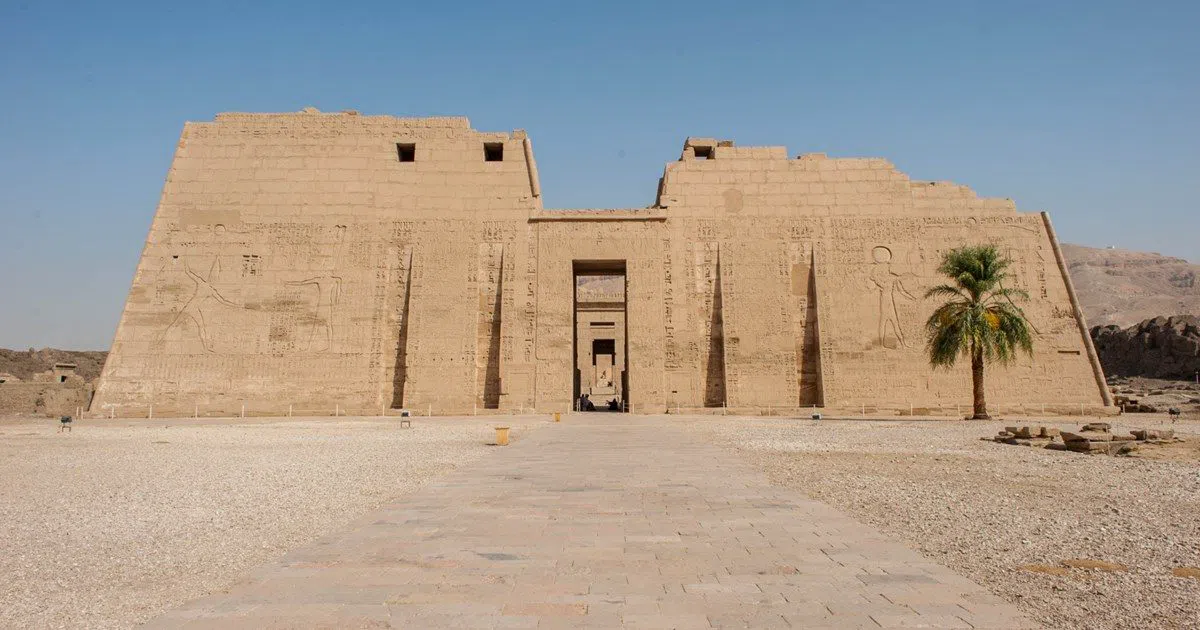
The gate you enter at Medinet Habu is a fortified tower in Syrian style, set into a huge mud-brick enclosure wall with the bare Theban cliffs behind it. Inside, the hypostyle columns still carry their original red, blue and ochre pigment. The temple is open 06:00 to 17:00, and entry is 220 ج.م for a foreign adult.
What you walk through
The High Gate, or migdol, is the tower at the entrance. It stands clear of the mud-brick enclosure, and it is the part of Medinet Habu (Kom Lolah, West Bank) you see first from the lane outside.

Behind it the first pylon is cut with deep reliefs of Ramesses III's battle against the Sea Peoples. Past the pylon the courts open out and the hypostyle columns hold their colour on the shafts, which is why this is the best-preserved painted temple on the West Bank.
Two hours covers the High Gate, the pylon reliefs and the painted halls at a pace that lets you stop in front of them.
Planifica tu viaje a Luxor
Precios en directo de nuestros socios de reservas.
Cancelación gratuita en muchas habitaciones. Podemos recibir una comisión cuando reservas.
Tickets, guides and crowds
A foreign student ticket is 110 ج.م. The Luxor Pass covers the site, and holders walk in free.
Coach and private groups arrive through the day. The forecourt is wide and open, so guided parties spread out across it and the gate does not back up. Guides are allowed to lecture inside the courts, and you will hear them working through the reliefs in the halls.
Guided West Bank day tours that take in the temple run every day of the week and book up steadily, so reserve one before you travel if you want a car and a guide. The temple itself needs no booking beyond the door ticket.
Best time to go
Come at 06:00, when the gate opens, or after 15:00. Low light makes the carving legible, and the deep cut of the Sea Peoples relief reads better at either end of the day than at noon.
What to see around it

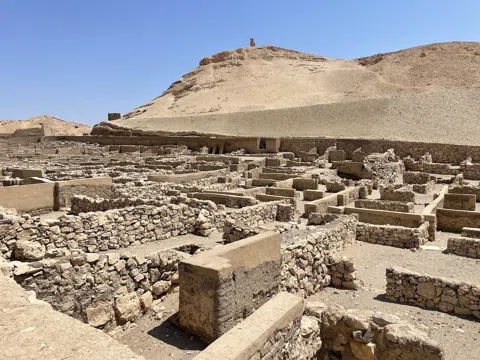
Deir el-Medina (10 minutes' walk from the temple, two minutes by car) is where the men who carved the royal tombs actually lived. The stone-walled houses of the workmen's village sit packed into a desert bowl, with a small Ptolemaic temple of Hathor and its painted ceiling at one end. The tombs of Sennedjem and Inherkhau are steeply cut and their colour is intact. They are narrow and entered a few people at a time, so expect a wait at the shafts.

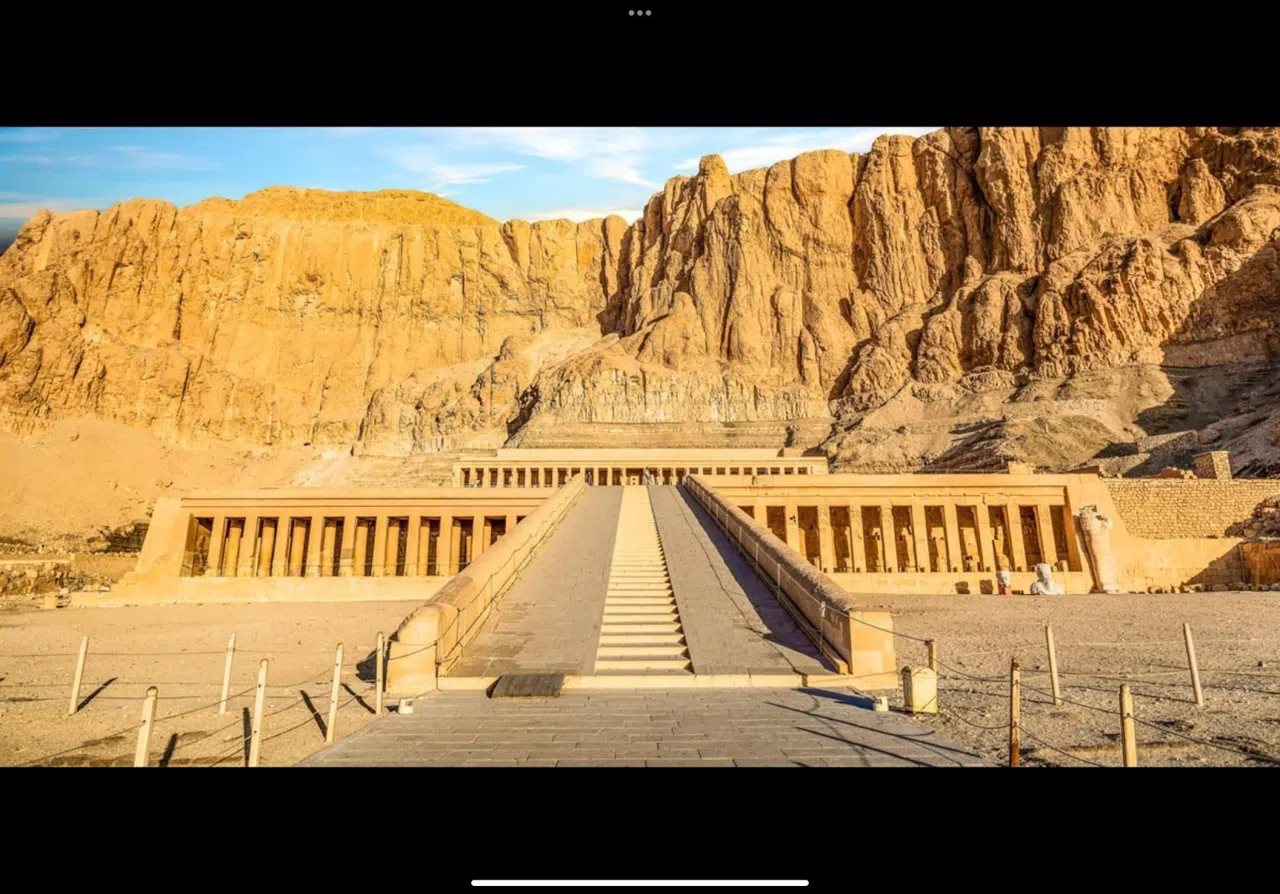
The Ramesseum (across the fields toward the Tombs of the Nobles) is the temple Medinet Habu was largely modelled on, and seeing both in one morning makes the design obvious. The granite colossus of Ramesses II lies face-up in the sand, the Osiride pillars stand with their arms crossed, and rows of vaulted mud-brick storerooms run behind the second court. It opens 06:00 to 17:00 and stays far quieter than Hatshepsut, with no real bottleneck anywhere on the site.
The Colossi of Memnon (roadside, in irrigated fields) cost nothing, have no gate and no limit, and can be seen at any hour. Two seated quartzite statues of Amenhotep III stand about 18m tall, faces weathered away, bodies cracked and re-blocked. Coaches stop here constantly, so go early. It is a five-minute detour off the road you will drive anyway.

The Temple of Amenhotep III at Kom el-Hettan sits directly behind the Colossi and is the least-visited major stop out here. Two restored alabaster statues of Amenhotep III were raised at the Third Pylon in December 2025. The rest is a vast open field of re-erected colossi, flooded excavation pits, scattered stelae and sphinx fragments, with almost no shade and no choke points. Hours are 06:00 to 17:00.


Howard Carter House (Dra Abu el-Naga ridge) was converted to a museum in 2009 and restored in 2022. The domed mud-brick house keeps its arched veranda, Carter's darkroom and his furnished study, with photographs and papers in glass cases. A full-size replica of Tutankhamun's burial chamber stands alongside, and it is the substitute to take if you skip the real tomb. Rooms are small and shown a few people at a time, and the attendants point out objects as you go. It is rarely busy.
Deir el-Medina, the Ramesseum, Kom el-Hettan and Howard Carter House each charge 220 ج.م for a foreign adult. The student rate at Deir el-Medina and the Ramesseum is 110 ج.م.
Breakfast and coffee at the High Gate
Habu Hotel (immediately beside the temple precinct) has the rooftop terrace closest to the temple, and the pylon and the Theban cliffs fill the skyline from it. Wooden tables sit under pale parasols. The roof seats a handful of tables and the rooms sleep up to four, which works for a family or two couples and not for a coach group. A meal up there runs 150 to 300 ج.م. Eat breakfast on the roof before the temple opens.

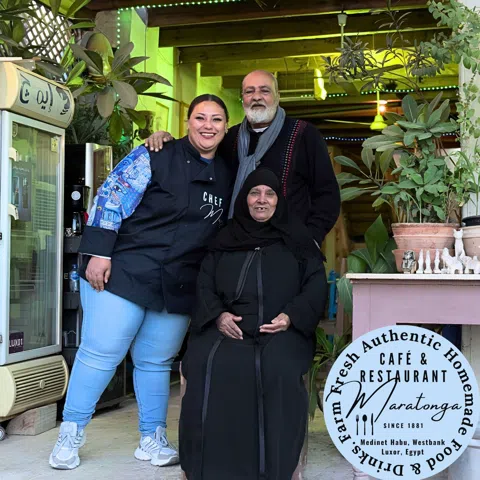
Café & Restaurant Maratonga (Kom Lolah, directly across the lane from the High Gate) opens at 06:00 and closes at 20:00, so it works before a dawn visit. A German-Egyptian family cooks there using produce from their own farm, and the vegan and gluten-free cooking is rare on the West Bank. The terrace is woven mats and painted wood, with the temple pylon rising over the mud-brick wall opposite. Figure 100 to 250 ج.م a head. For a party of more than 10, call ahead and they will lay tables on the terrace.

Lunch between temples

Habou Garden (walking distance from the temple gate) is the cheapest sit-down meal near the gate at 80 to 200 ج.م a head. The walled garden is bougainvillea and palms with cloth-draped chairs. It has wi-fi. Most village cafés here do not. The upper roof terrace looks across sugarcane fields to the temple and the Theban hills, it is first-come and limited, and it is worth booking for sunset.
Nour El Gourna (the Gurna lane facing the antiquities ticket office) is five minutes from Medinet Habu and two from the Colossi, which makes it the practical lunch stop on a full West Bank circuit. The garden terrace sits under reed shade with flat farmland running toward the Colossi. The kitchen covers vegetarian, vegan and dairy-free cooking and the meat is halal. Portions are large and a head costs 150 to 300 ج.م.

Ramesseum Rest House (beside the Ramesseum's fallen granite colossus) serves cold beer, one of very few places out here that does, and it stays open late. Drivers and guides use it as a scheduled break. The garden sits under trellised shade next to the papyrus-bud columns, and the resident animals wander between the chairs. A head is 100 to 250 ج.م. Pair it with a Ramesseum ticket.

Dinner at Qurna and Al Moudira

Marsam Hotel (Qurna) is an old domed mud-brick dig house, 10 minutes by car from Medinet Habu, and Sheikh Ali's garden restaurant is the reason to go. You sit in a shaded courtyard on low benches behind bamboo screens, with farm beds and donkeys beyond and the Ramesseum columns visible across the fields. Food comes off the farm and the menu is short. The kitchen is used to archaeological teams eating together, so tell them you are coming. Dinner is 200 to 350 ج.م a head.
Al Moudira (a walled desert garden) is the upscale option on this bank, with domed Ottoman-Moorish pavilions, mashrabiya screens, blue-tiled courtyards and a lantern-lit dining hall. Three restaurants and a poolside bar serve a seasonal farm-to-table kitchen, and the farm behind the loungers keeps ostriches and donkeys. Dinner starts at 1,000 ج.م per head. It became a Relais & Châteaux property in January 2026. Non-resident dining has to be arranged in advance, and the owners have flagged a closure window from 15 June to 31 August 2027.

Eating at the ferry crossing
Africa Restaurant (Gezira main street) is up a narrow tiled stairwell to an open-air rooftop dining room, plain chairs, shawarma spit turning by the kitchen door, the Nile and the east-bank skyline beyond. The shawarma is the best value for money on this bank, and there are vegetarian, vegan and gluten-free plates. A head is 120 to 250 ج.م. The roof is roomy and it does not fill with tour parties.


Sunflower Restaurant West Bank (a short walk up from the ferry dock) opens 11:00 to 23:00 daily and suits a late finish. A former Africa Restaurant waiter runs it and the cooking is traditional Egyptian. Strung bulbs cross the terrace, the Nile sits below and Luxor Temple's floodlit columns stand on the far shore. Expect 150 to 300 ج.م a head. This is the dinner to take if you are crossing back to the East Bank after a temple day.
Nile Valley Hotel & Restaurant (Gezirat el-Bairat ferry landing) is the whitewashed hotel at the crossing itself, with blue railings on the roof terrace, a heated pool in the courtyard below and Luxor Temple and Karnak across the water. The menu runs Egyptian and international and a head costs 180 to 350 ج.م. Book ahead for a sunset table.

Is it worth it
It suits a visitor who wants painted relief at close range and has a morning to give it. Two hours in the courts and the 10-minute walk to Deir el-Medina will take that morning, and the midday heat will end it for you either way.
Practical notes
Medinet Habu and the sites around it shut at 17:00, so the choice is which end of the day you take. Arrange a non-resident table at Al Moudira in advance, and book the sunset roof at Habou Garden or Nile Valley. See the Luxor guide and the Luxor hotel search.
Antes de ir
How much does it cost to enter Medinet Habu?
Entry is 220 ج.م for a foreign adult and 110 ج.م for a foreign student. The Luxor Pass covers it, and you buy the ticket at the gate.
How long do you need at Medinet Habu?
Two hours is enough for the High Gate, the Sea Peoples reliefs on the first pylon and the painted hypostyle hall. The site is open 06:00 to 17:00.
What is the best time of day to visit?
Arrive at 06:00 when the gate opens, or after 15:00. Low light makes the carving legible, and the deep relief on the first pylon reads far better than at midday.
Do you need a guide or a booked tour?
No. The door ticket is all the temple asks for, and guides may lecture inside the courts if you come with a party. Guided West Bank day tours that include Medinet Habu run seven days a week and sell steadily, so book ahead if you want a car and a guide.
Where can you eat near Medinet Habu?
Habu Hotel's rooftop terrace, beside the precinct, looks onto the temple and feeds you for 150 to 300 ج.م. Across the lane at Kom Lolah, Café & Restaurant Maratonga opens at 06:00 and runs 100 to 250 ج.م a head. For the cheapest sit-down meal near the gate, Habou Garden is 80 to 200 ج.م.